Showing posts with label Japan. Show all posts

Experts have sounded the alarm over Japan’s environmental wellbeing this week, as the country is storing 200,000 tonnes of radioactive water in makeshift tanks that are vulnerable to leaks. This is according to the operator of Japan’s tsunami-hit nuclear power plant, who said that there’s no reliable way to check on the tanks or anywhere to transfer the water.


The Fukushima Daiichi nuclear power plant was inspected last week, with Japan’s nuclear watchdog members looking into the contaminated water tanks. This is the latest in a long list of environmental wellness concerns, following multiple recent accidents, leaks and breakdowns. These problems show just how vulnerable the Fukushima Daiichi nuclear power plant site is, even though it has been more than two years since the powerful earthquake and tsunami set off meltdowns at three reactors.


Two weeks ago, Prime Minister Shinzo Abe promised that his government would take a more active role in the site’s cleanup, and so this new announcement has raised questions about how seriously he has taken that pledge. The government is still pushing to restart the country’s nuclear power programme, and the Prime Minister headed out to the Middle East on Saturday to promote Japanese exports to the region, including nuclear technology.


However, opposition lawmakers have demanded that Mr. Abe stay home and declare a state of emergency. At an anti-nuclear rally outside Mr. Abe’s office in Tokyo, Yoshiko Kira of the opposition Japan Communist Party, which made significant gains in parliamentary elections last month, commented, ‘The nuclear crisis is real and ongoing, yet the government continues to look the other way. The government should declare a state of emergency right now, and intervene to stop the outflow of contaminated water.’


How the crisis at the Fukushima plant will affect Mr. Abe’s extensive popularity remains to be seen, but what is clear is that the plant’s operator, the Tokyo Electric Power Company (Tepco), may not be able to handle the increasingly problems at the plant. At the sprawling complex, Tepco has built almost 1,000 tanks in order to store as many as 335,000 tons of contaminated water. This water is the result of the coolant that the plant pumps into the reactors to keep the cores from overheating, as well as the groundwater that they pour into their breached basements at a rate of 400 tonnes a day.


Tepco has admitted that one tank has sprung a huge leak this week, which could spell disaster if the other tanks follow suit. The 36-foot-tall cylindrical tanks were constructed as a temporary repository for the growing amount of radiated water at the complex, but Tepco announced that the builders had used vulnerable rubber sealing and the tanks’ ability to withstand radiation was not tested. Noriyuki Imaizumi, the acting general manager of Tepco’s nuclear power division, stated that the leaked water can be carried to the sea by a nearby drain, and high radiation readings suggest that this has already occurred.


According to the Nuclear Regulation Authority, which the Japanese government has ordered to more actively advise and monitor Tepco’s activities at the plant, the company needs to transfer the water into more durable vessels. However, an authority commissioner, Toyoshi Fuketa, said that after seeing the plant on Friday, the possibility of doing this quickly is ‘unrealistic.’ Tepco acknowledged that the water beneath the reactors is extremely contaminated. If it gets into the ocean, it will exceed even the disaster’s earliest leaks. Michio Aoyama, a senior scientist in the Oceanography and Geochemistry Research Department at the government-affiliated Meteorological Research Institute, admitted, ‘That prospect scares me. It’s the ultimate, worst-case scenario.’

When it comes to corporate wellness, it seems like Japan is getting ahead of itself. Last month, Japanese companies issued the most bonds in three years, and some raised cash ahead of schedule. They did this because they believe that large-scale bond buying by the central bank means that interest rates are almost certain to rise.


According to data tracked by Nomura Securities, in April, Japanese corporations issued ¥1.2 trillion ($11.8 billion) of bonds, which are the most in any month since April 2010 and the sixth-most in the past decade. The bonds issuers included smaller manufacturers, as well as retail store operator Seven & i Holdings Co. (3382.TO -1.14%) and auto giant Nissan Motor Co. (7201.TO +5.60%). But what of the buyers?


Rates are already ticking higher from ultra low levels, which means that some companies are issuing more debt than they first planned to yield, and hungry institutional investors are seeking better returns than Japanese government bonds can offer. Some of the buyers have said that they intend to use the funds to expand their businesses, while others are going to refinance existing debt.


For example, Tobu Railway Co. (9001.TO -0.70%) rushed to sell a ¥10 billion bond just two weeks after the Bank of Japan announced its newest monetary-stimulus programme. Tsutomu Yamamoto, manager at Tobu’s finance and accounting department, explained, ‘We thought it was better to raise funds sooner rather than later’ and this is exactly the kind of thinking and behaviour the Japanese government and central bank intended to create.


By vowing to defeat deflation and reignite the economy through broad-based asset purchases known as quantitative easing, the government caused Tobu – a major railway operator in the Tokyo area – to waste no time in issuing 10-year bonds even though the company doesn’t need the funds until June, when existing bonds are due. This is because Japan’s new economic policy, dubbed “Abenomics,” is likely to lead to higher interest rates later. Masanori Azuma, head of debt capital markets at Nomura, noted that companies believe there won’t be a better time to issue debt. ‘Frankly, there won’t be anything bigger than this’ easing, he said.


Japanese Government Causes Companies to Raise Cash Early

In the quest for anti-ageing wellness, it seems as though women will put their faith in all manner of weird and wonderful products. Recent trends have seemed to prove this fact, as we’ve moved away from BB creams and wash-off face masks and instead turned to, well, actual face masks.


The last product that promised to dramatically slow the effects of ageing without resorting to surgery was the wrinkle-busting balaclava known as the Face Trainer. Created by aptly named company No!No!, who maintain that just ten minutes of daily wear is enough to tighten your sagging skin and ease the signs of ageing, the Face Trainer provides resistance training to the muscles in your face – so long as you don’t mind looking like a rejected Storm Trooper.


However, Japan has created its own version of the Face Trainer which, frankly, looks more terrifying than the original, if not more ridiculous. The Facewaver Exercise Mask is described online as ‘a new face stretcher from Japan that promises to give users a more youthful and energetic look’. I think the Japan Trend Shop, who sell the product, sums it up when they boast, ‘It’s cheaper and doubles as a great Halloween outfit.’ Now there’s a selling point you want on all your beauty products!


You use the Facewaver Exercise Mask much in the same way as the Face Trainer; wrapping it round your face and making bizarre facial expressions to exercise different muscles. The manufacturers claim that this serves to improve and increase blood circulation to your face, as well as smoothing out any wrinkles, lines and sags in just five minutes of daily use. At two-thirds the price of the Face Trainer, and only having to be worn for half the time, the bizarre invention may be the better option, unless lurid pink isn’t your colour. However, while the Face Trainer boasts that 91% of users would recommend it to a friend, there are no reports on whether the Facewaver Exercise Mask actually works.


Yet if the Facewaver Exercise Mask doesn’t bring in the big bucks for Japan Trend Shop, the seller has an array of different bizarre products. You can purchase the £80 Eye Slack Haruka, which combats the sagging skin around your eyes with battery-powered vibrating pads, or the £70 Beauty Lift High Nose, which vibrates to make your nose higher and firmer. You can also enjoy the lips of Pete Burns with the rather cartoonish Face Slimmer Exercise Mouthpiece, or the Facial Lift At Once Toner. The question is; is it worth it?

When it comes to corporate wellness, it seems like Japan is getting ahead of itself. Last month, Japanese companies issued the most bonds in three years, and some raised cash ahead of schedule. They did this because they believe that large-scale bond buying by the central bank means that interest rates are almost certain to rise.


According to data tracked by Nomura Securities, in April, Japanese corporations issued ¥1.2 trillion ($11.8 billion) of bonds, which are the most in any month since April 2010 and the sixth-most in the past decade. The bonds issuers included smaller manufacturers, as well as retail store operator Seven & i Holdings Co. (3382.TO -1.14%) and auto giant Nissan Motor Co. (7201.TO +5.60%). But what of the buyers?


Rates are already ticking higher from ultra low levels, which means that some companies are issuing more debt than they first planned to yield, and hungry institutional investors are seeking better returns than Japanese government bonds can offer. Some of the buyers have said that they intend to use the funds to expand their businesses, while others are going to refinance existing debt.


For example, Tobu Railway Co. (9001.TO -0.70%) rushed to sell a ¥10 billion bond just two weeks after the Bank of Japan announced its newest monetary-stimulus programme. Tsutomu Yamamoto, manager at Tobu’s finance and accounting department, explained, ‘We thought it was better to raise funds sooner rather than later’ and this is exactly the kind of thinking and behaviour the Japanese government and central bank intended to create.


By vowing to defeat deflation and reignite the economy through broad-based asset purchases known as quantitative easing, the government caused Tobu – a major railway operator in the Tokyo area – to waste no time in issuing 10-year bonds even though the company doesn’t need the funds until June, when existing bonds are due. This is because Japan’s new economic policy, dubbed “Abenomics,” is likely to lead to higher interest rates later. Masanori Azuma, head of debt capital markets at Nomura, noted that companies believe there won’t be a better time to issue debt. ‘Frankly, there won’t be anything bigger than this’ easing, he said.


Japanese Government Causes Companies to Raise Cash Early


This month it has been announced that arthritis wellness in Japan is set to improve thanks to the approval of a new rheumatoid arthritis drug. Made by Manufacturer Pfizer Inc, Xeljanz is a twice-a-day pill which the Japanese Ministry of Health, Labour and Welfare have approved for use in patients whose wellbeing has not improved after using at least one other disease-modifying drug.


When you have rheumatoid arthritis (RA), it means that your immune system mistakenly attacks your body’s tissues, mainly in your joints. This disabling autoimmune disorder limits your mobility and sometimes leaves your fingers bent at uncomfortable angles. RA generally gets worse with time, even attacking your lungs, heart, eyes, skin, blood and nerves. Early, aggressive treatment can slow the progression of the disease


Xeljanz works inside your cells, inhibiting your Janus kinase enzyme’s signalling pathways, which are involved in the inflammation caused by rheumatoid arthritis. This makes Xeljanz one of a new class of medicines called Janus kinase inhibitors, or JAK inhibitors for short, and is the first of this class to be approved for use. On the other hand, other RA drugs, such as Enbrel and Remicade, work outside your body’s cells, broadly suppressing your immune system in order to slow progression of the disorder.


These other RA drugs are expensive, must be injected or infused, and can cause significant side effects. You can experience persistent fevers, flu-like illness, susceptibility to infections and flare-ups of dormant diseases such as tuberculosis. According to Mark Swindell, head of Pfizer’s specialty care business in Japan, ‘RA is a serious and disabling disease and there is a need for new treatment options, as a significant number of patients do not adequately respond to current therapies.’


Pfizer is the world’s largest drugmaker by revenue, and the company commented that Xeljanz will initially only be made available in Japan to medical institutions participating in a programme monitoring the progress of all patients. The drug was approved as for use in the US in November, and now with Japan welcoming Xeljanz it could be a potential big seller for Pfizer. In Japan, 750,000 people are affected by rheumatoid arthritis, and Pfizer asserted that up to one-third of patients don’t respond adequately to current therapies.


Japan Welcomes New Rheumatoid Arthritis Drug

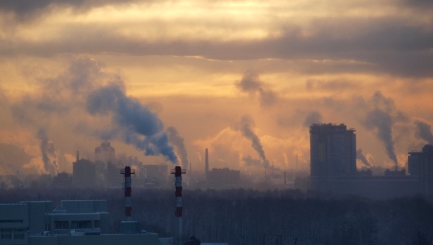
pollution cityThe air pollution problem in China has been well publicised. As the country has developed into an industrial superpower, the number of large factories and buildings producing pollution has skyrocketed to unprecedented levels. This has left many of the big cities with dangerously high levels of pollution, found in thick smog that often blankets the urban sprawl. However, while it has been a huge problem for China, it has been contained in the country – that is until now.


Increasingly we are seeing air pollution being blown toward China’s neighbour Japan, causing panic and problems in major cities there. Japan’s environment ministry’s website has been overloaded as worried citizens log on to try to find out what is coming their way and work out the best way to deal with it.


With pictures of smog covering Beijing fresh in the minds of many Japanese people, it’s no surprise that there has been widespread panic concerning the possibility that the pollution could come the way of Japan. News programmes have made things worse by broadcast maps showing a swirl of pollution gathering strength across China and then showing that it will head towards Japan.


According to Japanese authorities, access to the country’s air pollution monitoring system has been almost impossible since last week. However, the reality is that air pollution levels in Japan have been growing steadily for a long time. This is in part due to the influence of China’s intense industrial growth, but Japan too has caused problems itself.


The authorities have now advised people with respiratory problems to take extra care and also for families to pay close attention to their children and elderly relatives as they can be affected especially badly by problems in the air.


Japan To Be Hit By Chinese Air Pollution