Showing posts with label angioplasty. Show all posts

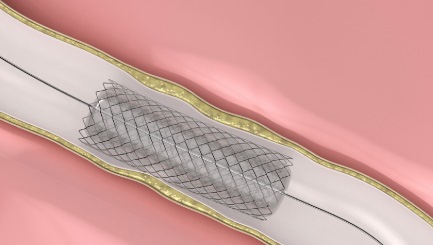
stentsStents are commonly used in patients suffering from heart disease, inserted into the coronary arteries to open them and increase the blood flow to the heart in a procedure known as angioplasty. Technology has now produced biodegradable stents that have been tested and found to be safe for long-term use in heart patients.


In Mumbai, the Asian Heart Institute is leading the way for Indian hospitals in using the new generation of biodegradable stents for angioplasty surgery. The stents used to be made from wire mesh and are now made from material that eventually dissolves in the body.


Stents have been used in heart surgery since the late 1970s. The blood vessels or coronary arteries that supply the heart can become narrowed and hardened, particularly in older people. This process, known as atherosclerosis, causes the flow of blood to the heart to slow or become restricted, leading to angina.


The stents are small tubes that are inserted into those narrowed arteries to open them wide enough so that blood flows normally again. The old-style stents often caused the tissue in the artery to scar so that, over time, the artery began to close over again, known as restenosis.


Today’s bio-absorbable stents will dissolve in the body within 18 months of being inserted and so reduce the risk of restenosis. The stents were given the go-ahead for widespread use in India after a clinical trial involving 100 heart patients.


Another advantage of the biodegradable stents is that they do not interfere with the machinery used to scan the body, allowing medics to spot and treat any potential blockages that might occur in the arteries of the heart.


Patients who have angina or had a heart attack will see major health benefits after having a stent fitted. The procedure brings pain relief, eases the symptoms of breathlessness and improves your ability to do everyday activities such as walking or climbing stairs. It will also reduce the chance of you suffering another heart attack.


Biodegradable Stents Reduce Complications After Angioplasty

stents2When your arteries are narrowed or blocked, this can sometimes be a wellness warning of a heart attack. These days, a stent can fix that problem, and the little device has come a long way to be able to do so, but there was a time when cardio doctors thought they could live without them.


An angioplasty is a procedure to widen narrowed or obstructed arteries and it used to be done without any stents. The first angioplasty on a coronary artery was performed in 1977, in Zurich, Switzerland, by Dr Andreas Gruentzig, a German-born physician. Back then, the surgeon would stretch the artery with an inflated balloon, and the balloon would be removed along with the fine guidewire. However, as vessel walls are elastic in nature, and therefore tend to spring back or recoil after the procedure, this, coupled with the formation of scar tissue, meant that restenosis could occur, in which your treated vessel becomes blocked again.


Clearly, something had to be done and so bare metallic stents were introduced in 1986. According to Dr Benjamin Chua, the director of endovascular surgery and a consultant at the department of general surgery at the Singapore General Hospital, stents act as struts, radiating force outwards to keep arteries open. However, though these devices solved one problem, they created other issues too.


Because bare stents exert an outward force against the arterial walls, extensive scar tissues grow inside the device, causing your blood flow to be obstructed. This can affect your wellbeing with symptoms such as chest pain, and so the next evolution of stents was born: drug-eluting stents. These stents are coated with medication, which is released over time to stop your body from responding to injury, and causing restenosis.


Though each new stent reduced restenosis by up to 20% each time, there was still a problem with thrombosis, or clotting, which can occur from within 24 hours to a year later and is more common with drug-coated stents. People who have bare stents have to take two kinds of blood-thinning or anti-clotting medication for at least a month while those with drug-coated stents have to take both for at least a year.


So, we come to the last evolution of stent: biodegradable drug-eluting stents, which remove the root causes of vessels narrowing after a procedure, but do not remain permanently to trigger extensive scar tissue growth. Also known as the Absorb stent, Dr Goh Yew Seong, a consultant at the department of cardiology at Changi General Hospital, explained, ‘Although the Absorb stent’s premise of leaving nothing behind is an attractive option for most patients, we must still be stringent in lesion selection in order to ensure the best outcome.’


The Evolution of Stents: How Far Have We Come?