Showing posts with label resveratrol. Show all posts

Grapes are delicious, sweet and – best of all – have a whole host of amazing benefits for your wellness and wellbeing. They are quite sugary, as far as fruit goes, but when eaten as part of a healthy diet, they can be some of the best nutrition that you can possibly take on board.


Did you know, for example, that grapes are great for weight loss? Research carried out recently at the University of Georgia has found that the resveratrol contained in grapes helps to assist the body’s weight loss efforts by reducing the cell’s ability to store fat dramatically (by about 130 percent) and it also causes fat cells to disintegrate far more quickly than normal.


Grapes are also great for your heart. Research has also shown that the resveratrol contained in these little fruits has the ability to improve the way that the blood vessels dilate, which could allow more blood to flow freely through the blood vessels. It has also been proved to help relax the walls of blood vessels, thus making their diameter larger, and allowing the blood pressure to lower. The increased blood flow to all areas of the body means that more oxygen is delivered, and also more nutrients to the cells of the body. A further study showed that just a small amount of resveratrol resulted in a dramatic reduction in the risk factors for heart attacks.


As well as your heart and your weight, grapes could be great for your brain. The University of Switzerland has just released research which proves that grapes can help to mop up brain-damaging plaques and also the free radicals. These have been linked to Alzheimer’s disease. In face resveratrol is sometimes playfully referred to as ‘reverse it all’ by health practitioners, due to the amazing effects that it can have on the body.


In any beauty store in the country, you’ll find products designed to make you look younger. Be it for your wrinkles or age spots, these products promise anti-ageing wellness in a bottle – but are they making promises they can’t keep? You can’t help but be a little skeptical as to exactly how beneficial these miracle products are to your wellbeing, but it seems that this skepticism doesn’t stop you from forking out the big bucks.


‘Yes, there has been a tremendous anti-ageing craze accompanied by a boom in available products, technology and procedures,’ notes Dr. Elizabeth Hale, a dermatologist at New York University Medical Centre. ‘Increasingly, people are searching for products and procedures that deliver results without the cost, risks and downtime of more invasive cosmetic surgery. There are many great options out there for people seeking results, but the key is to find a doctor that you trust and one that will help you to look natural. One should strive to look like a better, more relaxed, version of themselves; no one should look “done”.’


According to Hale, there are certain products and procedures that she uses personally and recommends on a regular basis. These include a daily broad-spectrum sunscreen (such as Coppertone or SkinMedica Physical Defense), retinol or prescription-based tretinoin (which is found in Roc, Renova and RetinA), stem cell-derived products to stimulate collagen and elastic (like Lifeline Skin Care), Botulinum Toxin injections, Hyaluronic Acid and poly-L-lactic acid fillers and Fractional Resurfacing lasers. Hale explains, ‘With the right sunscreen, topicals and minimally invasive procedures, along with a healthy diet and lifestyle which includes exercise, we can all look… natural and rejuvenated.’


Let’s take a look at the scientific evidence behind the commonly listed active ingredients in anti-aging products:


Peptides – These are small proteins that help stimulate new cells to grow, and the theory goes that they make your skin more plump, which reduces your fine lines. However, Hale asserts that, while this is a nice idea, there’s really no evidence which conclusively proves peptides really do anything to reduce wrinkles.


Alpha-hydroxy acids – The natural ingredients found in fruits and milk sugars, including lactic, glycolic and citric acids, are collectively known as alpha-hydroxy acids. These acids work to exfoliate your skin, which removes dead skin cells and makes room for new, healthier ones. Hale notes these acids vary in terms of impact and what they do. For brighter skin, you want lactic acid but you should opt for glycolic acid if you want your skin to look smoother, as this one reduces fine lines and wrinkles.


Retinol – You’ll find this natural form of vitamin A in a variety of over-the-counter skin creams, and the idea is that it boosts the thickness and elasticity of your skin and reduces the appearance of wrinkles. Hale affirms that this is backed up by ample evidence, but the prescription version tretinoin or Retin-A is much stronger. Still, though it may be more effective than over-the-counter retinol, doctors warn that tretinoin can also cause more side effects, so tread with caution.


Resveratrol – A lot of people like this plant compound, as it is found in red wine and studies have shown that drinking wine in moderation has some health benefits. However, when it comes to the supplement form of this anti-ageing plant, the jury is out. According to research published in a 2008 edition of the journal Cell Metabolism, resveratrol slowed down age-related decline in mice, but subsequent studies have not confirmed similar results from the supplement form.


Antioxidants – It is commonly believed that antioxidants protect your cells from free radicals, which damage your body and increase your risk for diseases. When it comes to age prevention, antioxidants are only effective in certain formulations. The most time-tested combo is vitamins C and E.

As most women will enthuse, red wine and chocolate is good for you – at least in terms of anti-ageing benefits. A natural antioxidant that is found in red wine and cocoa, known as resveratrol, has been the focus of many beauty companies in recent years, which have seemingly developed products that work by soaking in through your skin. But is there madness in that method? Or can you get the same wellness benefits of resveratrol by slathering it on your skin?


According to Dr. Joseph Maroon, professor and vice chairman of the department of neurological surgery at the University of Pittsburgh (and author of The Longevity Factor: How Resveratrol and Red Wine Activate Genes for a longer and healthier life), you have to understand where resveratrol comes from in order to understand how it works. The polyphenols antioxidant is one of 600 antimicrobial compounds known as a phytoalexin, which plants produce for protection against adverse conditions, such as excessive ultraviolet light, infections and climactic changes.


Studies have found that this compound could aid your health and wellbeing, such as a 2012 study which found resveratrol helped mice with balance issues. Another July 2011 study found resveratrol countered the effects of inactivity in mice, and suggested that red wine could be “exercise in a bottle”. According to the Mayo Clinic, resveratrol might protect against obesity and diabetes, reduce the risk for blood clotting, or reduce “bad” LDL cholesterol. Maroon noted that this is because resveratrol has the ability to dilate blood vessels, increase nitric oxide and block the stickiness of platelets.


However, when it comes to resveratrol’s anti-aging benefits when applied externally on humans, the research is limited. Researchers of a 2005 study, published by the National Institutes of Health, applied resveratrol to the skin of laboratory animals, who were then subjected to high ultraviolet radiation. The compound protected the animals, and, as Maroon explained, ‘It was a very good sun block. It might be the ultimate sun block for both plants in animals. In animals, it was shown to prevent the development of skin cancer.’ However, he added that the best way to get resveratrol’s supposed benefits is probably through other methods. ‘That would be my opinion,’ he said. ‘I’d rather drink it than pour it on my skin.’

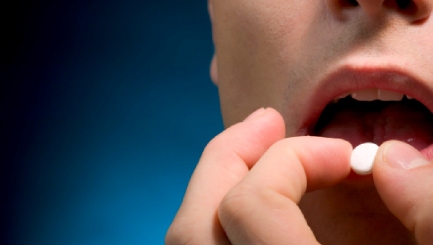
Myth Busters the truth behind miracle pillsIt has recently been reported that, not only could resveratrol-based pills improve your wellbeing and prevent illnesses, but it could also help you live to the age of 150. This is because the compound, found in red wine and dark chocolate, has been shown in molecular-level research to increase the activity of proteins called sirtuins. However, the claims that these anti-ageing drugs could boost lifespan so dramatically have been dubbed “early” and “optimistic” by wellness experts.


Sirtuins are proteins that can increase the lifespan of yeast, worms and flies, playing a role in human age-related diseases such as Alzheimer’s disease. Researchers from Harvard Medical School, the Massachusetts Institute of Technology, the US National Institutes of Health, the pharmaceutical company GlaxoSmithKline, and other institutions in Portugal and Australia, examined whether they might be able to stimulate the activity of sirtuins to the point where it could theoretically improve human life expectancy.


The research, which was published in the peer-reviewed journal Science, showed that these compounds directly activated the sirtuin proteins, but it is far too early and optimistic to claim that a pill could be created that would allow people to live to the age of 150. The focus of the study was on biological processes in a laboratory, rather than the development of an anti-ageing pill, and the ’150-year’ claim seems to have been manufactured by the headline writers.


The effect of the pill on humans was not tested, but rather in overweight mice, and so it is unknown whether a pill such as this could have any effect on human disease or lifespan, or whether it would be safe to use. According to the study’s researchers, the conclusion that they came to was simply that a range of STAC compounds can activate SIRT1, and that this process ‘remains a viable therapeutic intervention strategy for many diseases associated with ageing’.


The lead researcher said that, when the pill was compared to red wine, ‘at least 100 glasses would be needed each day to get the levels shown to improve health in mice’. Therefore, it is clear that this type of study is a necessary and useful early step in the development of drugs. On its own, however, it is certainly not sufficient evidence for anyone to be able to say that STAC compounds can reverse or delay human ageing, and so much further is research is needed before those claims are justified.


Unfounded: Wellness Experts Doubt Claims of Anti-Ageing Pill

anti-ageing the wholeWithin the next five years, you may be able to extend your life by over 50 years. This is according to a new, landmark study, which says that anti-ageing drugs could improve your wellness to the point where you live to the age of 150!


According to the study, published in the journal Science, by targeting a single, anti-ageing enzyme in the body, a drug is able to look after your wellbeing by preventing age-related diseases. Through a common mechanism, all of the 117 drugs tested work on the single enzyme, meaning that a whole new viable class of anti-ageing drugs could ultimately prevent cancer, Alzheimer’s disease and type 2 diabetes.


Lead author of the paper, Professor David Sinclair, from the University of New South Wales (UNSW) Medicine, explained, ‘Ultimately, these drugs would treat one disease, but unlike drugs of today, they would prevent 20 others. In effect, they would slow aging.’ You can naturally switch on the target enzyme, SIRT1, with calorie restriction and exercise, but it can also be enhanced through activators.


The most common activator that naturally switches on SIRT1 is resveratrol, which is found in small quantities in red wine, but synthetic activators that are currently being developed exhibit much stronger activity. The researchers found that overweight mice who were given synthetic resveratrol were able to run twice as far as slim mice and they lived 15% longer.


In a statement, Sinclair said, ‘Now we are looking at whether there are benefits for those who are already healthy. Things there are also looking promising. We’re finding that ageing isn’t the irreversible affliction that we thought it was. Some of us could live to 150, but we won’t get there without more research.’ He noted that, ‘In the history of pharmaceuticals, there has never been a drug that tweaks an enzyme to make it run faster.’


Pharmaceutical giant GlaxoSmithKline bought the technology in 2008, and of the four thousand synthetic activators currently being developed, the best three are now being used in human trials. Sinclair suggested that the first therapeutic to be marketed will be for diabetes, but warned, ‘our drugs can mimic the benefits of diet and exercise, but there is no impact on weight.’  However, he did assert that the drug could one day be taken as a preventative.


Could Anti-Ageing Drugs Soon add over 50 Years to Your Life?

There are so many vitamin and mineral supplements that one or two important ones can get overlooked. This is certainly the case for resveratrol, which, though most commonly associated with wine, has many benefits to your fitness, mental wellness, vision and overall wellbeing.


Endurance training is enough to put anyone off exercise altogether, but resveratrol could help to enhance your results. In 2012, a Canadian study found that resveratrol supplementation could give you similar skeletal muscle benefits to endurance training. Combining the two resulted in a performance increase of 21%, but even on its own resveratrol increased endurance and oxidative metabolism, and enhanced cardiac function.


Another Canadian study discovered that if you drink one to two five-ounce glasses of wine per day, you can reduce your risk of developing atherosclerotic disease, a precursor to heart disease and stroke, which means that you subsequently reduce your risk of death by roughly 30%. Experts explain that resveratrol preconditions your heart and provides it with the best protection to avoid cardiac events.


But it’s not just heart disease that resveratrol protects you from. According to a recent French study, resveratrol, which can be found naturally in blueberries, peanuts, grapes, and both red and white wines, can slow down the production of cancerous cells and therefore could be considered an effective anticancer agent.


Also, vision loss is a normal part of getting older, but according to a study by Missouri researchers, resveratrol has the ability to counteract this common occurrence. Resveratrol can regulate angiogenesis, which prevents the abnormal growth of blood vessels that are damaging to eyesight. Further, for men, resveratrol may be an option if your doctor tells you that your testosterone needs a boost. A Korean study managed to improve blood testosterone concentration in mice by more than 50% following a 28-day period of resveratrol consumption.


Finally, resveratrol not only benefits your body, but also your mind, as a study here in the UK found that neurological blood flow was increased following resveratrol consumption. Blood flow boosts your brain power, and another study, this time in Illinois, gave mice resveratrol supplements and this improved their memory function and overall mental performance. So whether it’s a new supplement you want to add to your regime, or you just want another excuse for drinking wine, it seems that resveratrol could be your wellness-boosting new best friend.


Why Should You Be Supplementing With Resveratrol?