Showing posts with label Chinese Herbs. Show all posts

Are you intrigued by Chinese medicine’s profound philosophy, but don’t have much of a grasp on what it’s all about? Here’s a quick guide to what lies behind one major aspects of Chinese medicine: Chinese herbal medicine.


What is Chinese herbal medicine? Just herbs?


As the name suggests, herbs are the main ingredient in Chinese herbal medicine. Indeed, Chinese herbology recognizes more than 3,200 different types of herbs. Some prominent examples are ginseng and astragalus (root is used).


But that’s not all. Chinese herbal medicine also utilizes a slightly less mind-numbing 300 different minerals, insects, sea-creatures, and animal extracts. Cinnabar (ore of mercury), silkworm, seahorse, and rhinoceros horn, are some examples.


The different herb and non-herb ingredients are often combined as formulas, of which there are more than 400 widely known permutations.


So it’s the chemical properties of the herbs that are important, right?


Like Western medication and vitamins, Chinese herbs are chemical agents with illness-treating properties.


But the chemical component of Chinese herbs is not the sole consideration for an effective treatment. Rather, the level of energy output of each formula that goes toward restoring the body’s yin-yang balance is the key determinant.


With so many herbs and ingredients, how do they know which to combine?


In most cases, four types of herbs are included in the formula, categorized as: “emperor,” “minister,” “assistant,” and “ambassador.” There can be more than one of herb of each type.


These herbs are not casually termed. The “emperor” targets an illness’ main symptoms and underlying causes, while the “minister” treats the accompanying symptoms and their underlying causes. The “assistant” harmonizes the formula and eliminates possible toxins and side effects. Finally, the “ambassador” is there to get the formula to the afflicted meridians and organs.


Before being administered to a patient, these four herb types are made into a decoction (medicinal liquid) or capsule and pill variant. After that, like a proper, functioning bureaucracy, these herbs perform their own roles, and combine for efficient “governance” of illnesses.



Are you intrigued by complementary wellness? Do you feel that your wellbeing is not being optimised by western medicine, and that there might be something better out there? Here’s what everyone should know about one of the biggest aspects of Chinese medicine – Chinese herbal medicine.


Chinese herbal medicine is not just about herbs. Although herbs are the main ingredients in Chinese herbal medicine (in fact Chinese herbology boasts more than 3,200 different herb types – some prominent examples being ginseng and the root of astragalus), there is more to herbal medicine than just herbs.


Chinese herbal medicine also uses a huge variety of different minerals (over 300 different ones), various insects, animal extracts and sea creatures in its make up. Cinnabar (ore of mercury), seahorse, silkworm and rhinoceros horn are all examples of the various compounds that go into Chinese herbal medicine.


All these various compounds – both herbal and non herbal – are combined together to make more than 400 widely-known supplements.


Much like western medications and vitamins, Chinese herbs are full of chemicals which have illness-treating properties and agents. However, the chemical component in Chinese herbs is not the only consideration when planning an effective treatment. Instead, the level of energy output that each formula has is considered, in terms of how this can restore the body’s yin/yang balance.


In most cases, there are four types of herbs included in each formula. These are categorised as the emperor, minister, assistant and the ambassador. There can be more than one herb in each category. The reason that these names are used is because the emperor herb targets the main symptoms of an illness and any underlying cause, whilst the minister treats any accompanying symptoms of the illness and their underlying cause. An assistant herb harmonises the formula and gets rid of any toxins or any possible side effects. The ambassador herb’s job is to get the formula to the right medians and organs in the body.


  Extension of collaboration on setting of Chinese herb standards with China Medical University in Taiwan


Hong Kong (HKSAR) – The Department of Health (DH) today (February 12) signed a contract with China Medical University (CMU) in Taiwan for sample collection and research on Chinese materia medica under the Hong Kong Chinese Materia Medica Standards (HKCMMS) Project (Phase VIII). The aim of HKCMMS is to develop referencestandards for Chinese herbs commonly used in Hong Kong.

The contract was signed by the Chairperson of the International Advisory Board (IAB) on HKCMMS, Dr Constance Chan, and the President of CMU, Dr Lee Wen-hwa, at the CMU in Taichung, Taiwan. The CMU has been participating in the HKCMMS Project since 2011 and its research results on four Chinese herbs were published in HKCMMS Volume VI.


Its research on another four Chinese herbs is expected to be completed within this year. The signing of this contract represents the ongoing collaboration effort between CMU and the DH on the development of HKCMMS.


“I am delighted to see that the research collaboration with CMU has yielded very good results. These ongoing collaborative activities mark an important milestone in promoting the safe use of Chinese medicine, especially in the context of wider global use of herbal medicine.


The signing of this contract will not only enhance our Chinese medicine research efforts in terms of both quality and volume; it also signifies another important step to further bolster research collaboration between both places for the development and promotion of Chinese medicine. I look forward to very fruitful results of this further collaboration,” Dr Chan remarked.


“The research work to be undertaken by CMU will cover four Chinese herbs, namely Radix Tinosporae, Semen Cassiae Occidentalis, Semen Hoveniae and Stamen Nelumbinis,” Dr Chan added.


The HKCMMS Project was launched in 2002 for the development of safety and quality standards for Chinese herbs commonly used in Hong Kong. The principles and parameters for research and laboratory analysis are laid down by the IAB, which comprises a panel of internationally renowned experts.


As of today, the reference standards for around 200 Chinese materia medica have already been established, with six volumes of HKCMMS published.


The HKCMMS Volumes I-VI are accessible at the website of Chinese Medicine Division, Department of Health (www.cmd.gov.hk/html/eng/health_info/publication.html).


Printed copies of the publications are also available for sale.


Source: HKSAR Government


Published on: 2014-02-12


Tweet


News Provider: EUPB – European Press Bureau


Limited copyright is granted for you to use and/or republish any story on this site for

any legitimate media purpose as long as you reference 7thSpace and any source mentioned in the story above. Please

make sure to read our disclaimer prior to contacting 7thSpace Interactive. To contact our editors, visit our online helpdesk. If you wish submit your own press release, click here.


Social Bookmarking
RETWEET This! | Digg this! | Post to del.icio.us | Post to Furl | Add to Netscape | Add to Yahoo! | Rojo


Comments

For many years, there have been concerns that the levels of pesticides in traditional, complementary Chinese medicine, and the World Health Organisation has reported that the herbs could actually do damage to our wellness and wellbeing. The American Herbal products association and the American Botanical Council have been involved over the past couple of years and have identified where the problems of contamination are occurring. Many of the cases of contamination seem to occur in India and China, possibly due to the environmental safety laws being far more lax.


A new study has now been published, called Chinese Herbs: Elixir of Health or Pesticide Cocktail and it investigates further the effects that these traditional Chinese herbs could have on our health. The report was sponsored by the environmental group, Greenpeace, and it exposes many cases of unsafe practice when it comes to the use of pesticides. This includes using pesticides that have been banned, or using pesticides that have high levels of toxic agents. This report could do huge damage to the Chinese herb trade, which has previously come under a lot of scrutiny due to concerns about contamination.


China is the world’s largest supplier of herbs, and so stands to lose a lot from the damaging effect that this report could have. Chinese herbal exports bring in a total revenue of hundreds of millions of US dollars, and Chinese people also rely very heavily on herbs for their health. Not only is this potentially a huge financial problem, it is also possibly a huge medical problem for China, as more and more people’s health could be affected by the poisons that they are ingesting in their daily natural medicines.


The study found pesticides in 48 samples out of a total of 65 sample batches that they investigated. Many of these were heavily contaminated.

acuOn the face of it, weight loss is simple, but when you’re on an eternal diet with questionable results, you can start to question if it is so simple after all. More often than not, successful and sustainable weight loss comes down to finding an enjoyable (as much as possible) weight loss plan which involves adopting a better wellness lifestyle. Yes, you want to look thinner, but weight loss should also be about improving your wellbeing, and living a long and healthy life.


So what factors could give your weight loss a kick in the right direction? Try switching your usual sweet drinks for water, to save on calories and help clear toxins from your body. You can also boost your metabolism by sipping warm water throughout the day, and eating five or six small meals instead of three heavy ones. You can bulk up your meals with vegetables, and fill up and do more for your wellness by eating fruit instead of drinking fruit juice. Also, make sure you eat your last heavy meal by 4 pm and have broth in the evening if you are feeling peckish.


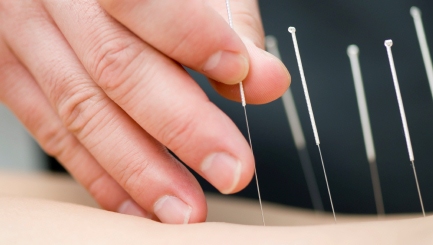
However, sometimes weight control is impossible until you first establish appetite control. If you eat more than your body needs to carry out its daily functions, your body will simply store it. However, acupuncture can help you to eat less, simply by activating points on the ear and mouth that are associated with appetite. To do this, your acupuncturist will insert very long, thin needles into your skin for approximately 30 minutes, and may place small ear magnets or ear seeds on the same points after this, to allow continuous stimulation of the point until the next acupuncture session.


Chinese herbal formulas, such as Kun Bu (kelp thallus), Lu Cha (green tea), He Ye (lotus leaf) and Hai Zao (seaweed) can be used to help you burn excess fat in the body. However, whilst these herbs can give your results a much-needed boost, that doesn’t mean you can sit on the sofa and drink green tea all day – you still have to exercise! Pick an activity you like and will stick to, especially if you are just not a gym person. Try walking, jogging, dance classes, yoga, swimming, squash, tennis – the world is your oyster! And, if you can’t stick it out alone, you can always get a buddy to join you.


How Can Herbs And Acupuncture Help You Lose Weight?