Showing posts with label traditional chinese. Show all posts

In the West, we think we know all about vitamins, minerals, fats and carbohydrates—so why aren’t we healthy? One way back to nutritional wellness can be found in the East Asian tradition, which has been taking care of wellbeing through food for thousands of years. Therefore, we turned to complementary wellness expert Mika Ono, author of Ancient Wisdom, Modern Kitchen: Recipes from the East, for her Eastern healthy eating tips.


1. Balance Is Beautiful: According to Ono, ‘In the West, we can be found casually eliminating whole food groups, say fats or carbohydrates, or trying to exist on a single type of food (the grapefruit diet, anyone?). That’s an anathema in the East, where we’re advised to pursue balance in our bodies and in our minds by eating a variety of foods to maintain health. No single ingredient or kind of ingredient is vilified or consumed to excess. As one Chinese proverb says, “Sour, sweet, bitter, pungent: all must be tasted.” Food is also used to bring balance between the individual and his or her natural cycles and parts of the environment. Particular foods are thought to counteract an individual’s personal tendency toward, say, restlessness or fatigue, and different choices are recommended for different seasons.


2. Take Your Temperature: ‘Are you the kind of person who runs cold?’ asks Ono. ‘Or do you tend to feel hot? What is the weather like outside? According to the East Asian tradition, the answers to these questions can help guide your healthiest food choices. In the interest of balance, traditional Chinese medicine advises people who tend to run cold to gravitate towards “warm” foods and spices. This refers not only to the food’s physical temperature, but also to its effects on the body (think of breaking a sweat when you eat a curry). On the warmer end of the spectrum are foods and herbs such as ginger, chili peppers, cinnamon, turmeric, nutmeg, green onions, and walnuts. Warm foods are also especially appropriate in the winter or an unusually cold day.  Similarly, people who tend to run hot or who are in a hot environment are advised to consume more cool foods (think of the tingly cool sensation you experience when consuming a mint beverage). In addition to mint, cool foods and herbs include citrus, tofu, milk, lettuce, celery, cucumber and tomato.’


3. Colour Counts: Ono notes, ‘In the world of natural foods, traditional Chinese medicine teaches us to try to consume foods of various colours—purple eggplant, red tomatoes, green spinach, black sea vegetables, white garlic and yellow squash, for example—to fortify different parts of our bodies and to balance each other’s beneficial properties. By paying attention to this rainbow of hues, Chinese food therapy transforms what we in the West often lump into a few categories, say “fruits” and “vegetables,” into patterns more complex and inviting. Interestingly, scientific studies have related phytochemicals in coloured plant foods to their healthful effects. For example, red tomatoes, peppers and watermelon contain lycopene (linked to cancer prevention); orange and yellow fruits such as squash, carrots and apricots possess beta carotene (which may reduce the risk of cancer and heart disease); and white garlic and onions contain a number of sulphides (which may possess anti-bacterial, anti-cancer and immune enhancing qualities).’


4. Raw Might Not Be Better: ‘In our society where over-processed foodstuff is encountered at every turn, members of the raw food movement need to be applauded for getting back to basics,’ says Ono. ‘However, assuming that you are selecting natural, mostly organic foods to begin with, traditional Chinese medicine would recommend a different approach in the kitchen. According to this tradition, cold, raw food such as salads are particularly hard on the digestion and should be eaten in moderation.’

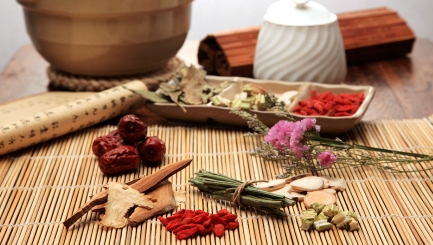
If you want to improve your chances of getting pregnant, it’s important to look after your wellness and wellbeing. As well as all the traditional, mainstream ways, you should look to gain an all-natural boost from the plethora of treatments and tips available under the discipline of Traditional Chinese Medicine.


At a recent fertility seminar held in New York City, many natural fertility specialists highlighted the importance that Traditional Chinese Medicine and other mind/body techniques can have on a woman’s chances of having a baby.


For example, traditional Chinese Medicine can help to improve blood flow to the reproductive area. It is thought that a stressful lifestyle can remove blood flow away from the reproductive organs, funnelling it instead to the legs and arms as part of the body’s ‘fight or flight’ response to danger. To change this, a course of acupuncture can help to redirect the blood flow back to the reproductive organs. You could also try focused relaxation (such as mentally going to your internal ‘happy place’), or a session of de-stressing yoga, or even a massage.


Hormones also play a big role in conception. When your hormones are all out of kilter, it can make it much tougher to conceive. Stress is often the cause of hormonal imbalance too, especially as so many women have high –stress lifestyles. Stress can cause increased production of the hormone prolactin, which may then impede ovulation. As well as cutting down on the stress in your life, there are some herbs that can be useful to fertility. You would also benefit hugely from eating a healthy, balanced diet and taking plenty of exercise. All of this will help to bring your body’s hormones back into balance, hopefully helping you to conceive successfully in the future.

Prostate cancer is a sexual health issue that can negatively impact all areas of your wellbeing. According to recent projections from the American Cancer Society, of the 232,090 new cases to be diagnosed, about 30,350 men will die from prostate cancer. This is why it’s so important to get tested early and often, and find the right treatment.


According to Licensed Acupuncturist Dr. Mao Shing Ni, PhD, who has diplomas in Chinese Herbology and Anti-Ageing Wellness, ‘If you are a man over the age of 40 and prostate cancer runs in your family, it is extremely advisable to monitor your Prostate Specific Antigen (PSA) levels. A PSA blood test measures the level of a protein released by prostate cells. Recent experts state that if a PSA level is 2.5 or higher, it reveals the possibility of prostate growth (hyperplasia), but it does not always mean that cancer is present. Since PSA levels may fluctuate with infection and lab errors, usually more than one test over a period of time is done to confirm your PSA level. Digital Rectal Exam (DRE) and ultrasound are other ways to evaluate the prostate. However, only biopsies can truly determine whether the growth in the prostate is benign or malignant.’


So what exactly is your prostate, and why does it become more likely to be damaged as you age? ‘The prostate gland lies at the base of the bladder surrounding the urethra (urinary tract from bladder to penis),’ Dr. Mao explains. ‘During ejaculation, the prostate secretes a fluid that combines with the seminal fluid in order to prevent infection in the urethra while protecting and invigorating sperm. Due to the ageing process, the prostate naturally enlarges as hormones change and weaken after the age of 40. The swelling of the prostate puts pressure against the bladder and urethra, thereby affecting the smooth flow of urine. Abnormal patterns of urination such as higher frequency at night, burning sensation, difficulty, blockage and dribbling are common symptoms and signs of prostate enlargement.’


But why are we asking a Traditional Chinese Medicine specialist about prostate cancer? Dr. Mao notes, ‘TCM associates hyperplasia of the prostate with damp heat and kidney deficiency. After the age of 40, one’s vital energy in the kidney system decreases, resulting in the disturbance of sex hormones. This process also decreases one’s sexual energy, which affects the function of the prostate and the circulation in this region. Throughout the ages, in order to compensate for the decline of prostate function, men in China have used regular acupuncture treatments to improve the circulation and energy in the prostate.’


Dr. Mao continues, ‘To enhance the effect of acupuncture, they have also used Chinese herbs such as Poly Goni He Shou Wu, in traditional, custom herbal formulas to replenish the kidney essence. In fact, at Tao of Wellness, we have had many successful cases of normalising elevated PSA levels in patients with prostate conditions. Kidney essence nurtures the prostate. As the prostate is revitalised, it is now capable of self-regulating toward normal functioning and maintaining a balance of growth and non-growth. This is the balancing property of Chinese medicine.’


Dr. Mao adds, ‘TCM nutrition encourages men to eat more nuts, seeds, pumpkin, mushroom and berries to help nourish their prostate. Managing stress, regular exercise and massaging the prostate are also vital to help maintain prostate health. Besides Chinese and western herbs such as saw palmetto, there are many delicious foods that you can eat to help maintain a healthy prostate. Regular consumption of foods that contain lycopene (a prostate protective antioxidant) is highly recommended.’

Traditional Chinese Medicine is a complementary form of medical treatment that is quite different to Western medicine. In Western medicine, any problems with your wellness and wellbeing are typically treated with prescription medication, with perhaps a healthy dose of chicken noodle soup on the side, whereas in traditional Chinese medicine, a treatment plan can include various therapies including qi gong, massage therapy and moxibustion.


The most common type of treatment plan is a combination of herbal medicine and acupuncture, and this is used to treat a very wide variety of ailments.


Traditional Chinese Medicine, like Western medicine, covers every different aspect of health, with anything from allergic reactions, to insomnia to a common cold being covered by the wide range of treatment options. If you are interested in trying Chinese medicine, however, you would be well advised to go and see a Chinese healthcare practitioner. Medical advice found in articles on the internet cannot be a safe substitution for the guidance of an educated and experienced professional.


Many people who suffer with allergies turn to traditional Chinese medicine. These allergies can be to anything at all in the environment, from animal hair to peanuts, and some experts in Chinese medicine claim that the therapies can cure these sensitivities.


Arthritis is another one that is a prime target for Chinese medicine. Whilst Western treatments tend to focus on dulling the symptoms of this painful disease, Chinese medicine claims to offer a cure, by eliminating the actual cause of the arthritis.


Even the common cold isn’t left out when it comes to traditional Chinese medicine. Instead of chicken noodle soup, however, the Chinese turn to foods such as miso soup with ginger and spring onions to help cure this ailment and get you back to full strength.

No matter how old you are or what level of activity you do, the chances are that your wellness and wellbeing will be affected by some form of pain during your lifetime. Traditional Chinese Medicine is a complementary therapy that is designed to help ease your discomfort, whether you’re suffering from knee pain, sciatica or menstrual pain.


There are several Chinese pain relief medications, with varying functions, indications and dosages. These remedies have already stood the test of time and are based on traditional formulas that date back for thousands of years.


Traumatic injuries can include things like bruising and swelling. These occur when an area of the body experiences trauma of some sort, whether that be a direct contact with an object, a fall, a sprain or something of this ilk.


The Chinese herb Chin Too Tieh Shang Wan (also known as chin koo dyeh shahng wahn) is known in English as the Muscles and Bones Injury Pill (which, let’s face it, is a little easier for Westerners to say!). It is used in cases where traumatic injuries have occurred, such as sprains, swelling and bruising. The pill helps to get the blood moving and also reduces swelling and internal bleeding, plus of course relieves the pain that is usually resultant from such an injury.


Chin Koo Tieh Shang Wan is the main pill that is used in these types of circumstance. The chief herb that makes up the formula for this pill is Panax pseudoginseng (san qi) which is also an active ingredient in the pill Yunnan Pai Yao. Chin Koo also contains the ingredient myrrh and frankincense, two better-known herbs that are used to increase circulation and reduce pain levels.


These herbs have been used as an incense, too, for many thousands of years. They are also available as essential oils, and these work to stimulate the circulation of blood.

Figures from the National Institute of Child Health and Human Development show that the current estimated cases of autism are around one in every 1,000 and one in 500. Some scaremongers claim that vaccines are responsible for these high levels of autism, but there has never been any established link between vaccines and autism. There is also growing concern that autism may be caused by toxins and pollution in the environment. Another school of thought is that nutrition may contribute towards autism, as well as viral infections, antibiotics and other minor factors.


Although people talk about children ‘developing’ autism, some new research coming out of the Autism Society of America suggests that there may be a genetic link, and that the disorder is actually present at birth. The symptoms of autism normally appear by the time the child is three, and it is then that a formal diagnosis can be made. Autism is difficult to diagnose, however, as there are so many different factors and characteristics, such as social communication problems, language problems and difficulties with cognition.


In the Western sense, autism does not exist in traditional Chinese medicine. It is instead classified as the ‘Syndrome of 5 Delays’. These delays are categorised as walking, standing, teeth eruption, hair growth and speech. Based on the yin and yang theory, traditional Chinese medicine treats the problem within the framework of rebalancing the energy.


Western medicine rates the brain as being the most important part of the human physique, whereas Chinese medicine views the body and mind as being joined, as part of a circular system which includes the organs and the central nervous system. . The Chinese medicine system sees balance as the key to achieving wellness and wellbeing. The complementary system sees the organs as being a vital part of this balance.

The problem with the term “complementary wellness” is that it implies a certain “add-on” element to health practices; sure, they may help, but only on top of proper Western medicine. However, there are several ways in which the Eastern view on medicine is completely different to the way that, here in the UK, we look at the subjects of health and wellbeing. This is certainly the case when it comes to Traditional Chinese Medicine (TCM).


According to the tradition, diseases and unbalances within your body are connected to its energetic patterns and features. In most cases, a disease is seen as directly related to a disturbance in one of your vital organs. A traditional Chinese doctor will take a holistic approach to diagnosis, taking into account every aspect of you as a person. This means analysing your emotional patterns, activity levels, nutritional intake and lifestyle. As you can see, there’s no such thing as a “one-size-fits-all” treatment in Oriental Medicine.


The same can be said of Chinese Dietary therapy; everyone is different, and so in order to use nutrition to restore your wellness, your TCM doctor will have to look at your specific condition and constitution in order to determine the foods that will work the most effectively. Whereas a Western doctor or wellness expert will evaluate foods for proteins, calories, carbohydrates, vitamins, and other nutritional contents, in TCM takes this one step further; analysing the energetic properties of food like energy, flavour and movement.


Chinese Dietary therapy is seen as the primary solution for disease prevention, as well as restoring your body’s vitality and general wellbeing. However, while TCM principles are based on the inner workings of individuals, there are a few basic Eastern principles and recommendations that you can apply to your lifestyle, no matter who you are:


1. When possible, eat local and organic food.


2. Eat according to your constitution, i.e. don’t eat really cold foods if you’re always cold.


3. Avoid processed foods and try to eat foods in their whole form.


4. Don’t deprive yourself of a nice treat, but try to maintain a healthy wholesome diet most of the time.


chinese medicine2A new study confirms what the Chinese have known for centuries – their traditional herbal remedies are an effective way to treat diabetes. The Australian study has revealed that combining Chinese medication with conventional drugs made the prescribed medication work better.


Researchers from the University of Queensland carried out a controlled clinical trial involving 800 adults diagnosed with type 2 diabetes – this is the type of diabetes in which the body cannot produce any or enough insulin to turn sugar from food into essential glucose for cells.


The participants in the study were split into two groups. The first were given the anti-diabetic drug Glibenclamide on its own with the second prescribed Glibenclamide alongside traditional Chinese medicine. The study’s findings revealed that patients given the combined medication were more than a third less likely to experience dangerously low levels of blood sugar – known as hypoglycaemia – than the patients given Glibenclamide on its own.


The participants receiving Chinese herbal medicine also showed fewer symptoms associated with diabetes, such as hunger, palpitation and fatigue, according to the research, which was published in the journal PLOS ONE.


The Queensland research was prompted by the lack of scientific understanding and relevant data in the western world relating to the efficacy and safety of traditional Chinese medicine. The study concluded that more research is required into how Chinese medicine can reduce hypoglycaemia but the results of the Australian study suggest that the traditional remedies could be put to work immediately to treat diabetes.


In developing countries, diabetes – and in particular, type 2 diabetes – is fast becoming an epidemic, fuelled by the rise in obesity.


Traditional Chinese Medicine Proven to Treat Diabetes