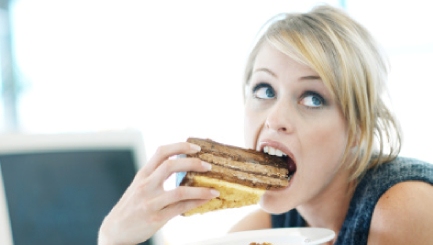
Showing posts with label overeating. Show all posts


In a rare condition, a 55 year old woman recently stated that she needs to follow a strict diet throughout the day as she has no control over what she eats at night. Lesley Cusack says that she can only determine what she’s eaten by the packets and empty containers the following morning. This rare form of sleep-walking, known as Sleep Related Eating Disorder or SRED, means that your body switches off at night. Cusack says that she has tried to use alarms to wake her up, but that she simply ignores them in her sleep – her body only allows her to eat. At first, she was only aware of night terrors, but this quickly developed into an eating disorder which has left her feeling embarrassed and guilty of everything she’s eaten the night before.Of course, such a condition can cause severe weight gain and makes dieting difficult – no matter how controlled you are during the day, your body doesn’t follow regimes at night. It also means that food might not be your only problem – Cusack says that she’s been known to eat paint, Vaseline, cough syrup and soap powder, among others that she’s not sure of. The condition comes with other symptoms, such as stomach cramps, extreme feelings of guilt and, of course, disturbed nights.


Most benign sleep walking disorders start in childhood, but disappear in adulthood, however around one percent of adults continue to have symptoms. Factors which are known to fragment sleep include snoring, an uncomfortable environment and restless legs – general stress may increase the risk of complex sleep disorders. You may find that medication can help you to sleep more soundly and reduce the risk of sleep walking conditions developing – speak to your GP who can advise you further.


Rare Disorder Causes You to Overeat in Your Sleep

The word ‘addiction’ was once reserved for the hardest and most dangerous of substances – mainly class A drugs or at least those that were illegal. It would typically elicit an image of a person in a helpless and deplorable state of existence.


Psychologists have since been testing whether this should really be our overriding definition or whether there is actually sometime of addiction in some of the things that we take for granted. For example, they found examples of Internet addiction, gambling addictions and addictions to pornography and sex. Some experts have even discovered that the same portion of the brain that’s affected by addiction is affected when a person eats. This has led them to believe that an addiction to food could be possible.


There is something of an issue with this idea. We all know that food is a necessity for survival, and while the stomach can send signals to the brain that it is becoming full, the brain doesn’t know how to send signals to know that it has had too many harmful substances, such as alcohol, cocaine, heroin or other drugs.


While the psychology community continues to dispute and argue over this area of addiction, a newly revised version of the Diagnostic and Statistical Manual of Mental Disorders will include binge-eating disorder as a new form of addiction.


Addiction can be defined as the continued or compulsive use of a substance, despite negative or harmful consequences. Those who do not believe in the concept of a ‘food addiction’ rightly insist that food is a biological need and does not qualify when typical addictive behaviours are considered.


Can You Really Get Addicted to Food?

Want to Gain Weight Don’t OvereatIf you want to stay healthy and slim one of the most important things to avoid doing is overeating. Of course that’s easier said than done, so here’s five tips that will help you out.


Avoiding bingeing


It might seem obvious if you’re trying to avoid overeating but bingeing is a very bad idea. Sometimes eating too quickly means you don’t feel full, but because you’re enjoying the food you carry on anyway. The best advice is to slow down and chew your food properly. Chewing aids digestions and it makes you feel fuller. Bingeing will leave you feeling bloated after a little while, chewing will keep things slow and will let you know when you’re full.


Don’t drink too much alcohol


Drinking alcohol is a bad move if you’re trying to avoid overeating. Drinking alcohol can make you dehydrated which is a signal that is easy to mistake for hunger. It doesn’t take long to reach for snacks once you’ve had a drink or two, so cut out the alcohol to avoid eating extra food.


Choose a smaller plate


It has been shown in multiple scientific studies that if you have a bigger plate you are likely to eat more food. This seems to be a psychological effect that tells your brain that a plate needs to be full. Having a smaller plate will limit your opportunities to overeat.


Choose vitamin-rich food


Food that has plenty of vitamins and minerals fills you up and keeps you feeling fuller for longer. Dark green vegetables, salad and turkey meat are all great low-calorie options that provide you with plenty of nutrients.


Resist your sugar temptations


Everyone loves a sugary treat and often it can be difficult to say no when we are presented with the opportunity to indulge. But eating sugar sets you to be very hungry much sooner than you would with other foods.


Five Ways To Stop Yourself Overeating

Nothing beats a good night’s sleep. Without it, you can feel tired, irritable and even depressed, but a new study has shown that getting insufficient sleep doesn’t just affect your energy levels and emotional wellbeing, but also your food choices.


According to the study’s researchers, as an adult, if you increase the amount of sleep you get, you could better look after your wellness during the day because the right amounts of sleep could mean that you reduce the amount of food you consume. The team of experts also found that this health concern is gender-dependent, as short sleep affects your hunger differently depending on if you’re a man or a woman.


The study’s principal investigator, Marie-Pierre St-Onge, PhD, FAHA, said, ‘Restricting sleep in healthy, normal weight participants has limited effects on metabolic risk factors and may affect food intake regulating hormones differently in men and women.’ She also commented that, ‘We were surprised by the lack of a significant effect of sleep on glucose and insulin, leptin, and sex differences in the hunger-stimulating hormone ghrelin and the satiety hormone GLP-1.’


For the study, which was published in the journal SLEEP, 27 normal weight men and women, aged 30 to 45, provided fasting blood draws, and were studied under two sleep conditions: short (four hours) or habitual (nine hours). The researchers tracked the participants sleep duration, glucose dysregulation, and hormonal regulation of appetite, and the results were that short sleep increased total ghrelin levels in men but not in women, and it reduced GLP-1 levels in women but not in men.


This a sex difference, which has not been reported before, suggests that if you’re a man, you are more susceptible to overeat during short sleep if you have an increased appetite, whereas it is more related to reduced feelings of fullness in women. St-Onge explained, ‘our results point to the complexity of the relationship between sleep duration and energy balance regulation. The state of energy balance, whether someone is in a period of weight loss or weight gain, may be critical in the metabolic and hormonal responses to sleep restriction.’


So far, this is the largest controlled clinical investigation of the effects of sleep reduction on hormonal regulation of food intake that there has ever been. The researchers concluded by saying that their results support a causal role of sleep duration on energy intake and weight control.


Researchers Say Get Plenty Of Sleep And You Won’t Overeat!