Showing posts with label Bee Venom. Show all posts

Everyone avoids bee stings, but you may be doing more harm than good to your wellbeing in the process. This is according to a new trend in complementary wellness, in which patients in China are swarming to acupuncture clinics to be given bee stings to treat or ward off life-threatening illness. At bee acupuncturist Wang Menglin’s clinic in Beijing, more than 27,000 people have undergone the painful technique, which can involve dozens of punctures per session. Wang makes his living from believers in the concept of bee acupuncture, but there is no orthodox medical evidence that bee venom is effective against illness. Aside from potentially preventing allergic reactions to the stings themselves, rationalist websites in the West describe so-called ‘apitherapy’ as ‘quackery’. So is bee acupuncture worth the pain?


At his facility on the outskirts of the capital, Wang detailed the process of bee acupuncture: ‘We hold the bee, put it on a point on the body, hold its head, and pinch it until the sting needle emerges.’ The imported Italian variety of bee that Wang uses dies when it stings, but Wang asserts that the bee’s life is not given up in vain. ‘We’ve treated patients with dozens of diseases, from arthritis to cancer, all with positive results,’ he comments, adding that bee stings can be used to treat ‘most common diseases of the lower limbs.’ However, the US-based website sciencebasedmedicine.org paints a different picture. According to the site, such claims of panaceas and cure-alls are ‘always a red flag for quackery’. Speaking on apitherapy – or treatment with bee products – the site stated, ‘there is no scientific evidence to support its use.’


And yet the therapy, and other potentially flawed methods used within Traditional Chinese Medicine (TCM) remain popular in China. Most hospitals in China have traditional medicine treatments available, and the lucrative field produced goods worth 516 billion yuan (approximately £50.5 billion) in 2012. the National Bureau of Statistics points out that this production from the TCM industry in China accounted for more than 31% of the country’s total medicine output that year. Maybe individuals are seeing benefits that are yet to emerge in scientific studies, so what about case studies and testimonies of people who have had the treatment?


One of Wang’s apitherapy patients recalls that doctors gave him little over a year to live following his lung and brain cancer diagnosis, but he now believes he has almost doubled his life expectancy, thanks to the power of bee stings. He noted, ‘From last year up until now, I think I’m getting much stronger.’ However, the American Cancer Society makes clear, ‘There have been no clinical studies in humans showing that bee venom or other honeybee products are effective in preventing or treating cancer. Relying on this type of treatment alone and avoiding or delaying conventional medical care for cancer may have serious health consequences.’


The American Cancer Society does allow, however, that there is a Koranic reference to the medicinal properties of the liquid produced by bees. Moreover, the first Holy Roman Emperor Charlemagne (742-814) was thought to have been treated with bee stings. And bee stings are not just an ancient or far eastern thing; in the West bee stings have also been used by sufferers of multiple sclerosis (MS), which is an often disabling disease that attacks the central nervous system. That said, on the website of the National Multiple Sclerosis Society, it is written that, ‘In spite of long-standing claims about the possible benefits of bee venom for people with MS, a 24-week randomised study showed no reduction in disease activity, disability, or fatigue, and no improvement in quality of life.’

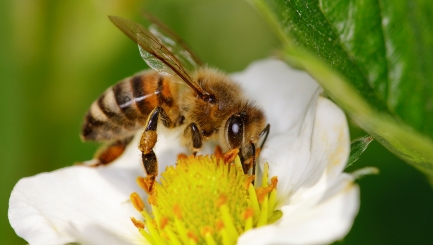
These days, it seems that people will try almost anything to improve their anti-ageing wellness, even to the tune of a bird poo facial (yes, people smear that on their faces). In fact, it was recently rumoured that even Kate Middleton owes the wellbeing of that flawless skin to bee venom, but is that as weird as it gets? Nope! Let’s check out some of the bizarre things people will do in the name of health, wellness and beauty.


1. Placenta masks – Although it seems like something you’d never like to admit to, Jennifer Lopez once admitted to being a fan of anti-ageing placenta face masks, on TV! The placenta is taken after live human births or from other mammals, such as pigs, sheep, or goats, and turned into a freeze-dried, sterilized powder which often gets used after a laser treatment or exfoliation. According to dermatologist Dr Howard Lancer, ‘It’s full of proteins and enzymes, a freeze-dried cellular harvest.’


2. Vitamin IV Drips –Simon Cowell swears by IV drips of nutrient infusions, made up of B12, magnesium, and vitamin C. He recently commented, ‘When you have it done, it’s an incredibly warm feeling. You feel all the vitamins going through you. It’s indescribable but very calming, and then it gives you energy for a good few days afterwards.’ However, Charles A. Bollman, MD, who stopped offering these beauty treatments at his practice about four years ago, notes that IV drips aren’t really that effective and ‘are expensive and take 45 minutes, twice a week.’


3. Vampire Face Lifts – Here’s one for all the Twilight fans out there: vampire face lifts use blood to keep you forever young. Dr Lancer explains, ‘Plasma is used in a purified form to be injected into the skin of the person that donated the blood.’ However, Jeffrey M. Kenkel, MD, professor and vice chairman of the department of plastic surgery at the University of Texas Southwestern Medical Centre, warns, ‘It’s hard to justify the cost for what we know about it scientifically,’ as clinical studies haven’t followed patients for long enough after treatment.


However, before you inject your face with bee venom or pile on the placenta, a little cautionary note: Don’t try any of these treatments at home without first consulting your GP. Dr Kenkel advises, ‘From a safety and effectiveness standpoint, patients need to ask their doctors whether there’s any good science behind the cosmetic procedures they want to try. I love it when patients ask me a lot of questions, because once we’re done, I know that they are well informed.’

For “The Invisible Woman”, a writer who blogs for The Guardian, anti-ageing isn’t so much a matter of your wellness as it is “cobblers”. ‘Admittedly, I wouldn’t mind losing the slightly droopy jawline but y’know, that’s what happens, in real life, when you’re 57,’ she says. ‘I’m basically a pretty typical middle-ager with slightly complicated feelings about getting older and a healthy scepticism about the more extravagant claims beaming in from the Final Frontier of the age and beauty industry.’


So when The Invisible Woman went to Britain’s first ever anti-ageing fair, the Anti-Ageing, Health and Beauty Show, she didn’t hold back on her scepticism as to the efficacy of some of the products. ‘Give snail slime a posh pot, a vaguely scientific name and a hefty price tag and Bob’s your uncle: a new chemical-free all-natural “anti-ageing” wonder product,’ she scoffs. ‘Hah! As if. Do you detect a degree of snook cocking here? Don’t you think somebody needs to?’


She adds, ‘There were quite a few three-figure products in the National Hall at Olympia and yet when you start to ask questions about research and testing and, you know, how the stuff actually works you’re likely to get waffle – waffle and buzz-words. Take bee venom “botox” serum. “Poor bees,” I thought, “are any harmed in the bee-milking process, or whatever indignity is forced upon them?” It’s only what we’re all thinking and bees are a finite resource after all. The response was vague, unsatisfactory and not particularly convincing.’


However, The Invisible Woman was surprised to find that not all of the products were three-figure marketing ploys. She explains that ‘there was, surprisingly (to me anyway) a lot that was good and useful. There were yoga classes, brow bars, cosmetics companies and an interesting schedule of mini-talks on stages at either end of the hall and I enjoyed trying out new stuff, gadgets and gizmos. There was a champagne bar and a chocolate shop (someone’s done their research) and there were collagen shots coming at you from all directions.’


She concludes, ‘In the end I stayed three hours longer than I meant to and spent most of my time discussing diet and supplements and taking good care of our whole selves with a number of very good people who were knowledgeable on their subject and didn’t try to bluff their way through with a load of flannel…The atmosphere at this first “anti-ageing” exhibition (there is another planned) was of lively curiosity and I thoroughly enjoyed talking to the women, and men, who had come along because they were interested in making the best of themselves as they are, not least because they had their BS detectors switched on and in magnificent working order.’

honeybeeIt has already been suggested that bee venom can give your anti-ageing wellness a buzz, but a new study has found that one of its components can also improve your sexual health. According to the US researchers, who reported their work in Antiviral Therapy, an element of bee venom, when packaged in super-tiny blobs, can knock out HIV.


Testing the delivery system in lab dishes, the researchers from Washington University in St. Louis report that these nanoparticles improve HIV wellness by attaching to and destroying the virus without damaging cells. This has offered an early glimpse of a technology that might one day prevent HIV infection in some people, albeit with a lot more testing. Antony Gomes, a physiologist at the University of Calcutta in India, who studies the medical use of venoms, commented, ‘This is definitely a novel approach. There are very few reports available on venom-based treatment against viruses. This type of research has the potential to proceed further for product development.’


Lead by physician-researcher Joshua Hood, the researchers found that the toxin-carrying nanoparticles preferentially locked onto HIV and delivered their venom component; a toxin called melittin. This poked holes in HIV’s protective protein coat, which meant that the amounts of the virus were sharply reduced. The researchers then went on to test the venom on healthy human cells obtained from vaginal walls, because this is often where HIV enters the body in women.


Because the nanoparticles holding the melittin come equipped with protective structures attached on their outsides, the researchers discovered that the vaginal cells were largely unaffected by the treatment, in spite of the fact that melittin is known to degrade cell membranes. The protective structures act as bumpers to prevent the nanoparticles — and, more importantly, the toxin they carry — from contacting the cell membrane. This, along with a specific lock-and-key structure that fits onto the virus’s protein shell, allows the nanoparticle to bind to the much smaller virus.


However, Bruno Sarmento, a biotechnology researcher at the University of Porto, in Portugal, noted much still needs to be mastered if this is to become a working drug. ‘Particular attention and care must be taken in order to reproduce nanoparticles in a robust and homogeneous way to guarantee uniformity of the drug,’ he said, adding that a vaginal gel using this technology would need adhesive properties to guarantee that the nanoparticles remain in the right place, and that the virus is prevented from entering the bloodstream.


Researchers Unveil Bee Venom as Unlikely Fighter of HIV