Showing posts with label Cycling. Show all posts


Mountain biking is a great form of exercise, and few things beat taking a ride during the beautiful fall months. However, it can also be very dangerous. That is why it is so important that you take the proper precautions while out cycling. When you employ the tactics outlined below, you will stay safe and secure while out exploring your environment.


Wear Protective Gear


For starters, when out mountain biking, you should always make sure that you are wearing a helmet. In fact, while this sounds fairly a fairly simplistic tip, it’s one people often avoid. This is actually the most important step you can take, as you need to protect your head in the case that you take any falls while out and about. Similar to this, you should also gear up in any other appropriate safety equipment like body armor, padded shorts, elbow pads, shin pads, ankle protection, medical bracelets for kids, wrist protection and bike gloves. With this protection gear on, you will be better preparing your body for any conditions that may come your way while out biking. The fall months in particular can make navigating trails more difficult as leaves and fallen tree branches often impede trail access.


Know Your Limits


Another important safety tip is that you do not overdo what you are capable of. You must never ride beyond your abilities. If there is a section of the trail you are on that seems too complicated for your skill set, skip over it. It is perfectly fine to walk some parts of trail. Do not ever let anyone pressure you into attempting parts of the course that you do not feel comfortable with. In other words, know your limits here and stick to them.


Use the Right Equipment


Similar to all this, you should also use the appropriate mountain biking equipment when it comes to the type of track you are cycling over. That is because some bikes are just better suited for different situations. Even if you see tire tracks on the terrain, that does not mean it is okay for your particular bike to be going over it. Those tire tracks could belong to someone whose bicycle is specifically designed for that type of terrain, so don’t let that base your decision on what types of track to attempt.


Don’t Speed


While you are mountain biking, it may be tempting to speed away. However, under no circumstances should you do that. Always makes sure that your speed stays at a safe level. That’s because you never know what type of obstacles or changes in trail conditions will be up ahead. For instance, you may come across a small lake, tree branches or even an animal. If that happens and you are speeding down the trail, you could end up being in a serious accident that leaves you injured.


Stick to a Trail You Know


You should also know the trail that you are going on, this way you can expected the unexpected. That is why it is very unsafe to try out an unfamiliar trail, especially alone. However, if you must for whatever reason, make sure to go at a slower speed so that you can fully prepare for anything that could throw you off completely.


Work Your Way Up to the More Difficult Tasks


Finally, the phrase “go big or go home” is completely irrelevant here. In order to stay safe while mountain biking, you have to work your way up to doing any stunts or crazy obstacles. If you want to work on your skills, practice mountain biking in areas that are far less complicated. Also, make sure at that time you are going at a slow speed, so that if anything happens, it won’t be as serious.


While mountain biking can be an exhilarating experience, it can also be very dangerous. That is why you must employ safety measures every step of the way. By doing everything from wearing a helmet to riding at a slow speed, you are protecting yourself from encountering the unthinkable. Now go out and enjoy the beautiful autumn weather!


Author Bio


Karleia is a freelance blogger and outdoor enthusiast. Away from the office she enjoys spending time with her two daughters.

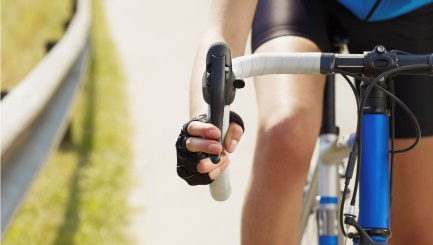
They say that cycling is good for your wellbeing, and for environmental wellness. Not only do you get fitter; you also reduce your carbon footprint – win-win. However, when you’re cycling behind a fuming bus or taxi, and inhale that diesel-esque aroma, do you ever wonder: is this really the “wellness” option?


According to environmental wellness expert Peter Walker, ‘Cycling does remain many, many times better for your health than not cycling, even factoring in exposure to pollution and the risk of accident. What’s more surprising is that on two wheels you might even be exposed to less of the smelly stuff than those using other forms of transport. The more full answer is, inevitably, slightly mixed. Air pollution is a very real danger, with even conservative estimates gauging it prematurely kills almost 30,000 Britons a year, making it the most deadly public health hazard apart from smoking. And yet, experts say, there are a range of measures cyclists can take to limit their exposure, from taking quieter back routes, to cycling at particular times of the day. There’s even an argument that pollution masks, once common in cities like London but little seen these days, might help.’


With urban areas, the real villain behind the peril is the diesel engine, says Gary Fuller, an expert on air quality at King’s College London. Unlike petrol vehicles, which have somewhat cleaned up their emissions in recent years, diesels still emit lots of black carbon. Fuller warns, ‘People should be worrying about diesel traffic and particle exposure, and also about nitrogen dioxide. The thing about these is they haven’t really improved in urban areas for the last decade or so. We’ve managed to clean up air pollution emissions in terms of nitrogen dioxide from petrol cars. Buy a petrol car today and it will emit about four-tenths as much in oxides as a car you bought 10 or 12 years ago. But for diesels, despite the fact we have ever-tighter emissions standards the conditions in which the emissions test is performed doesn’t really reflect the real world.’


If you’re reading this and thinking: “That’s OK, I don’t live in London,” Fuller points out that diesel pollution is an issue for cyclists everywhere. ‘It’s not just a London problem,’ he says. ‘You can go out into apparently rural areas with an A-road travelling through a small village and you can find EU limits being exceeded.’ So, as a cyclist, what can you do to limit your exposure? Walker notes, ‘One simple idea is to take quieter back streets, where the concentration of some pollutants can be considerably lower than on main roads. As an illustration, the London Air website provides a live map of smog levels in the capital, showing how so much of it is clustered around big roads.’


It might also be a good idea to consider when you cycle, Fuller advises, as ozone can peak in the afternoon – especially in the summer – and this can have a significant effect on your lung wellness. ‘Ozone follows a distinct diurnal pattern,’ Fuller explains. ‘It’s always greatest in the mid to late afternoon. It’s not so much for urban cyclists but if you’re looking to have a day out on the bike maybe think about travelling in the morning and then the evening, avoiding the mid afternoon on the hottest, most polluted days. That can reduce your exposure quite a lot.’ King’s College London academic, Ian Mudway, an expert on respiratory toxicology, points to research that shows masks can filter out some smog. He comments, ‘I might say that people who wear them probably overestimate the benefits that they’re delivering, but I think there’s enough in that paper to say they make some difference.’

If you’ve ever mentioned to a friend that you wanted to lose weight, the chances are that they’ve tried to drag you along to a spin class. Maybe you’re even one of those fitness fanatics that are addicted to the act of indoor cycling, booking back-to-back classes to get your weekly fix (yes, people can – and do – do that). While it’s hard to get yourself motivated for such a vigorous workout, you can see why people do it; it gets results. Spin classes help you to torch calories, shredding about 400 to 600 in the space of 45 minutes. But, if indoor-cycling is so beneficial to your wellbeing, why are some spinsters cutting down, or cutting it out completely?


The first thing to remember with spin classes is that their effectiveness depend on the kind of body you already have; pear shapes may find that indoor-cycling doesn’t give you the body you want. According to celebrity trainer David Kirsch, ‘If you have a predisposition to bulking in your lower half, Spinning can make your butt and quads bigger.’ Rebecca Battista, an associate professor of exercise science at Appalachian State University, adds, ‘Those are the muscles you’re using. Some cyclists get really big thighs.’


If you’re thinking that the recent trend of aqua cycling, in which you bike in the pool, can minimise that thigh-impact, think again. James Pivarnik, a professor of kinesiology at Michigan State University, comments it’s too soon to tell.  However, that’s not to say that these wellness experts are anti-spinning. Still, Kirsch rations his clients’ classes, letting an apple-shaped woman with skinny legs, for example, go once a week, but forbidding fashion models to ride at all. Michael Ciardulli Jr., the bodyworker of choice for New York’s A-listers, is another expert who warns clients against indoor-cycling, as he notes that ‘To be lean, you need to lengthen the musculature; cycling can shorten it.’


It’s not just the experts that are concerned about the impacts of indoor-cycling, but the spinning enthusiasts themselves. Take Sarah (not her real name), a 30-year-old publicist who used to love running until she fell head over heels for indoor cycling. However, this budding romance quickly fell flat when Sarah realised that, after a few months, ‘my butt felt and looked padded and my legs felt heavy.’ Sarah had to give up spinning classes and all kinds of exercise for a month in order to let her muscles atrophy. Now, she has taken up yoga and enthuses, ‘My lean, shapely runner’s legs are back.’


Then you have Holly (again, not her real name), a 49-year-old who was even an indoor-cycling instructor, loving the exercise so much that she taught eight classes a week. Yet Holly had to give up on her teaching schedule when she noticed that her jeans were getting ‘really tight, uncomfortable in the butt and thighs.’ In Holly’s case, dropping cycling and picking up barre classes and running resulted in a weight loss of 10 pounds, but not everyone agrees that spinning classes are to blame for the bottom-half bulge.


Jennifer Sage, founder of the Indoor Cycling Association, is, as you might expect, still extolling the benefits of spin classes. While Sage allows that results like Sarah’s and Holly’s aren’t exactly surprising, she is adamant that these are two cases in a whole wealth of other, more positive stories. ‘Very few people will get larger legs,’ from cycling, says Sage, adding that, if they do, ‘they could probably stand to lose a little bit of the body fat on top.’ Ouch. Pivarnik is less harsh in his explanation: ‘Not everybody responds to the same exercise stimuli the same way.’ So, I guess you have to just try it for yourself, and see if indoor-cycling works for you.

diabetes cyclingGestational diabetes is a type of diabetes that affects pregnant women and puts both them and their children at risk of developing type 2 diabetes in later life. Diabetes is caused when there is too much glucose (sugar) in the blood. During pregnancy, women will naturally have higher levels of glucose and their body cannot produce enough insulin to process the glucose and turn it into cells.


In pregnancy, the condition is controlled through diet and exercise, although some women with particularly severe diabetes may need medication. Now an Australian research team is testing whether regular exercise can actually prevent gestational diabetes from re-occurring.


Once a woman has had gestational diabetes in one pregnancy, she is at a higher risk of developing it in subsequent pregnancies. Their babies are not only at risk of going on to develop type 2 diabetes but also of becoming obese


The Perth study involves 200 high-risk women taking part in a stationary cycling program run by the University of Western Australia’s School of Women’s and Infants’ Health and the School of Sports Science, Exercise and Health. The study follows previous research that identified stationary cycling as providing the maximum preventative benefit for high-risk women.


In the Cycle Study, the 200 participants are provided with a stationary bike for the home with a visit three times a week by a personal trainer who will supervise the training. Over a 14-week period, the research team will compare their rates of gestational diabetes with the rates of participants in a control group who are doing normal levels of physical activity.


The researchers will also measure the effect of this exercise on other health outcomes such as weight gain, mobility, sleep quality, fitness and psychological wellbeing.


Is Cycling the Key to Preventing Gestational Diabetes?