Showing posts with label Waste. Show all posts


Written by Jenny Catton


They say that it is better give than to receive. And it’s true, most people love choosing gifts for their loved ones. But no matter how well intentioned, sadly many gifts don’t ever get used by the recipient. Whether it’s clothes in the wrong size, gadgets they don’t need, or fragrances that they don’t like, many gifts just end up stuck at the back of cupboards. Not only is this a waste of money but is also a waste of the earth’s resources.


So next time you’re choosing a gift for a loved one, think creatively and have fun choosing unusual gifts that are more environmentally friendly. Ideas include:


  • Hunt out unusual one-off gifts at flea markets or charity shops

  • Whether you’re into knitting, cooking or soap making, try making homemade gifts for friends and family

  • If you’re on a tight budget, give your time rather than a physical present. You can create a handmade voucher that promises for example to babysit for 4 hours or help with the gardening once a month

  • Check your book shelves and DVD collections for books and films that you think others will enjoy. If they’ve only been read or watched once, chances are they are still in excellent condition and will make a great gift

  • Make a donation to your friend’s favourite charity instead of giving a gift. From helping endangered animals to providing clean water for overseas communities, there are a wide range of gift ideas available


For charitable gift ideas visit: www.oxfam.org.uk


Written by Jenny Catton


According to the ‘Love Food Hate Waste’ campaign, UK households throw away a staggering 7.2 million tonnes of food every year. And if this food wasn’t wasted, the CO2 reduction would be the equivalent of taking 1 in 5 cars off the road.


With a little planning, you can avoid food waste. Not only will you be helping the environment but you could also save on your shopping bills. Here are some ideas:


Plan Your Meals


Decide what meals you are going to cook before doing the weekly shop. This way you can choose ingredients that can be used in several recipes.


Get Creative


It’s easy to look in the fridge after a long day at work and be stuck for inspiration. But take a little time to think about how random ingredients could be combined. For example, left over potatoes, an onion and a box of eggs could be made into a delicious Spanish omelette.


Take Left-overs to Work


If you have a tendency to cook portions that are too big, don’t throw the left-overs away. Pop them in a box and take them to work for lunch the next day. Just make sure you store the food correctly to avoid food poisoning.


Nothing’s Too Small


You might think that a tiny piece of leftover cheese, a few peas or one solitary tomato isn’t worth keeping. But little odds and ends like these are perfect for adding to homemade curries, stews or pizzas.


For more inspiration, visit: http://www.lovefoodhatewaste.com/


The post Put a Stop to Food Waste appeared first on .


Written by Jenny Catton


According to the ‘Love Food Hate Waste’ campaign, UK households throw away a staggering 7.2 million tonnes of food every year. And if this food wasn’t wasted, the CO2 reduction would be the equivalent of taking 1 in 5 cars off the road.


With a little planning, you can avoid food waste. Not only will you be helping the environment but you could also save on your shopping bills. Here are some ideas:


Plan Your Meals


Decide what meals you are going to cook before doing the weekly shop. This way you can choose ingredients that can be used in several recipes.


Get Creative


It’s easy to look in the fridge after a long day at work and be stuck for inspiration. But take a little time to think about how random ingredients could be combined. For example, left over potatoes, an onion and a box of eggs could be made into a delicious Spanish omelette.


Take Left-overs to Work


If you have a tendency to cook portions that are too big, don’t throw the left-overs away. Pop them in a box and take them to work for lunch the next day. Just make sure you store the food correctly to avoid food poisoning.


Nothing’s Too Small


You might think that a tiny piece of leftover cheese, a few peas or one solitary tomato isn’t worth keeping. But little odds and ends like these are perfect for adding to homemade curries, stews or pizzas.


For more inspiration, visit: http://www.lovefoodhatewaste.com/


In a nutshell, all that food going to waste from your restaurant is actually money. It’s not just garbage; it’s your investment going “sour”. Like you’re being mugged, but you’re doing it to yourself – in small doses, taking those crisp notes from your pocket and throwing them in a bin. Like tissues. It probably doesn’t end there. Oh, no. Then you’re going to pay some waste disposal company to get rid of your money, in garbage form, of course.


These days there are many good ways to reduce and control your food waste, or to call it by its proper name – Waste food management.


One thing I would start with is garbage audit. What it basically means is that you physically monitor your waste, food or otherwise. The benefits are pretty obvious, actually. When you know what food is being thrown away as leftover majority, you can, let’s say order those items in smaller quantities next time you talk to your suppliers.


That actually gave an introduction to my next recommendation –precycling. Precycling is a process of reducing waste at the source. In another words, there isn’t a better way of reducing waste than not making any in the first place!


Moving on, recycling itself. For a successful recycling campaign, there should be a separate, designated bin for recyclables. As well as compost and landfill, for that matter. You could build a system that would ensure that the most of the restaurant waste is recyclable or reusable. That would include packaging like cardboard, recyclable plastics and so on.


Composting is another great idea that could remove great amounts of waste. It is a process of separating your organic scraps, mainly vegetable trimmings (because they are preferred) from the rest of the food like dairy products, meat or oils. There are websites these days that can help you find a local composter, if you’re in a need of one.


How about changing the menu? You’ve pinpointed the items on your menu that are always, or in most cases, coming back with leftovers. So, besides having smaller portions (as another advice), you can freeze leftover, UNSERVED food and make it next day specials, for example. That would only involve ingredients that could endure the freezing process and be reused when thawed, naturally.  So, freezing surplus food is always a better option than throwing it away, but you have to make sure to abide by the health regulations and safety issues when freezing leftover food. Freezers offer the opportunity to preserve food. Use it! Vacuum pack it and freeze it for later, certainly a good way to minimize food waste.


Educating your staff is a very important part in this money – saving endeavor. They should go through a complete, thorough program so they could be properly guided and educated. Use multilingual signs, for example, if your employees are diverse nationalities.


Here’s another little “trick” you could use. Serve your portions in a smaller plate on top of a bigger plate. That way your portions will look bigger, if you decide to go with the option of reducing your portions. It will probably require an investment of a new set of plates, but in the long run, an investment that can worth your while.


Fruits and vegetables are very sensitive food. Make sure to properly store them for then you’ll extend their time of use. That would involve appropriate containers and storing temperatures. Follow those simple guidelines, and a little bit will go a long way.


Some people have even done the math and came to conclusion that 4-10% of food purchases wind up as waste never reaching the consumer. Be wise with your food management plan, rethink, reuse and buy recycled when possible.


Author bio:


Daniel Hirsch is a successful entrepreneur running a few successful companies, founder of icemachineclearance.com and several other thriving businesses. You can connect with Daniel on Google+.


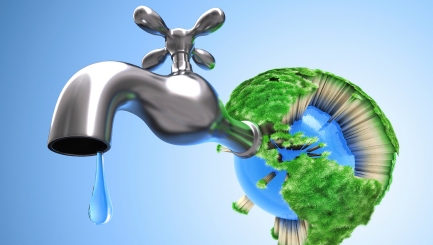
How often do you see drinking fountains anymore? That once ubiquitous, and free, source of H2O now seems quaint, while bottled water is everywhere you look. In 2006, we consumed over eight billion gallons of the stuff, which was a 10% increase from 2005. That said, more and more of us are starting to question bottled water’s impact on our wellbeing, as well as the effect it has on the environmental wellness.


According to Jenny Powers of the NRDC, ‘Bottled water is an increasingly growing business, and with that comes a whole lot of environmental impact that can be avoided by a turn of the faucet.’ Environmental wellness expert Janet Majeski Jemmott explains, ‘While we struggle to cut down on our consumption of fossil fuels, bottled water increases them. Virgin petroleum is used to make PET, and the more bottles we use, the more virgin petroleum will be needed to create new bottles. Fossil fuels are burned to fill the bottles and distribute them.’ Then you have Stephen Kay of IBWA, who points out that this impact is not just limited to bottled water, but also juices, fizzy drinks and other beverages packed in plastic.


Majeski Jemmott notes, ‘Some brands of water come from islands and countries thousands of miles away, and shipping bottles can cause carbon pollution to spill into the water and spew into the air.’ Todd Jarvis, PhD, associate director of the Institute for Water and Watersheds at OregonStateUniversity, adds that there’s also the waste of the water itself. Jarvis has calculated that, across the globe, it takes about 72 billion gallons of water a year just to make the empty bottles. Therefore, it’s no wonder that David B. Goldstein, co-director of NRDC’s energy program in San Francisco, warns, ‘Bottled water has a significant environmental burden.’ But the environmental toll of water doesn’t end there. Let’s look at a few shocking statistics:


1. Oil: Majeski Jemmott comments, ‘The energy used each year making the bottles needed to meet the demand for bottled water in the United States is equivalent to more than 17 million barrels of oil. That’s enough to fuel over one million cars for a year.’


2. Energy: ‘If water and soft drink bottlers had used 10% recycled materials in their plastic bottles in 2004, they would have saved the equivalent of 72 million gallons of gasoline,’ says Majeski Jemmott. ‘If they had used 25%, they would have saved enough energy to electrify more than 680,000 homes for a year.’


3. Waste: Majeski Jemmott details, ‘In 2003, the California Department of Conservation estimated that roughly three million water bottles are trashed every day in that state. At this rate, by 2013 the amount of unrecycled bottles will be enough to create a two-lane highway that stretches the state’s entire coast.’


4. Greenhouse Gas: ‘In 2004 the recycling rate for all beverage containers was 33.5%,’ Majeski Jemmott states. ‘If it reached 80%, the reduction of greenhouse gas emissions would be the equivalent of removing 2.4 million cars from the road for a year.’


5. Long-Term Impact: Majeski Jemmott notes, ‘That bottle that takes just three minutes to drink can take up to a thousand years to biodegrade.’


So why do we keep on drinking it? ‘A big part of the appeal of bottled water is those convenient single-serving bottles,’ says Majeski Jemmott. ‘Yet fewer than 20% of them ever make it to a second life, according to estimates by the Container Recycling Institute. The rest are tossed onto beaches and roadsides and into landfills, where they could be around for a thousand years. Nestlé Waters, Dasani and other bottlers are trying to be greener, introducing lighter-weight bottles that use up to 30 percent less plastic. It’s a good start, but more needs to be done—by them, and by us.’

The Department for the Environment, Food and Rural Affairs (Defra) may be concerned with environmental wellness, but the corporate wellness of one of its agencies is under threat due to an upcoming review of its funding. Wrap (Waste and Resources Action Programme) is the agency charged with tackling Britain’s growing food waste, but potential cuts to their funding has caused critics to question Defra’s attempt to make Britain a zero-waste economy.


In the past four years, Wrap has already had its budget halved, with £26m to work with in 2013/14. However, the agency now faces the prospect of further cuts, which has confused critics as to the government’s aims towards Britain’s waste, as well as its belief in Wrap as an effective organisation. According to Mary Creagh MP, the shadow Environment Secretary, ‘The Government has sung the praises of Wrap while slashing their funding by nearly half. Defra has failed to show leadership and has nearly trebled the amount of waste it sends to landfill in just two years.’


Andrew George, who chairs the Liberal Democrats’ Defra policy committee, added, ‘If we’re moving to a zero-waste to landfill economy, then the Government has to place any policy reviews in that context. If the Government thinks Wrap is ineffective and it wants to deploy its resources more effectively, it needs to say so.’ However, the statistics show that wrap is, by all appearances, getting the job done. The amount of food and drink thrown away by families has dropped by 13% since Wrap started targeting household waste, lowering from 8.3 million tons in 2007 to 7.2 million tons in 2010.


So if the agency has helped Britain to eliminate 1.1 million tons of waste, why do Wrap face funding cuts? A Defra spokesman noted, ‘It is normal good practice for departments to review the role of arm’s-length bodies.’ However, critics are concerned that the squeeze is politically motivated, as the review follows a clash between Eric Pickles, the Communities Secretary, and Wrap over council bin collections.


Yet campaigners are calling on the Government to shift the focus from household to industry waste. According to a report by the lobby group This Is Rubbish, the amount of food wasted in the supply chain is a grey area because many businesses do not carry out audits. The organisation has said that food waste audits need to become mandatory, and the government should set more ambitious reduction targets.


What a Waste: Potential Wrap Budget Cuts Confuses Critics

save waterIt has been well-known for a long time that China has a problem with air pollution. The country’s dynamic rise in industrial sites has been the culprit and it is a common experience to see the larger cities covered in a thick smog.


However, it has not been so well publicised that China also has a huge problem with water pollution – and it’s only getting worse. The country’s underground water is being contaminated at a very quick pace. And accusations that the problem is caused by deep well factory pollution have only raised the profile of the story and made people panic.


A number of Chinese social activists are accusing factories in Weifang City of illegally dumping their chemical waste into 1,000 metre deep wells. To look into the matter, the Shandong provincial environment authorities had sent 320 officers to over 700 suspected factories to investigate if there is a problem. However, 24 hours later the regulators announced that none of the factories had been discharging waste into the wells.


Nevertheless, the problem of water pollution is easy for all to see and the public seem unconvinced that large companies aren’t to blame. The Chinese authorities have argued that while there have been incidents of companies dumping chemical waste into deep wells, this is not one of the major problems causing pollution.


They have confirmed that the most common practice is to discharge chemicals into rivers and lakes, and these chemicals eventually filter through to the ground aquifer. This is the major cause of the contamination of ground water, specifically in the north of the country.


A recent survey suggested that around 90 percent of China’s underground water supply is not safe to drink, and that 60 percent of it is badly polluted. China must now look into ways to reverse the trend and ensure that water is safe for people to use.


China’s Underground Water Pollution Problems

You know that plastics are not-so-fantastic for your environmental wellness, but did you know that electrical products are also a major issue? In the UK alone, it’s estimated that we produce over one million tonnes of electrical products every year, thanks, in part, to the technology revolution that swept over the world in the last 30 years.


You didn’t really know much about recycling in the UK until its first dedicated recycling centre opened in 2001, but in the 12 years that followed only 20% of all electrical appliances were recycled, and the remaining 80% were shipped over to China for disposal. For the wellbeing of current and future generations, more needs to be done – especially as the growing population means staggering implications of where this might lead.


Most technology waste is processed in developing countries, and very harmful substances and contaminants like lead, beryllium and cadmium causes a large risk to the workers who sort and dismantle these items. These harmful substances also find their way into the water system as they break down and create heavy metals when they are place in landfills.


When it comes to precious metals, you’ve probably seen the series of adverts encouraging you to turn in your gold for cash, and this is because gold has never been higher in value and its current price is around £1000 per ounce, though silver is worth a lesser £30 per ounce. 320 tons of gold and over 7000 tons of silver are used in personal computers, mobile phones, tablet computers and other electrical products every year because gold never corrodes and is highly conductive of electricity. Manufacturers also use other precious metals such as copper, titanium and aluminium in technology production, and mining these metals from goods worldwide could generate over 20 billion dollars a year, or £12 billion.


To encourage recycling and reduce goods production, all resellers and manufacturers in European Union have to follow legislation in the WEEE directive in order to place electrical products on the market. Products that conform to WEEE, or Waste Electrical and Electronic Equipment have the wheelie bin logo displayed on it.


Other solutions would be to produce less or keep things for longer and repair them; instead of having the mindset that ‘new is always better’ which is perpetuated by marketing. Manufacturers could also make their products upgradeable instead of changing their whole form, so technology and styles could be updated without scrapping and wasting entire products.


Electric Environment