Showing posts with label fat loss. Show all posts

If you’re considering a new fitness regime, whether you want to lose weight or gain muscle, you might be considering protein supplements. However, it’s better for your wellbeing to choose food choices of protein as your primary source of the nutrient. That said, not all food sources of protein are created equal; you need to choose better quality protein foods so that you can maximize the fat burning and muscle-building processes. Without doing so, you are robbing your body of the many benefits protein has to offer. All of the hard exercise you do is going to waste if you aren’t consuming an optimal amount of protein. Your body has to work hard to digest protein, and the energy cost of digesting, absorbing, and metabolising this nutrient leads to great fat loss. So which food sources of protein are the best, and why? Let’s take a look at your new, smarter way of eating protein:


The reason why it’s better to eat animal sources of protein is because they have a high content of a branched-chain amino acid known as leucine. Leucine is actually a strong indicator of the quality of the protein you’re consuming because it helps to raise muscle anabolism. Why is this important? When your muscle anabolism is raised, your body is put in a better position to induce the growth of your muscle tissues. The more muscle tissue your body has, the higher your metabolic rate is going to be. This helps you to lose fat way after you’ve finished working out.


According to study by Acheson et al., different protein sources can be used to modulate your metabolism and, as a result, your energy balance. For the study, “Protein choices targeting thermogenesis and metabolism,” the researchers looked at how four isocaloric (same calorie) meals eaten at different times had an impact on 23 sedentary, lean, healthy men and women. The investigators took data before meals, and 5.5 hours after consumption. While three of the meals contained 50% protein (whey, casein, or soy), 40% carbohydrate, and 10% fat, the fourth meal consisted of 95.5% carbohydrates.


The results of the study revealed that the thermic effect (or energy cost) was greater after the whey than after the casein and soy meals. However, the thermic effect was still much greater after the whey, casein, and soy meals (all three proteins) than after the high carbohydrate meal, meaning that any of these proteins can have a decent thermic effect. The study results also showed that total fat oxidation tended to be greater after the whey meal than after the soy meal, and was greater after the whey and soy meals than after the high carbohydrate meal. This was because the high leucine content in the whey protein meal activated MPS in all participants and was more energy costly, leading to greater fat loss.


So which protein foods should you eat? The protein foods you should be aiming for are those that are packed with leucine. This means eating animal products such as beef, chicken and pork, as well as eggs, fish, whey, casein, and milk. These foods should help you get over the leucine threshold and activate MPS, depending on the amount you’re consuming. However, in order to elicit a greater thermic response, your best bet is whey as opposed to either casein or soy. That said, don’t make the mistake of thinking soy and casein are pointless; if your body can’t tolerate whey for whatever reason, the research shows that soy and casein still have a decent thermic effect.

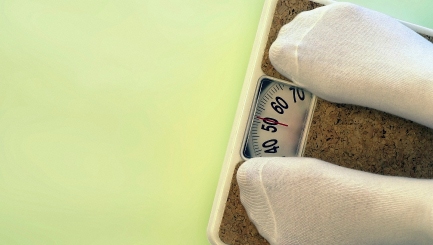
We all have that fantasy – apart from that one about Ryan Gosling – to lose weight and have better wellness minus the effort of dieting, exercise or surgery. While this seems like nothing more than a pipe dream, your effort-free, weight loss wellbeing may me just around the corner, thanks to a revolutionary treatment called Vanquish that even usually sceptical doctors are excited about.


According to David McDaniel, a leading researcher and an assistant professor of clinical dermatology at Eastern Virginia Medical School, who has been conducting an independent study on Vanquish, ‘I’ve seen a lot of fat-removal techniques; some procedures are painful or take too long; some are effective only on small areas of body fat that can be sucked up through a small vacuum. Vanquish addresses all those problems. It can treat a large surface area uniformly. It’s fast, efficient, and comfortable…I’ve been doing this for 30 years, and most advances have been little baby steps. This is a big technological breakthrough.’


The treatment, which will become usable by an elite corps of doctor’s offices this month, targets your fat cells through radio frequency waves which heat the cells and kill them off without damaging your muscles or skin. As the applicator is suspended over your abdomen about an inch above your skin, Vanquish is non-invasive, and there’s no downtime or ridiculous price tag. In the US, a 30-minute session goes for $450 (£282) to $800 (£501), and it’s recommended that you have four sessions. During these sessions, you may feel a warming sensation, but there should be no pain. The only risk to watch out for is a hot spot near to a bone, which your technician can readjust and fix without a problem.


The FDA approved Vanquish earlier this year for deep-tissue heating, which can help your muscles to recover and heal. However, the FDA is awaiting further results before giving the device the seal of approval for fat reduction. Still, the current research is impressive; animal studies have shown that Vanquish killed 60% of the fat cells treated with it, and a subsequent Prague study done on people with love handles showed visible results within two weeks, revealing an average loss in waist circumference of 2.23 inches after two months. Robert Weiss, an associate professor of dermatology at Johns Hopkins Hospital and the lead researcher of the aforementioned animal study, notes, ‘This new technique is a real game changer—it’s the safest, easiest way yet to remove fat.’


‘As the panels heat up, the radio frequency waves they transmit differentiate between fat cells (which are denser and hold less water) and skin and muscle cells,’ Weiss explains. ‘The heat causes cell death in the fat cells; some die instantly, some in a matter of weeks…I’ve seen patients lose several inches after four treatments without changing their diets.’ McDaniel continues, ‘The results are not as dramatic as liposuction, which can remove large volumes of fat,’ adding that Vanquish does not carry the risks of surgery or anaesthesia. However, Adam Kolker, a plastic surgeon and an associate clinical professor of surgery at Mount Sinai Hospital’s Icahn School of Medicine in New York, asserts, ‘I’ve seen a lot of people who’ve undergone various non-surgical fat-reduction treatments who were underwhelmed with the results.’


Still, Kolker allows, ‘It may be appropriate for small-scale changes as long as the patient’s expectations are well managed.’ Nonetheless, Patricia Wexler, a dermatologist to New York’s A-list, believes that expectations will be high for the procedure. She points out, ‘It’s great for women who are in good shape, within 5 to 10% of their ideal weight, and don’t want to go through surgery. A lot of women exercise and don’t have a lot of weight to lose, but they’ve had children or seen changes in their core for other reasons.’

whats stopping your weightloss goalOne of the most common desires of anyone in the UK is to lose some weight. But long-term, sustainable weight loss is not an easy thing to accomplish and despite the myriad of diets and plans available many people struggle to complete their goals.


However, the Changi Sports Medicine Centre and the Singapore Sports Medicine Centre have managed to help more than 2,000 patients lose weight effectively through an evidence-based, multidisciplinary programme. They did it using three fundamental principles, and here they are:


Principle One: You need an energy deficit


In order to lose weight, you need to be burning off more energy than you consume. The body will only burn off fat when it does not have readily available energy from food or drinks that you have consumed. For example, if you consume 2,000 calories in a day and burn off 3,000 calories, the body will burn off the 2,000 calories from what you have consumed first, before taking the extra 1,000 calories from your body’s energy store.


Principle Two: Constant energy deficit leads to fat loss


The important aspect of the energy deficit is to sustain it. If you can sustain an energy deficit of 1,000 calories every day that leads to 7,000 calories being burned away from your body every week. And 7,000 calories amounts to nearly 1kg of fat.


Principle Three: The energy deficit needs to be appropriate


If you’re going to lose weight effectively and safely, your energy deficit needs to be at a sensible level; burning off too much fat too quickly can be very damaging for your health. The American College of Sports Medicine recommends a daily energy deficit of 500 to 1,000 calories per day for weight loss. Much more than 1,000 calories of energy deficit per day and the body can start burning away muscle, and that is very dangerous.


The Three Important Principles For Weight Loss