Showing posts with label skills. Show all posts


Written by Jenny Catton


Stuck in a rut at work? Want to build your confidence and learn new skills? Interested in new career opportunities? If so, volunteering could be just what you are looking for.


Volunteering can be a great way to boost your career prospects. Whether you want to learn new skills to help you bag your next promotion or would like to find out about different careers without leaving your current job, volunteering provides a whole host of opportunities.


From helping on an archaeological dig to working back stage at your local theatre, there are hundreds of volunteering options within a wide range of different industries.


Think about the sort of thing you would like to learn. For example, if you’ve always wanted to work with animals but aren’t sure if it’s the career for you, find out if any local animal sanctuaries are looking for volunteers. It’s a great way to find out what you really enjoy and what is involved without going through the upheaval of a complete career change.


Volunteering is also a great way to boost your CV. For instance, if you are applying for management roles but don’t have any management career experience, you might find it hard to progress. But if you can find relevant volunteering opportunities, you might be able to refine your management skills in other ways and can then include this experience on your CV.


To find out more about volunteering opportunities in your area, search online or visit: www.do-it.org.uk

 

Professional athletes are, understandably, the best in the world at their chosen sport. But in order to reach that level of knowledge and expertise, they needed to practice from a young age. Ability and work ethic are two essential factors in success but there’s another factor that often gets overlooked, despite being such a crucial element of any success story – confidence. Without confidence, no amount of skill will get you to where you want to be. When you feel confident, you feel capable and able to play harder and better. But just as those athletes needed to improve their skills from a young age, they also needed to improve their confidence. This is something you can encourage in your children too, so that they can grow up to be experts in their field – and confident with it, too.


Don’t fear failure


Confidence is a simple battle between faith and fear, and a lack of confidence means you’re afraid to fail. But with failure comes wisdom – we all fail at some point or another, but with that we learn how to improve and get better. Even the very best athletes miss the vital shot or make mistakes on the track that cost them the race. But if you give up just because you’ve messed up one game, you could be missing out on succeeding at so many more. The only way to get better is to keep practicing, so you can’t give up just because of a few off days.


Focus on achieving your best


The goal is to win for every athlete stepping onto the court, track or field. But the desire to win can sometimes overshadow what the main goal should be – doing your best. It’s important to remember that you won’t win every game or achieve your personal best every time you perform, but that shouldn’t stop you giving it your all. Sometimes you will be beaten by someone who simply has a better skillset or who is simply better than you; maybe you just got unlucky that day. But instead of focusing on how many times you won or lost, focus more on giving it your all and doing your best every time. That way, you can take something positive from every game, regardless of the outcome.


Trust your teammates


You don’t need to be the sole carrier of your team; you need to have faith in them that they will do their best, just as you’ll do yours. Instead of focusing on how much you need to do to win the game, have confidence that you work so well as a team. It will help you to make each other better players, and will make it easier to have faith in yourself.


Start off easy


The easiest and most effective way to improve your confidence is to begin with something easy. If you know you can shoot every hoop when you’re just a few feet from the basket, do a few of these as a warm up. If will give your ego a boost to see yourself succeeding time after time, which will give you the confidence to take a few more risks and push yourself that little bit harder during the game. Even professional athletes do it – Tiger Woods begins every practice session by making 100 three-foot putts. You don’t need to put yourself in countless scenarios where you are challenged to the absolute max – that’s what competitions are for. When you’re practicing, it’s ok to start off by making things a little easier for yourself; then you can begin in a good frame of mind and build on your skills.

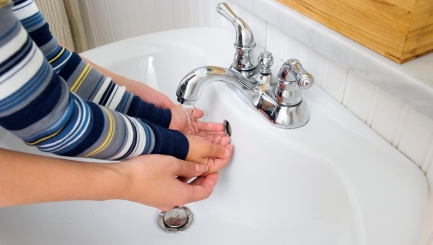
hygiene1Children who suffer from emotional problems, such as autistic spectrum disorder (ASD) suffer many detrimental effects to their wellbeing, but one less commonly known one is the effects that the disorder can have on their personal hygiene.


All children are born helpless, and it is down to their parents to care for them and look after their wellness and hygiene during their early years. Gradually, however, they learn the all-important skills of washing themselves, brushing their teeth, dressing themselves and so on. Children are often very independent, and love the feeling of being in control of these actions, taking great pride in being able to do them for themselves.


Some children with an Autistic Spectrum Disorder have more trouble with this area. Some of them can’t do it, as they lack the necessary motor skills or understanding, and some of them (seemingly) ‘won’t’ do it, as they have problems, perhaps, with sensory issues, or they are unable to grasp the social importance of why these sorts of daily chores are necessary.


In particular, children with ASD will not often simply pick up these sorts of skills through observation and mimicry, they have to be specifically taught how to manage their self-care through teaching, prompting and modeling.


This process should be started early; even though it may be far more tempting to simply do things for your child rather than take the extra time to get them to do it themselves. Fostering these sorts of habits from an early age will help them to become routine.


Identify your child’s physical or sensory needs and find a way to work around these – for example, if the texture of soap causes sensory problems for your child, consider alternatives you can try, such as only using warm water or a liquid soap. Occupational Therapy can also greatly help with these sorts of issues.


Breaking each task into manageable steps and setting up a sequence of instructions can also be helpful as this allows children to become comfortable and safe within a familiar set of steps, and breaking tasks down like this also stops them seeming so overwhelming.