Showing posts with label Child asthma. Show all posts

Why is it that some children’s asthma symptoms continue throughout their lives, while the respiratory health concern only affects the wellness of others until adolescence? Do they just grow out of it? According to Leanne Reynolds, research operations manager at Asthma UK, ‘We know that some children with asthma no longer experience symptoms when they reach adulthood, however it can be misleading to assume they have “grown out” of the condition; the underlying tendency still remains and so symptoms can still return in later life.’


However, according to a new study published in journal The Lancet Respiratory Medicine, genetic testing has the potential to predict which children will ‘grow out’ of asthma. Using data from New Zealand – in which 880 people were tracked over 38 years – US researchers have identified 15 locations in the human genome linked to asthma. As part of the study, the researchers monitored the amount of disruption to a person’s life and wellbeing caused by asthma symptoms, including time off school or work and admissions to hospital.


The results of the study revealed that children who had a higher genetic risk of asthma were 36% more likely to develop serious, life-long asthma than those with a lower risk. If your child does have a higher genetic risk of asthma, he or she is also more likely to be admitted to hospital with asthma symptoms, and to develop atopic or allergic asthma, according to the study findings. The genes used to make this prediction were independent of a person’s family history of asthma.


In a statement, study leader Dan Belsky, a postdoctoral fellow from Duke University Medical Center in the US, noted, ‘Although our study revealed that genetic risks can help to predict which childhood-onset asthma cases remit and which become life-course-persistent, genetic risk prediction for asthma is still in its infancy.’ Reynolds commented, ‘This study provides valuable insights into this area, although more research is needed before these findings could be used in clinical practice. We would welcome further research into this area to expand and confirm these findings. This could mean that in the future we’re able to identify those people whose asthma will put them at greatest risk so we can ensure they get the support they need.’

In the grim swatch of winter greys, it is a genuine relief when the sun is finally out and the vivid blossom of flowers and birdsong joins it.


Those of you that suffer from asthma may feel that the alternating atmosphere of dry cold and pollen-filled spring is perhaps a little much. Everything seems to be working against you – the dry crispness of winter invites coughing fits, the windy springtime billows about pollen and the humid, wetness of autumn growing out mould spores. It may feel as if nature is working against you. It goes without saying that air pollution affects those that are lung-sensitive.


Children go through these motions perhaps a little more sensitively than adults. If they are more sensitive to the weather, what can a concerned parent do for their child?


If you are noticing certain patterns with your child’s health, then keep a diary of it – note down any effects, changes and any possible triggers. Anything you can do will be vital when discussing it with your child’s doctor. Also, make a note of what to do whenever your child suffers from an asthma attack.


Keep an eye on pollen and mould counts, as well as the extremity of the weather. If it feels like too much, limit the amount of time that your child spends outdoors.


During good weather, it’s very tempting to open your house up to soak in a little springtime atmosphere – but remember to close up your house at night so that your child isn’t exposed to nightly pollen and mould. Running the air conditioning will also help with this.


Pollen levels are highest at 10am. If you can, keep your child indoors at this time.


Although definitely not a “get-out-of-chores” card, children with asthma shouldn’t mow the lawn or rake leaves. Furthermore, they shouldn’t go near leaf-piles and freshly cut grass.


Rescue medication at all times – don’t leave home without it.


Asthma doesn’t have to be the bane of your child’s fun. With some care and consideration, asthma can be dealt with day-to-day without it taking away the pleasures of growing up.


Could A Change in Weather Affect Young Asthmatics?

Did Your Birth Choices Make Your Baby IllThe risk of childhood asthma may start before birth. This is according to researchers from Cincinnati, who showed that the wellbeing of children born to women who live in high traffic areas is at risk of developing gene “reprogramming” that starts in the womb, and this affects their lung development.


Children who are born in high traffic areas seem to be more at risk of asthma because exposure to polycyclic aromatic hydrocarbons (PAHs), byproducts of incomplete combustion from carbon-containing fuels, alters their genes. PAHs have also been linked to other wellness problems, such as increased risk of cancer, heart disease, respiratory ailments, and other inflammatory related diseases.


Published in PLoS ONE, the results may be able to help doctors predict environmentally-induced asthma resulting from exposure to pollution during pregnancy. This contributes to a growing body of evidence that demonstrates the role of epigenetics (how your genes change expression) and disease. In epigenetic studies, the focus is on how genes misbehave to cause illness, and this one explores how traffic exposure alters gene programming in the womb during foetal development, which leads to airway inflammation and asthma in childhood.


According to Shuk-mei Ho, PhD, chair of University of Cincinnati’s Department of Environmental Health, director of the Centre for Environmental Genetics (where the study was conducted) and senior author of the paper, ‘Our data support the concept that environmental exposures can interact with genes during key developmental periods to trigger disease onset later in life, and that tissues are being reprogrammed to become abnormal later.’


The gene ACSL3, which is important for normal lung development, is involved in the alteration. After measuring the white blood cell counts from the umbilical cords of 56 children living in Northern Manhattan and the South Bronx, looking for epigenetic gene alterations that occur in the womb that put children at risk for asthma before the age of five, the researchers found that exposure to PAH led to changes in ACSL3 methylation.


Study co-author, Rachel Miller, MD, director of the Columbia Centre for Children’s Environmental Health (CCCEH) asthma project commented, ‘Understanding early predictors of asthma is an important area of investigation, because they represent potential clinical targets for intervention.’ This could help researchers find ways to intervene in asthma-related child suffering from asthma, and targeting air quality could certainly be one way of decreasing the risk of childhood asthma from maternal exposure to PAH, along with a variety of other diseases.


Could Your Child’s Risk of Asthma Begin Before Birth?

Aspects Of Asthma You HadnPuerto Rico has one of the highest rates of asthma prevalence in the world, with the respiratory condition affecting the wellbeing of tens of thousands of children. In the US Caribbean territory, child wellness is nearly 300% more likely to be affected by asthma than white non-Hispanic children in the continental United States and cases of the respiratory condition have jumped in the last year.


According to the US Centres for Disease Control and Prevention, Puerto Rico, with its population of 4million, has 2.5 times the death rate stemming from asthma as the mainland. Health officials suspect that the prevalence has something to do with the island’s heavy rains that unleash millions of spores, but even Puerto Ricans living in the US have been hit hard by asthma, being 2.5 times more likely to have an asthma attack than their white counterparts, so what’s going on?


Another problem is that Albuterol, the number one inhaler medication prescribed to asthmatics to relieve sudden attacks, isn’t as effective in Puerto Rican children, compared to other ethnic groups. With this in mind, several major pharmaceutical companies are working to create another medication, but this could take years. According to Dr Esteban Gonzalez Burchard, director of the Centre for Genes, Environments & Health at the University of California, San Francisco, the challenge is that ‘Puerto Ricans are not all the same,’ but rather they ‘are racially mixed.’ He added that those with European ancestry are most at risk of developing asthma.


Despite decades of research, no one knows for certain why Puerto Ricans suffer so much from asthma. One theory is that it’s due to the volcanic ash that drifts in from nearby Montserrat, whilst others believe that the clouds of Sahara dust that blanket the city in the summer have a part to play. Or else the fungi that flourish in the tropical humidity is the culprit, which would explain why asthma rates have been particularly bad this year, as it was the wettest season on record.


‘There is nothing worse than watching a child have an asthma attack. You think they are going to die,’ said Dr. Gilberto Ramos, a professor at the graduate School of Health at the University of Puerto Rico. However, he added, ‘unfortunately, the children in Puerto Rico do have the highest rates in the world. Whether it’s more genetics or more environment, we don’t know.’


Why Have Puerto Rican Asthma Rates Left Experts Baffled?

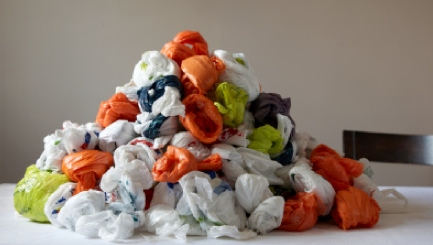
Asian Cities Begin Plastic Bag BanIf your child is exposes to a commonplace chemical early in life, they are more likely to develop asthma. This is according to a new study that found exposure of young children to bisphenol A (BPA), a common ingredient in household plastics, has been linked to the children’s later development of asthma.


Testing 568 children and their mothers in New York City, the study is the first to link early childhood exposure to with asthma, though other studies with lab mice have found a similar link. According to the team from Columbia University, the wellbeing of children with higher levels of BPA at ages 3, 5 and 7 was more at risk of developing the respiratory disease when they were between 5 and 12.


According to Kathleen Donohue, an instructor in clinical medicine at Columbia University Medical Centre and lead author of the study, ‘We saw increased risk of asthma at fairly routine, low doses of BPA.’ You can find the chemical in many household polycarbonate plastics, as well as some canned foods and beverages, paper receipts and dental sealants.


The study, which was published online in the Journal of Allergy and Clinical Immunology, has been praised by wellness experts who, for decades, have been trying to figure out why asthma have skyrocketed in children worldwide since the 1980s. A lot of researchers believe that it might have something to do with early-life exposures and changes in immune systems causing inflammation, and this study has helped that idea along.


Kim Harley, an associate professor at the University of California, Berkeley, who studies environmental chemicals and children’s health but did not participate in the new research, commented that though the research did not prove that BPA causes asthma or wheezing, ‘it’s an important study because we don’t know a lot right now about how BPA affects immune response and asthma.’ She added, ‘They measured BPA at different ages, measured asthma and wheeze at multiple points, and still found consistent associations.’


However, even though the researchers took BPA measurements at multiple times, Joe Braun, an epidemiology professor at Brown University who was not involved with the research, explained that it’s tricky to pin down exposure levels. ‘BPA has a short half life, so whatever we take in today will be gone in about 24 hours,’ he said, adding that the testing was ‘as good as we’re going to get for this type of study’ but ‘we’re still not accurately capturing exposure.’