Showing posts with label Environmental. Show all posts

These days, most people would agree that environmental wellness is important. Not only do you need to take care of your wellbeing, but that of the planet and everything and everyone in it. That said, sometimes it can be difficult knowing where to start with environmental wellness. Do you need to join some sort of organisation or get politically involved to help the planet? Of course not. You can help the world in which you live simply by leading an environmentally conscious life.


Firstly, let’s check out where you’re at with environmental wellness. Ask yourself the following questions. If the answer is “always or almost always” give yourself two points. If you answer “sometimes or occasionally” award yourself one point. If your answer is “seldom or never” give yourself no points. Answer each question as honestly as you can, and tally up your points at the end to get your environmental wellness score.


  • Do you conserve energy (i.e., switching off unused lights)?

  • Do you recycle paper, cans, and glass as much as possible?

  • Do you enjoy spending time outside in natural settings?

  • Do you avoid polluting the air, water or earth when possible?

  • Do you avoid second-hand smoke?

  • Do you consciously try to conserve fuel energy and to lessen the pollution in the atmosphere?

  • Do you limit the use of fertilisers and chemicals when managing your outdoor living space?

  • Do you avoid using aerosol sprays?

  • Do you avoid littering?

  • Do you volunteer your time for environmental conservation projects?


Score: 15 to 20 Points – Excellent strength in environmental wellness – well done!


Score:  9 to 14 Points – There is room for improvement, but you’re still putting in the effort and that’s what counts. What changes can you make to improve your score?


Score:  0 to 8 Points – So you may need a bit of help to improve your environmental wellness. Why not challenge yourself to begin making small steps toward growth here?


Whether you got 0 points or 20, we’ve got some tips to help you improve your environmental wellness:


1. Spread the word: No matter what you scored on our quiz, you can talk to people about environmental wellness. Speak to your friends and family about the importance of leading an environmentally-aware lifestyle, and get involved with your community’s recycling programmes. Try implementing a recycling programme in your home or workplace if you haven’t got one already, or make sure your existing programmes are as efficient as they can be.


2. Stop your junk mail: You receive so much unwanted junk mail every year, which wastes paper as well as being irritating. Contact the major senders of junk mail saying “take me off your list.”  Try stopjunk.com or privatecitizen.com for the major players, or contact senders individually. If you receive catalogues from shops you love, email and ask to be taken off this sending list – everything is viewable online these days anyway!


3. Snip your six-pack rings: As six-pack holders are virtually invisible underwater, it’s all-too-easy for seagulls to strangle themselves by catching their neck in a loop while another loop gets snagged on a stationary object. Make sure you snip each circle with a pair of scissors before you throw them in the recycling.


4. Don’t leave your water running: Doing the washing up with the tap running can use an average of 30 gallons of water, or three to five gallons of water per minute. The same goes for brushing your teeth, washing your car or watering your garden. Only turn the tap on when you actually need the water to run, or fill the sink or a bowl with water to minimise the damage.


You might not think environmental wellness is important compared to, say, fitness or good nutrition, but all of these elements are equally essential to your overall wellbeing. Environmental wellness, when you think about it, has far more of an impact on your health than you initially realise, because you rarely stop to consider how you feel in your environment, and how these environments may be affecting your emotional, mental and physical health.


According to Jessica Rhodes, of health and wellness website 123FeelBetter, ‘Environmental wellness does involve our connection to nature and our concern about the health of our planet, but there is much more to it than that. All the people, places and things around us make up our environment, and these things can have both direct and indirect effects on how we feel. Taking care of our home, car and work environments helps us to feel as though we are taking care of ourselves, creating spaces that we want to be in and in which we can thrive. Environmental wellness involves surrounding ourselves with supportive atmospheres which will help us feel nurtured and accomplish our goals. Appreciating nature, spending time outdoors and taking steps to care for our natural environment are also behaviours that help to build feelings of love and nurturance, and are an integral part of our overall environmental wellness.’


However, you don’t need to make big changes to make a big difference to your wellbeing; the following small steps will go a long way in enhancing your environmental wellness:


1. Spend five minutes a day cleaning: ‘In just five minutes a day, you can affect a simple but substantial change in your environment, and the way you feel about your surroundings,’ says Rhodes. ‘Wash the dishes. Do one load of laundry. Clean the toilet, but don’t worry about the rest of the bathroom. If you spend just five minutes each and every day de-cluttering or cleaning your home environment, you’ll see big changes with minimal effort, and you’ll enjoy your time at home so much more.’


2. Bring the great outdoors indoors: Rhodes explains, ‘Placing a few potted plants in your home will create a feeling of freshness and life. Surrounding yourself with living things like plants and animals helps you feel more connected to the energy of life, and caring for plants and animals helps you feel loved and nurtured as well. If you don’t think you have a green thumb, there are plenty of plants out there that require very little care.’


3. Clear your desk: Yes, environmental wellness doesn’t only apply to your home, but your workplace too. Rhodes advises, ‘Whenever you sit down at your desk to study for school or begin a work project, clear up the clutter. A few minutes spent de-cluttering and organizing your desk each time you sit down to work will help you focus on your work, find what you need and avoid frustration. This small investment of time and effort is well worth the reward of not having a big mess on your hands later.’


4. Keep some small plastic bags in your car: Rhodes instructs, ‘Each time you get out of your car at the end of the day, pick up any trash that has accumulated and throw it in the sack. Then simply take the sack in and throw it away. This is a really simple way to keep your car from getting cluttered, and it’s easy to make it part of your daily or weekly routine.’


5. Get rid of useless clutter: ‘If you haven’t used it, worn it or even touched it in a year, it’s time to get rid of it,’ Rhodes asserts. ‘Donate clothes, furniture and other durable goods to Goodwill or the Salvation Army, recycle anything else that you can and throw the rest away. If you’re not using it, it’s simply taking up space and cluttering your house.’

If someone asked you about environmental wellness, what would you think of? Is it just about saving the rainforests or stopping global warming? Put it that way, and you can be put off the idea of environmental wellness altogether. It’s so intangible; how are you going to save the entire rainforest? Luckily, the reality of environmental wellness is a lot more easy to grasp.


According to Jessica Rhodes, of health and wellness website 123FeelBetter, ‘Environmental Wellness deals with the relationship between you and your immediate environments. It also concerns your larger connection with nature and the entire planet. Keeping a clean house, maintaining home spaces that reflect who you are, taking good care of your belongings, creating a space for private time and taking steps to enjoy and care for the natural environment are all important parts of Environmental Wellness.’ While these may seem like simple and basic things, environmental wellness encompasses all of the external factors that have an impact on your overall wellbeing.


As environmental wellness means taking care of your material possessions, plants, animal companions, friends and family, and surroundings, Rhodes sets out the following activity to help you get a better grip on the concept: ‘Right now, before you have time to clean, take pictures of yourself and of your surroundings,’ she instructs. ‘Don’t be shy, capture all the wonderful grime you can. Only you will see these pictures. Don’t obsess over them, simply log them in your private journal…Whether you took pictures or not, how did this make you feel? What were the emotions that came up while doing this exercise? What were your family’s rules about cleanliness? How have they affected you?’


Once you have a good idea of your current state of environmental wellness, you can take steps to improve the world around you and, as a result, your personal sense of wellbeing:


1. Plan A Garden: If you have a little piece of unused land, or even a sunny spot by a window that you could clear out, Rhodes recommends planting something! ‘Often it is easier to take on our own land and our own responsibility than to take on the global environmental crisis,’ she explains. ‘So, in lieu of developing anxiety about the ozone layer, see if you can harvest some joy in your very own backyard.’


2. Think About Your Fruits and Vegetables: ‘Go into your fruit and vegetables and take note of where they are from,’ Rhodes advises. So often we put foods on our plates and into our bodies without really realising the journey they have taken to get there. ‘Which countries did you rely on to get your produce?’ Rhodes asks ‘Think about how long each item took to arrive on your doorstep. Write a day in the life of your mango.’


3. Go to your Local Wildlife Centre: Whether this is an official centre for wildlife or something as simple as your local park, connecting to your surroundings means actually going out and connecting to your surroundings. As Rhodes puts it: ‘You can’t promote wellness only on your computer.’ So get out there and visit the world around you. If nothing else, a bit of fresh air and exercise never hurt anyone!


4. Sign up for an Environmental Advocacy or Exploration Group: If you’ve got the environmental wellness bug, share it with others so that they can see the benefits of environmental wellness in their own lives. However, if advocacy isn’t your thing, check out a local walking group. Rhodes explains, ‘The first step in loving and taking care of the environment is to explore it.’

A new environmental agenda is picking up kudos and converts, but possibly at the expense of many traditional environmental wellness experts. Environmental modernism, as it is known, is based on the belief that technology is the solution for the planet’s wellbeing and not the problem. The agenda goes that harnessing innovation and entrepreneurship can save the planet and environmentalists who don’t buy into that are exacerbating the problem through their Arcadian sentiments.


According to Fred Pearce, author of The Land Grabbers: The New Fight over Who Owns the Earth, ‘The modernists wear their environmentalism with pride, but are pro-nuclear, pro-genetically modified crops, pro-megadams, pro-urbanization and pro-geoengineering of the planet to stave off climate change. They say they embrace these technologies not to conquer nature, like old-style 20th century modernists, but to give nature room. If we can do our business in a smaller part of the planet — through smarter, greener and more efficient technologies — then nature can have the rest…the modernists are also the proponents of rewilding, the restoration of large tracts of habitat and the reintroduction of the species that once lived there…With technology, they say, we can more painlessly usher in the return of the wild, because more land can be liberated.’


So what’s the problem, you ask? ‘This is deeply heretical for many mainstream environmentalists,’ Pearce asserts. ‘Should we condemn the modernists for hijacking and subverting environmentalism in the name of capitalist and consumerist greed? Or do we concede they may have a point. The one certainty, I think, is that we cannot ignore it. The debate has to be joined.’ One point up for discussion certainly is how to do conservation of nature. Modernists says that the existing conservation strategies we have in place simply do not work, as human activity spreads relentlessly. Therefore, we need to make more intensive use of the land we do take, so that more land can be left unfenced.


Linus Blomqvist  of the Breakthrough Institute, which is run by Ted Nordhaus and Michael Shellenberger who gained prominence a decade ago with their critique of the green movement The Death of Environmentalism, argues that even as consumption rises and the world’s population continues to grow, ‘land use can peak out in the next two decades.’ There aren’t any environmentalists who wouldn’t applaud that. However, to achieve it, Blomqvist says we require many things that they are conventionally less keen on, such as the further spread of large-scale industrial agriculture, accelerated urbanization, and a switch out of using “renewable” biological resources.


Pearce explains, ‘The modernist approach to conservation is to seek out technological substitutes for crops. We should, they say, give up cotton in favour of polyester or whatever else the chemists can come up with to clothe us. We should turn our noses up at wild fish and embrace aquaculture instead. Farmers should discard organic fertilizer in favour of chemicals.’ The question remains, then; are they right? Pearce asserts, ‘In truth, some degree of environmental modernism is part of the worldview of all but the most fundamentalist greens. Whether driving a Prius, putting solar panels on our roof, or installing a low-flush toilet, we are buying into a version of the eco-modernists’ call for environmental efficiency to be a watchword of conservation.’


However, he continues that there is much that can be criticized in the modernists’ playbook. ‘Technology often doesn’t deliver even its own prospectus,’ Pearce says. ‘Some say the Green Revolution, which doubled global food production in the late 20th century, has now stalled. And it may not just be the Green Revolution. Canadian futurologist Vaclav Smil, speaking at the Sausalito event, argued that “all the essential technologies” of modern life are at least a century old. He noted, for example, that the basic process of manufacturing nitrogen fertilizer from the air “hasn’t changed since 1894.” And if mainstream environmentalists have a weakness for Arcadian myths, then the modernist agenda too has its own blind spots and contradictions. A strict effort to rewild nature and to cut our use of nature for ecosystem services would surely rule out using forests as carbon sinks. Do the modernists really oppose that? And if they make an exception here, then where does the boundary lie?’

There has been a decade of rapid economic growth for India, but unfortunately, the country’s environmental problem is still abound. This affects the wellness and wellbeing of Indian residents in a number of ways as they are frequently exposed to serious water and air pollution.


A recent report has shown that the environmental problems do also have an effect on the economy, and that in fact environmental degradation costs India some $80 billion every year, which represents 5.7 percent of the economy.


In order to tackle this problem, more green strategies are needed to help break out of this pattern and stop the natural resource depletion in its tracks. It is thought that emission reductions could actually be achieved with minimal cost to the GDP.


The fantastic economic growth in India has allowed millions of people to emerge from poverty thanks to increased employment opportunities, but unfortunately this wonderful growth record is tempered by the degrading environment and the increased scarcity of natural resources.


A recent survey was carried out into 132 countries, with their environments being surveyed, and of these, India ranked very near the bottom at 126th position, and ranked 132nd in the ‘Air Pollution’ category, which measured effects on human health. This means that India has the worst pollution in the whole world. An additional survey of the 20 most polluted cities in the world found that 13 of these were in India, showing a serious problem with pollution in the country.


Poverty is responsible for environmental degradation to a certain extent, as degraded lands are often overused by the poor. These lands then give a lower yield, worsening the problem with poverty and thus creating a vicious cycle of environmental degradation and impoverishment.

The environmental health risks associated with plastic are not new, but there is a lot of confusion surrounding them. Many people are unsure about whether or not plastic genuinely poses a risk to their health, but the latest reports seem to indicate that there could actually be quite a strong link between plastic bottles and cancer.


According to many toxicology experts, water bottles that are made from the hard and clear kind of plastic contain a chemical called Bisphenol A, otherwise called BPA, which may be a danger to human health. Studies have been carried out on animals, showing that BPA can be absorbed into living tissues and can then increase the rate of growth of the prostate, leading to prostate cancer. In addition to this, some studies have shown an apparent link between BPA and the onset of early puberty and the development of breasts in girls. This is thought to be a risk factor in the development of breast cancer.


The FDA, Canadian government and UK government have all now banned the use of BPA in baby bottles. The National Toxicology Program has been less clear in its recommendations, first expressing concern about the use of BPA in bottles and other packaging and then later redrafting the report and changing the terminology to express ‘minimal’ concern. Some sceptics believe this is because the plastic industry is huge and that big grocery chains have also been instrumental in defending BPA as they stand to lose personal profits if it is banned.


Other studies carried out recently have also linked BPA to a plethora of other serious health problems, including to abnormalities with liver enzymes, and to a link between poor cardiovascular health and BPA.


BPA water bottles are now available, and the general recommendation is to replace all your bottles with the new versions.

This month, the print industry celebrated some of the best journalism of the last year at the Canon Media Awards in Auckland, New Zealand. While news stories were celebrated across a range of categories, environmental wellness reporting was particularly prominent.


According to SMC Manager Peter Griffin, who attended the awards and was a judge on the best use of emerging technology and best multimedia storytelling categories, ‘What was great this year is that the awards were really opened up to outside parties, so you had the likes of ASB and Business New Zealand hosting tables. I got the feeling that although everyone acknowledges the industry faces major challenges adapting its business models to the digital world, there’s a lot less angst about making the transition.’


A speech from Sir Julian Smith was a highlight of the awards, as the Otago Daily Times publisher called for the industry to keep in mind the fundamentals of journalism. Sir Smith, the Allied Press chairman and managing director, explained that the written word is what sells, good journalism is paramount, the industry needs its readers more than ever and freedom of the press needs to be fought for.


But what of the winners? Tauranga-based New Zealand Herald reporter Jamie Morton won the best newspaper reporter in the science and environment category, for a series of features. These included a detailed look at New Zealand’s freshwater ways and rivers suffering from high levels of pollution and moves to clean them up, an extensive package looking at the twin eruptions of Mt Tongariro and White Island and how the volcanic landscape can violently change without warning at any moment, and an examination of the environmental impact of the MV Rena grounding and the ongoing clean-up effort.


Meanwhile, Herald on Sunday writer Russell Blackstock picked up the award in the Best newspaper feature writer in the science and environment category. This was based on his portfolio of work, which included an insight feature looking at New Zealand’s volatile volcanoes, coverage of a Herald on Sunday-endorsed campaign to clean up beaches and a more in-depth look at the state of New Zealand’s beaches and water quality at some favourite holiday spots.

China and five other countries were added to the Arctic council as official observers recently, helping to expand the focus the world has on the arctic due to climate change. The council consists of eight Arctic countries and has recently granted observer status to South Korea, Singapore, Italy, Japan and India, as well as China. The biodiversity assessment states that climate change is the biggest threat to the Arctic, driving many migrations of trees, mammals and fish northward. The council signed a second legally binding pact which was negotiated under its auspices and released assessments of ocean acidification and biodiversity, which could be issues that need to be in the forefront of national leaders’ minds. Experts have stated that the temperatures in the Arctic are increasing more than twice as fast as elsewhere in the world, meaning that many habitats and species are under threat. Last year, Arctic ice reached record lows, with some scientists predicting an ice-free summer by mid-century unless major global changes occur.


Environmentalists are frustrated, however, by the council’s pace which is not fast enough, considering such issues including ecosystem-based management and control of the short-lived climate warmers like black carbon. This pollutant is the result of incomplete combustion of fossil fuels, biomass and biofuels. While there are efforts being made for such issues, they don’t go far enough to make an impact. An agreement on black carbon has been under consideration previously, but it was shelved due to concern from countries with older industrial systems. Global warming is an issue which is becoming increasingly pressing, as the impact it has on the planet could be devastating. Though small efforts, if made by enough people, could help, it’s vital that countries make more of an effort on a larger scale to improve the prospects for areas of the world such as the Arctic.

In the grim swatch of winter greys, it is a genuine relief when the sun is finally out and the vivid blossom of flowers and birdsong joins it.


Those of you that suffer from asthma may feel that the alternating atmosphere of dry cold and pollen-filled spring is perhaps a little much. Everything seems to be working against you – the dry crispness of winter invites coughing fits, the windy springtime billows about pollen and the humid, wetness of autumn growing out mould spores. It may feel as if nature is working against you. It goes without saying that air pollution affects those that are lung-sensitive.


Children go through these motions perhaps a little more sensitively than adults. If they are more sensitive to the weather, what can a concerned parent do for their child?


If you are noticing certain patterns with your child’s health, then keep a diary of it – note down any effects, changes and any possible triggers. Anything you can do will be vital when discussing it with your child’s doctor. Also, make a note of what to do whenever your child suffers from an asthma attack.


Keep an eye on pollen and mould counts, as well as the extremity of the weather. If it feels like too much, limit the amount of time that your child spends outdoors.


During good weather, it’s very tempting to open your house up to soak in a little springtime atmosphere – but remember to close up your house at night so that your child isn’t exposed to nightly pollen and mould. Running the air conditioning will also help with this.


Pollen levels are highest at 10am. If you can, keep your child indoors at this time.


Although definitely not a “get-out-of-chores” card, children with asthma shouldn’t mow the lawn or rake leaves. Furthermore, they shouldn’t go near leaf-piles and freshly cut grass.


Rescue medication at all times – don’t leave home without it.


Asthma doesn’t have to be the bane of your child’s fun. With some care and consideration, asthma can be dealt with day-to-day without it taking away the pleasures of growing up.


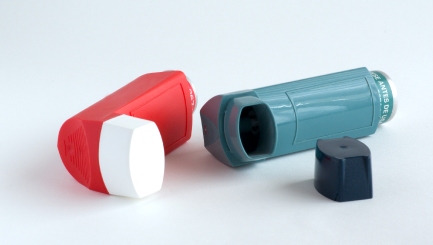
Could A Change in Weather Affect Young Asthmatics?

oil firmAn oil company has been ordered to clean up part of Peru’s northern Amazon rainforest because of the pollution caused by its oil fields.


An environmental state of emergency has been declared in the remote area, home to the Achuar and Kichwa indigenous people. They live in the Pastaza river basin, near the border with Ecuador, and have been petitioning the government for years to deal with the pollution. However, until now, nothing has been done.


A new law was finally put in place in March 2013 that established limits for contaminants in soil and with high levels of contaminants such as barium, chrome, lead and petroleum-related compounds found in the river basin, Pluspetrol, the biggest producer of oil and gas in Peru, has now been given 90 to clean up its mess and reduce the environmental risk to the indigenous population.


The Peruvian government has imposed multi-million dollar fines on Pluspetrol for environmental breaches in recent years but the company has appealed every single one with the appeal process being drawn out in the courts. The company has been operating its Peruvian oil fields since 2001 when it took over production from Occidental Petroleum, which had been drilling there since 1971 – the Peruvian environmental ministry says neither company has ever cleared any of the contamination caused by their operations.


Seven years ago, the Peruvian health ministry found that Achuar children showed very high levels of blood and calcium in their blood, a situation described as an “environmental disaster” by the campaigning group Amazon Watch.


More environmental checks are to be carried out in other parts of the northern Amazon rainforest where Pluspetrol also has oil fields. The Argentine company has refused to make any comment on the 90-day ruling by the Peruvian government nor responded to criticism from ministers who have branded it irresponsible.


Oil Firm Accused over Contaminants in Peruvian Rainforest

asthma epidemicWe all know about the dangers of asthma. It’s a debilitating disease of the lungs that mainly affects children and can cause life-long symptoms and challenges for wellbeing. Asthma can cause a constriction of the airways of the lungs and this can lead to shortness of breath, wheezing and tightness of the chest. Overall it can be a very worrying condition to have and it can be a real burden on the quality of life for many people. Unfortunately, however, things might actually be getting a lot worse.


A team of researchers from New Zealand have highlighted their concerns and suggested policy initiatives needed to avoid the impending global epidemic of asthma. Quite worryingly, the global level of children with asthma is currently around fifteen percent and it’s thought that this figure is only likely to rise.


The researchers are especially worried as more developing countries become more Westernised and lead lifestyles similar to those in the west. Unfortunately with less access to health care and less regulating in terms of air quality there is the potential for the asthma problem to become out of control in developing countries.


However, there is also the fact that the idea that Westernisation is what is causing asthma may not tell the whole story. It’s thought that genetic predisposition to the disease could be less important than previously thought and that other environmental factors may play a role.


It is clear that further asthma research is clearly needed urgently, before the rest of the world begin to have the levels of asthma prevalence that are present in high-income countries. It’s thought that a great deal more could be done to help alleviate symptoms of those people with the condition and make it easier for people to avoid an attack.


Is There An Impending Asthma Epidemic?

groinPolychlorinated Biphenyls (PCBs) no longer commercially produced, but that hasn’t stopped them from wreaking havoc on environmental wellness, or your reproductive wellbeing. According to new research, published in the journal Environmental Health Perspectives, there is still an association between PCBs and other environmental chemicals to sperm abnormalities and male infertility.


Infertility affects roughly 15% of couples, but previous studies have found that about 50% of male infertility is potentially correctable. Wellness experts and medical health professionals define infertility as the inability to conceive after one year of unprotected intercourse. 192 men who were part of couples that were “sub-fertile”, or with a lower ability to become pregnant than normal, healthy couples, took part in the observational study, which looked at environmental exposure to organochlorine chemicals.


Led by Melissa Perry ScD MHS, professor and chair of the Department of Environmental and Occupational Health at the George Washington School of Public Health and Health Services, the researchers analysed blood samples for the presence of chemicals such as PCBs and p,p’-DDE, which is the main metabolite of the insecticide DDT. The investigators also assessed semen samples for a condition where sperm cells have an abnormal number of chromosomes, known as sperm disomy. Though all men have a certain number of sperm with such abnormalities, the team found that those with higher levels of PCBs and DDE had significantly higher rates.


Though PCBs were once used for all manner of products, including electrical equipment, adhesives, oil-based paint, caulking, plastics, carbonless copy paper and floor finish, use of the chemical has been banned by the EPA since 1979, so why is exposure still a problem? Many PCB products are being dumped into landfills not designed to handle hazardous waste, or poorly maintained hazardous waste sites that leak and release the contaminants into the air and water. However, human exposure to the toxin appears to be primarily through food.


Dr Perry commented, ‘This research adds to the already existing body of evidence suggesting that environmental exposure to certain chemicals can affect male fertility and reproduction. We need to further understand the mechanisms through which these chemicals impact sperm.’ She added, ‘While we cannot avoid chemicals that already persist in the environment, it is imperative that decisions about putting biologically active chemicals into the environment need to be made very carefully, because there can be unanticipated consequences down the road.’


Do Environmental Toxins Contribute to Male Infertility?