Showing posts with label pollution. Show all posts

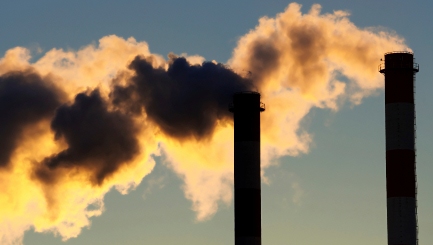
All over the world, about 7.4 billion people use consumer products to help them with the tasks of daily life. The unfortunate fact is that the manufacture and waste of many of these products causes some considerable, systematic damage to the natural environment. Not only do the smoke and fumes emitted by factories build up in our atmosphere, and trap more heat from the sun’s rays; improper disposal of waste poisons the environment, disrupting natural ecosystems. This cycle of pollution is making its way to a terrible end result: a planet Earth that is sapped of its beauty, vitality, and diversity. Because of this, stopping pollution grows more important with each passing day, and so your environmental wellness is now more important than ever before. But how can you, as just one person, do your part to put a stop to pollution?


1. Learn as Much as You Can: While you may have your moral reasons for stopping pollution, many people never do anything about it because they don’t know where to begin. Knowledge is power, my friend, so go to your library, surf the web for solutions, and, if you can, talk to people that know more about it than you do. These will all help you have a better understanding about pollution.


2. Think Small: There are countless things you can do to stop pollution. Even if each thing seems insignificant on its own, they all add up if you, and others, do them. Here are just a few things to get you started:


  • Reduce, reuse, and recycle.

  • Lower the thermometer in the winter and raise it in the summer, even you only do it by a few degrees.

  • Plant a tree.

  • Turn off the lights when you leave a room.

  • Do not leave Appliances on standby mode. Disconnect them at the port/socket.

  • Take your own travel mug when you get coffee at a coffee shop.

  • Pick up rubbish even if it’s not yours.


3. Speak Out: Nobody is going to do it for you, so tell people about what you know. As we’ve already discussed, people may care about the planet, but are just at a loss as to what to do about it. You can show people the way by talking to your friends and family, writing an article for your school or local newspaper and putting up signs around your neighbourhood – on recycled paper, of course. Do whatever you can to get the word out there. If you meet a few like-minded people along the way, you could start a group that meets once a week. You could discuss issues and what you can do to help.


4. Stop Disposing of Everything: Stop using paper towels and other disposable items! Dish towels are a much more environmentally-friendly way of drying up dishes, and using reusable grocery bags is better than getting new ones every time you go grocery shopping.


5. Walk More: You should try to only use your car when you need to, and then walk or ride a bicycle when you can. If it is available where you live, take public transportation such as a train or a bus. Not only is this better for the planet, the exercise is also beneficial to your health and wellbeing. If you really need to drive, and live near someone else going the same way, why not car pool? If your neighbour is heading the same way as you are pick him up. The next trip, reverse the process. That way, you are saving fuel and money as well as decreasing pollution.

For some reason, we think that we no longer to be concerned about air pollution. No one seems to be worried for their health anymore – not to mention the wellbeing of the planet. However, the EU is suing the UK as we have failed to reduce “excessive” levels of nitrogen dioxide (NO2) from traffic, and if that is anything to go by – and I’d dare say it is – air pollution is still an issue we need to be concerned with.


Environmental wellness expert Lucy Siegle, author of Green Living in the Urban Jungle, notes, ‘I wasn’t about for the great smog of 1952, but naturally I’ve heard a lot about this fabled pea-souper. There’s a suggestion we’ve moved on from air pollution, that we’ve somehow solved it. Not so. We might not have smog, but we still have chronic pollution. Road transport remains the largest single source of nitrogen-dioxide pollution. Fresh stats are emerging for 2013 and they’re not pretty. In Scotland 17 sites have failed to meet 2010 targets set in the Climate Change Act for air pollution (12 failed in 2012). In Northern Ireland 502 avoidable deaths were attributable to pollution – 10 times the number of road deaths. And there are similar pollution pockets all over the country.’


According to Siegle, ‘Incredibly there’s no obligation for local authorities to tackle the fine particulates air pollution that can be taken deep into the body and are thought to do the greatest amount of damage. (In Scotland, fine particulate matter is only monitored in six sites.) According to campaigners (Friends of the Earth remain the most vociferous group on this), EU levels on particulate air pollution are set too high. This conclusion was backed by a large-scale study published recently in the British Medical Journal. But the EU’s not planning substantive changes until 2030. So it’s up to us not to bang a drum but rather a bucket. Bucket brigades (gcmonitor.org) are a US invention. Community groups learn how to measure local pollution, collecting air samples in a bucket and then using their findings as evidence to fight for clean air. They have been used in the UK, but I want to see more of them, especially now that citizen science is all the rage.’


Britain has now been given two months to respond to a letter of formal notice from the EU of the intention to take us to court. In a statement, the commission said, ‘Nitrogen dioxide is the main precursor for ground-level ozone causing major respiratory problems and leading to premature death. City-dwellers are particularly exposed, as most nitrogen dioxide originates in traffic fumes … air pollution limits are regularly exceeded in 16 zones across the UK.’ The commission added that Britain has not presented any ‘credible and workable plan’ for meeting air quality standards by 2015. Clearly, the authorities are failing to clean up the airspace – so now it’s down to us.


But what else can you do to reduce the impact of air pollution on your environmental wellness? Siegle points out, ‘Some neighbourhoods have quietly been designated pollution hotspots and forced to implement an action plan. Is your neighbourhood one of these? If so, unlikely inspiration comes from the M1: more specifically Junction 28 at Matlock, Derbyshire, to Junction 35a north of Rotherham. This passes through a critical pollution pocket where unacceptable levels have been monitored. Consequently proposals are afoot to bring in a “green” speed limit, reducing it to 60mph. This is one of the first incidences I can think of where the right to breathe has been put ahead of the right to drive.’

China is often seen as an environmental disaster, with pollution causing a huge problem for the wellness and wellbeing of ordinary Chinese citizens.


This winter has been one of the worst winters on record, in terms of pollution, and all experts agree on this. What they cannot agree on, however, is whether cars or coal are the biggest contributors to Beijing’s terrible air pollution levels.


This was studied by the Chinese Academy of Sciences (the top research body in China) and they now believe that motor vehicle emissions are responsible for only a small amount of the population (around four per cent). The study points strongly towards coal burning as being the biggest contributor to the pollution. This is in direct opposition to the commonly held belief that cars (of which there are around 5.5 million in Beijing) cause most of the air pollution.


The Beijing Municipal Research Institute of Environmental Protection, headed up by president Pan Tao has strongly refuted the results of this study, saying that they are without a doubt that motor vehicle pollution is the biggest cause of Beijing’s air pollution.


The study looked at air samples taken in the capital on a seasonal basis, and appeared to find that the pollutants that were generated from coal burning and industrial production were the source of the most serious pollutants in the Beijing atmosphere. The study claimed that industrial pollution, secondary inorganic aerosol and coal burning actually account for around 70 percent of all emissions in Beijing.


The conclusions to the study seem to be contradictory, however, as motor vehicle emissions are actually counted as a secondary inorganic aerosol, so they cannot be counted as a separate entity, as they appear to be in this study. Experts have cited a wealth of evidence that strongly suggests that car fumes are responsible for a large part of Beijing’s air pollution, and should not be discounted.

Scientists are now discovering that there may be environmental reasons why some women suffer from high blood pressure during their pregnancy. A new study has shown that pregnant women who live in an area where the levels of air pollution are high are more likely to develop conditions affecting their wellness and wellbeing in pregnancy, such as high blood pressure.


Previous research has shown that around one in ten pregnant women develop high blood pressure. This is generally referred to as gestational hypertension and it increases the risk of needing a caesarian section to deliver the baby. It also increases the risk of the baby being born early, or having a low birth weight.


The results of the study, according to lead researcher Dr. Xiaohui Xu, showed that air pollution does make some kind of contribution to the risk of developing gestational hypertension. This could lead to ongoing health problems for the mother and baby, even after the pregnancy is complete.


It is important to note, however, that this was just a pilot study, meaning that it was simply to test the simple question of whether or not air pollution had an effect on maternal blood pressure. Having ascertained this, there are now many unanswered questions about why this should be the case and what the effect is on the long-term health of mothers and babies who live in areas with high air pollution.


The researchers looked at date relating to women who were suffering or had suffered from gestational hypertension, and then this information was linked to their address data, and these addresses were looked at in relation to data from the US Environmental Protection Agency about the quality of the air. It was found that women with gestational hypertension were more likely to live in areas where the air quality was poor.

It’s quite worrying to think about it, but the air that you breathe every day could be harming your health. There are lots of different particles in the air, and some of them can be damaging or dangerous for your wellness and wellbeing, particularly if you suffer from asthma.


Air pollutants are all around us. They come in the form of cigarette smoke and fumes from car exhausts, both of which release particles and gases into the atmosphere, and these can then irritate your respiratory system.


Leading charity Asthma UK believes that pollution actually plays a very strong role in causing asthma in the first place, both in children and in adults, as well as being a strong trigger to exacerbate the symptoms of those already suffering from the condition. Two thirds of people who suffer from asthma feel strongly that fumes from traffic make their asthma symptoms worse, and about 42 percent of asthma sufferers actually said that the worry about the effects of heavy traffic fumes would cause them to avoid areas with congestion. A strong 85 percent of those who suffer from asthma say that they feel very concerned about the effect that the increasing levels of vehicle fumes will have, both on their own future and that of their children in the years to come.


There is strong evidence that links the development of asthma with certain residencies, such as those who live next to roads with heavy traffics, particularly roads that are frequently travelled by diesel-fuelled lorries and busses, which cause the highest levels of pollution. Some studies suggest that asthma that starts when you are an adult can have the strongest link with pollution. This study links adult-onset asthma with pollution in the home environment, rather than any association with travelling or the workplace.

As one of the world’s most comprehensive lighting ordinances went into effect last month, France — including the City of Light — grew darker late at night. Between the hours of 1am and 7am, shop lights are turned off, lights inside office buildings must be extinguished within an hour of workers leaving the premises and the lighting on France’s building facades cannot be turned on before sunset. Within the next two years, there will also be regulations restricting lighting on billboards – but why? Excessive use of light makes a deep impact on environmental wellness, not only harming the wellbeing of animals but also adversely affecting our health and wellness.


France’s enlightened approach should eventually cut the country’s carbon dioxide emissions by 250,000 tons per year, save the annual energy consumption of about 750,000 households, and slash France’s overall energy bill by 200 million Euros, or 167.8 million pounds. According to France’s Environment Ministry, their goal is to ‘reduce the print of artificial lighting on the nocturnal environment,’ which is a powerful acknowledgement that excessive use of lighting is negatively impacting health and our ecosystems, as well as proving that light pollution is readily within our grasp to control.


Paul Bogard, author of The End of Night: Searching for Natural Darkness in an Age of Artificial Light and editor of Let There Be Night: Testimony on Behalf of the Dark, explains, ‘Researchers are increasingly focusing on the impacts of so-called ecological light pollution, warning that disrupting these natural patterns of light and dark, and thus the structures and functions of ecosystems, is having profound impacts. The problem is worsening as China, India, Brazil, and numerous other countries are becoming increasingly affluent and urbanised. Satellite views of Earth at night show vast areas of North America, Europe, the Middle East, and Asia glowing white, with only the world’s remotest regions — Siberia, the Tibetan plateau, the Sahara Desert, the Amazon, and the Australian outback — still cloaked in darkness.’


Italian astronomer Fabio Falchi, a creator of the World Atlas of the Artificial Night Sky Brightness, the computer-generated maps that dramatically depict the extent of light pollution across the globe, comments, ‘We have levels of light hundreds and thousands of time higher than the natural level during the night. What would happen if we modified the day and lowered the light a hundred or a thousand times?’ He concedes that this would be much worse, but his point is that ‘you cannot modify [light] half the time without consequences.’ Few countries and cities are doing anything to lessen their light pollution, but it doesn’t have to be this way.


However, the approach of using LEDs may be doing more harm than good to the planet. ‘Technological advances such as LEDs, or light-emitting diodes, can improve our ability to reduce and better regulate lighting,’ says Bogard. ‘But these same new lights may actually make things worse because they contain heavy doses of a “blue-rich” white light that is especially disruptive to circadian rhythms.’ This was the conclusion of Falchi and others in a recent article from the Journal of Environmental Management, which noted that LEDs could ‘exacerbate known and possible unknown effects of light pollution on human health (and the) environment’ by more than five times.


Bogard asserts, ‘Scientists are investigating new ways to provide society with the lighting it demands for security, commerce, and aesthetics, while greatly reducing the flood of light that is increasingly interfering with human health and the ability of many creatures to function.’ Explaining France’s new lighting rules, Delphine Batho, who was, until recently, France’s environment minister, described the government’s desire to ‘change the culture’ to include responsible use of light. Bogard comments, ‘This change is to be applauded, for what increasing numbers of studies — as well as our own eyes — tell us is that we are using far more light than we need, and at tremendous cost.’

In today’s fast-paced and career-focused world, many of us will find ourselves living in the city for work-related reasons at some point in our lives. There are some great things about living in the city, and of course many people choose to live in the city regardless of work, but could this type of urban environment actually be damaging to our wellness?


A new study has come to light which has revealed that spending time in the city could actually be bad for the wellbeing of your skin. The impact that the city environment could have on your skin is often hugely underestimated and this impact generally falls into two categories: pollution and stress.


Pollution is always worse in cities due to industry and high concentration of people in one place, but it also prompts the release of unstable chemicals known as free radicals which are produced in the body to attempt to fight the pollution.


Free radicals have been linked to serious health conditions such as heart disease, Parkinson’s, Alzheimer’s and cancer, but they can also steal oxygen way from your skin cells and make them age prematurely. The best way to fight against this is to take a regular vitamin supplement which contains vitamins A, C and E.


Eczema is often higher in cities too, due to the smog, deficiencies in vitamin D and pollution factors.


Whilst also wonderful, city living can be stressful because it is busy and noisy. It is also full of unnatural light, and this can deplete your skin of nutrients.


Stress can also make people more likely to make poor food choices (and of course junk food is readily available in a city) and this lack of nutrients and addition of fat and chemicals to the diet can also lead to poor skin, as can smoking and drinking alcohol – two things that people often turn to to relieve stress.

There has been a decade of rapid economic growth for India, but unfortunately, the country’s environmental problem is still abound. This affects the wellness and wellbeing of Indian residents in a number of ways as they are frequently exposed to serious water and air pollution.


A recent report has shown that the environmental problems do also have an effect on the economy, and that in fact environmental degradation costs India some $80 billion every year, which represents 5.7 percent of the economy.


In order to tackle this problem, more green strategies are needed to help break out of this pattern and stop the natural resource depletion in its tracks. It is thought that emission reductions could actually be achieved with minimal cost to the GDP.


The fantastic economic growth in India has allowed millions of people to emerge from poverty thanks to increased employment opportunities, but unfortunately this wonderful growth record is tempered by the degrading environment and the increased scarcity of natural resources.


A recent survey was carried out into 132 countries, with their environments being surveyed, and of these, India ranked very near the bottom at 126th position, and ranked 132nd in the ‘Air Pollution’ category, which measured effects on human health. This means that India has the worst pollution in the whole world. An additional survey of the 20 most polluted cities in the world found that 13 of these were in India, showing a serious problem with pollution in the country.


Poverty is responsible for environmental degradation to a certain extent, as degraded lands are often overused by the poor. These lands then give a lower yield, worsening the problem with poverty and thus creating a vicious cycle of environmental degradation and impoverishment.

Unless you live in a coastal area, it’s easy to forget that we Brits are surrounded by sea. Luckily, the Nottingham Contemporary/Tate St Ives exhibition, Aquatopia: the Imaginary of the Deep, is here to remind you of the beauty of water, how important it is to your environmental wellness.


The exhibit has been five years in the making and is filled with elaborate watery fantasies from various artists. When you think about it, it makes complete sense to celebrate the wonders of the deep. Your wellbeing depends on water; provides half of the air you breathe, carries 95% of your country’s global trade by volume and defines and outlines the country itself. However, you often ignore this vast expanse of wellness barring a few sunny weeks in August, at which point you rock up with your litter and fuel-pumping jet skis, take your fill, and leave it behind once more.


Our relationship with water has defined Britain as a country throughout history. You need only turn to the opening pages of Joseph Conrad’s Heart of Darkness to see how the waterways simultaneously floated us to greatness and shame, importing Britishness to every corner of the globe while allowing us to trade human beings for cane sugar.  Conrad writes, ‘What greatness had not floated on the ebb of that river into the mystery of an unknown earth! . . . “And this also,” said Marlow suddenly, “has been one of the dark places of the earth.”’ We subjected the waters to our terrible involvement in the slave trade, which is the subject of Aquatopia’s most telling works, the Otolith Group’s film, Hydra Decapita. The group depicts imagines a utopian world which has been populated by the subaquatic descendents of Africans drowned during the infamous Middle Passage.


For centuries, no one had any idea how deep the ocean really was. In fact, it was thought to be a bottomless entity which, if you sailed far enough over the flat world, would take you to the void or into the mouth of a monster. According to medieval myth, the sea was thought to continue overhead. There is a story of people in East Anglia, who claimed to find an anchor entangled on a gravestone when they were leaving church one Sunday. The story goes that a strange being climbed down the rope from an unseen ship in the sky, and then evaporated under the unnatural pressure. This is the hold that the sea once had over us – and look how far we’ve come.


It wasn’t until the 80s that we began to realise it wasn’t OK to routinely dump nuclear waste in the north-east Atlantic. Because of our actions, alpha predators, such as orca and sperm whales, have become the most polluted animals on the planet, due to lovely ingredients like heavy metals, organochlorines and PCBs entering the marine food chain. Even though we now know better, you can’t help but wonder if we’ve really come all that far from burying our heads in myth, or using the sea for our own, selfish and immoral needs.


According to the Wildlife Trusts and other conservation groups, in the recent round of assessments for 127 marine conservation zones around Britain’s coasts, the government only selected 31 for consideration. This is largely due to the opposition given by recreational users. Clearly, we still think Britain dominates the see, and won’t easily give her up for the greater good. Sure, we abuse the waters for domination and pollution, or just forget the sea altogether, but that’s ok as long as – for a few weeks a year – there’s somewhere you can go get a tan.

You could probably work out for yourself that smog is a combination of smoke and fog, but after that do you know what it is? The emissions from the internal combustion engines of vehicles and industrial smokes cause the air pollution known as smog, which affects the wellbeing of those in cities with sunny, warm, dry climates and a large number of vehicles.


So what is it made of? Many fine particles form smog, including gases like carbon monoxide (CO), carbon dioxide (CO2), sulfur dioxide (SO2) and nitrogen oxides (NO2), as well as the harmful pollutant of ground level ozone. These chemicals exist in polluted air and are highly oxidising and reactive. When they react in the atmosphere with sunlight, they form secondary pollutants. For example, photochemical smog is formed by the combination of primary emissions and secondary pollutants.


When the weather is warmer and sunnier, smog levels increase. This is because during these times the upper air is warm and inhibits vertical circulation. When smog stays for extended periods of time over densely populated areas, it can build up to dangerous levels. And it’s not just those in crowded areas at risk. Smog can travel with the wind and affect sparsely populated areas as well.


So how exactly does smog threaten your wellness? Smog is a serious health problem, especially for those with heart and lung conditions like asthma and bronchitis, as well as children and the elderly. Smog can cause eye and nose irritation, dryness of your nose and throat, inflammation of your breathing passages, shortness of breath, wheezing, coughing, decreased working capacity of your lungs, pain during deep inhalation, decreased ability of your body to fight infection (which increases your susceptibility to illness), worse and more frequent asthma attacks and even lung cancer.


Then, how do you avoid smog when you live in, or visit, affected areas? Firstly, avoid exercising near heavy traffic areas, especially during peak times. When smog levels are high, particularly in the afternoon, avoid outdoor activities. When possible, walk, ride your bicycle or use public transportation instead of your car and, if you’re concerned about your wellbeing, consult your doctor about more ways you can protect your health against smog.


Smog: What is it and Where Does it Come From?

Due to the drought being suffered in Texas, scientists now believe that the environmental situation has reached a crisis point. Texas Governor Rick Perry says that the state has suffered three years of drought, and that there is now a serious threat to property, the economy and public wellness as a result.


It is not just the wellbeing of those in the state of Texas that we should be worrying about, though. The situation shows that global warming is an increasing environmental threat, and the repercussions of not tackling this serious issue head on could be catastrophic for the future of the planet.


Fortunately, President Obama has recently unveiled his government’s plan to tackle the issue of global warming, in a speech given at Georgetown University.


It is important for the US to make a serious plan, as the country is the largest culprit in the production of global warming pollution in the entire world. To meaningfully address the problem of pollution in America would spell a much greater chance of averting the serious impacts that scientists fear will come with climate change.


Already, the states has seen a year in which temperatures soared to record-breaking heights, wildfires spread through the country (including during the recent tragedy which claimed the lives of 19 brave firefighters), drought has affected many different areas and severe storms have also battered the country. President Obama feels that one of the main culprits in this growing crisis are the dirty power plants which emit record-breaking levels of CO2.


Already, the States has managed to reduce its carbon footprint by placing caps on global warming pollution across a number of different states, and also aims to have taken 56 million vehicles off the road by 2020, reducing further pollution in this form.


Sad news reached Martinique as on the 15th April 2013, over 100 fishermen stood at Fort de France in a call for aid against a contamination of pesticides that have been said to have existed in water for over thirty years.


The pesticide known as chlordecone, a persistent organochlorine pesticide, is used to combat banana weevil that infests banana plants, making them impossible for human consumption. What it is also combating however, is the environment that the banana trees are growing in.


The chemical sank into the soil, polluting and wrecking havoc with the wildlife and local flora, before finding its way to the sea; where it has made drinking water unsafe.


Fish and other edible grubs have become inedible, rendering the lives of fishermen utterly redundant, following an extensive ban on fishing. For the 70 families that depend on fishing as a means of livelihood, the chemical pollution has made it an unhappy one.


Not only is this an environmental crisis, but it is also an economical one.


Unfortunately, this is not all. According to France’s Institute of Health and Medical Research Chlordecone has been found to increase the risks of prostate cancer, as well as induce problems such as infertility. Furthermore, the doctors examined 1,000 women and their children that were exposed to the chemical, only to discover that the 153 of their toddlers had psycho-motor impairment, reduced visual memory and a lack of visual interest in new things.


“The problem is perhaps not on the same scale as Fukushima,” says Dr. Luc Multigner, an epidemiologist at the institute, “but it is comparable in its complexity. It isn’t the sort of crisis you can contain and solve, then move onto the next thing. No, it’s going to last.”


The upsetting message that a pesticide has affected a substantial number of lives has arrived at what most consider, a belated time. Paris does not deny responsibility for Martinique’s astounding tragedy, with several ministries already contributing through paid research, food stocks, schemes and publications. The future, at least for the time being, is not very certain.


city smogDepending on where you’re from, smog probably means different things to you. In cities in the more developed countries of the world smog has rather become a thing of the past. It’s still experienced on the very worst days but these are rare and almost newsworthy occurrences. Smog is not something you’ll see every day in most modern cities.


Smog is a build up of exhaust fumes and pollution which hangs above heavily industrialised or densely populated areas. In the UK we most associate smog with the Victorian era. In this time period, just after the industrial revolution, smog hung over London like a vast man-made cloud. People treated it like a strange weather type with the thickest smog known as ‘pea soup’. This was before they realised how dangerous it is to breathe in the fumes from industry for long periods of times.


It’s now known that extended exposure to smoggy conditions can lead to permanent damage to the lungs and premature death. The most worrying thing about this fact is that a lot of cities in the world today have heavy smog conditions. One of these cities in the capital of China, Beijing. Though Chinese authorities eagerly claim that this smog is harmless and falls within accepted safety ranges, this might not be the case. Breathing in any chemicals for long periods of time will do unforeseen damage. It can bring about asthma in children and permanently stunt lung capacity.


Smoggy conditions are certainly much more dangerous for children than they are for adults but this doesn’t mean that adults are safe. In London in the past several years around 4,000 deaths a year have been attributed to the poor air quality which smog is known to cause. Beyond not going outside on the days when the smog is worst there’s little which can be done to avoid smog if you live in a city afflicted with it. Avoid high-traffic areas and places heavy with industry where you can.


How Much Do You Know About The Danger Of Smog?

pollutionWhen it comes to global warming we’re going to need a grand global effort to combat it and even with that it’s not going to be a quick or easy process. Human beings churn out a lot of waste in the forms of pollution and rubbish and most of it is necessary to maintain our way of life. Or at least it was.


There’s a huge vested interest as Governments make a lot of money from fossil fuels and taxes on those products so they’re not about to spend huge sums of money to cut themselves off from one of their major sources of income. The fact is that with the technology available and with enough time, money and tenacity we could cut our current levels of pollution by as much as 70%. That’s huge. The reasons we’re not – little interest, laziness and people not believing we need to.


More than half of the world’s population live in cities and as such the changes need to start here. Most industry pollution can also be traced back to these cities so if they started the ball rolling then we’d see levels of pollution across the globe plummet. It wouldn’t be a quick process, we’re looking at around 20 years for a drop of 30 percent but any progress as this point would be a good thing!


As with all big changes, it has to start with a smaller change. It will take individuals deciding that they want or even need to stop the levels of pollution rising even further to make the change globally. Governments will sway with their populations but it’s down to you, the individual to start that ball rolling so what are you waiting for?


How We Could Curb Pollution Within Our Lifetimes

lungssWe’ve known pollution was a bad thing for a very long time indeed. The thing which we weren’t aware of is that it’s actually bad for us as well as the environment. Quite why we didn’t put this together earlier is a mystery as pollution is essentially airborne poison which sounds pretty dangerous to me! A lot of cities are now approaching dangerous levels of pollution and there are a lot of areas in those cities which suffer from high levels a lot of the time. It’s said that London itself suffers from 12 ‘smog’ days a year, in which the levels of pollution are much higher and almost visible.


Illustrating this danger is the startling figure of 4,000 additional deaths per year in London which can be attributed to air pollution alone. This is roughly one in twenty of all deaths in the city. If you consider that these are people who are dying before their time simply because of the air they breathe, you can understand just how scary that number is. These deaths are generally adult but it’s also been shown that children are more profoundly affected by the pollution levels .


Stark evidence has been shown which suggests that children who are regularly exposed to high doses of pollution can end up with smaller lungs by the time they’re fully grown. This will stunt their lung function for the rest of their lives and put them more at risk of respiratory conditions. Asthma, one of the most common and most dangerous of the respiratory conditions has been directly linked to pollution. Children who grow up in areas which are exposed to high levels of chemicals are much more likely to contract the illness and will be hospitalised much more regularly as a result.


Doctors and other health professionals are recommending not allowing your children outside on the days with the highest pollution levels as this might help protect their lungs.


The Truth About Pollution And Our Lungs