Showing posts with label Green. Show all posts

It seems like not a day goes by without you witnessing some kind of magical weight-loss-promising product. There’s a pill, gel and machine to target any problem wellness area on your behalf – with absolutely no effort of your part, of course. More often than not, you see such adverts and change the channel, or write it off without much thought, but there’s always one product you see and think “well, maybe…” Being overweight is a real concern in this country, and millions put their wellbeing at risk by buying into these shams. In actual fact, the only way to lose weight is to exercise and eat right, and anything else on top of that can only help you along in that journey. If you do want a boost – and just a boost, mind – to your weight loss wellness, it’s better to opt for natural, home remedies, so even if they don’t work, you’re not putting yourself in any danger. Here are a few natural remedies that can help make your efforts more effective:


1. Flaxseed: The outer coating on flaxseed is the thing that makes you feel fuller, and so it’s this miracle layer that aids you in your weight loss. By feeling fuller, you’re less likely to overindulge in unhealthy snacks and meals, and so you can lose weight more quickly. Moreover, flaxseed is also a rich source of omega-3 fatty acids which is good for your heart – and that’s always a good bonus! As flaxseeds are naturally flavourless, they won’t negatively affect the taste of your food, but they might add a nice little crunch. Simply crush them up and add them to soups, cereals, salads, and oats.


2. Green Tea: There’s no denying the immense popularity of green tea for weight loss, but where does it come from? The reason why so many people are switching from coffee to green tea is because of its high antioxidant capacity. In addition, research shows that green tea is capable of boosting your metabolism and burning fat, both of which can be a great help when you’re trying to lose weight. Plus, as you don’t drink green tea with milk or sugar, you can cut down on unnecessary calories.


3. Cinnamon: You might reserve this spice for Christmas, but cinnamon is a weight loss aid you should consume all year long. By activating the insulin receptors and enzyme systems involved in carbohydrate metabolism, cinnamon helps your body to regulate your blood sugar levels, increase metabolism and reduce bad cholesterol. Add a little to your coffee or tea, sprinkle some on your breakfast cereals, or try making healthy baked goods such as flapjacks, with added cinnamon.


4. Black Pepper: Adding black pepper to your foods aids in weight loss the same way that any hot food does; the piperine in black perpper acts as a digestive while also helping to prevent the formation of fat. Moreover, spicy foods tend to inspire you to become more active, which is a mightily important part of any weight loss programme. And the best thing is you can add black pepper to almost any dish.


5. Turmeric: There are many studies purporting the benefits of turmeric, with scientists even researching methods to see if it can be used to fight cancer. Therefore, it’s not hard to see how this Indian spice can aid in weight loss. As well as reducing your risk of health concerns such as diabetes, studies have shown that turmeric helps metabolise fat. Add turmeric to any Indian-style dish, such as veggies, rice, curries, and dahls.

There’s a big business in sexual health boosters these days, especially when it comes to male enhancement drugs. There are so many rumours circulating about what can make you work better, feel better and appear longer and thicker, that you’d think every man would be some sort of sex God by now. Between the medical procedures (known as phalloplasty), advertised pills and various exercises, there’s never been more ways to make your little fella a slightly bigger and better fella – but how do you do that in a way that works for you. If you want to take care of your environmental wellness, while also giving your sexual wellbeing a boost, you need the best path to self improvement with minimal environmental impact. So let’s take a little look at male-enhancing techniques, and which one will win out for you and the planet.


1. Surgery: Let’s begin with the male-enhancement techniques that do Mother Nature no favours. Depending on who you are phalloplasty is a surgical technique that can add anything from one to three inches to your penis, but it comes at a cost; not only does your wallet take a significant hit (with the procedure costing thousands of pounds) but it is neither green nor natural. The procedure has several “green” problems: 1) the use of administered drugs and painkillers. 2) The energy expenditure of the operating room and tool cleansing. 3) Although this isn’t a green problem, if something goes wrong, you could end up disfigured and non-operational for the rest of your life – and that’s definitely a con to consider!


2. Pills: Moving on to miracle pills, almost any MD will tell you that these are, by and large, a scam. The idea of a food, herb, vitamin, or mineral in existence that can create size for a man is very appealing, but unfortunately it just doesn’t exist – or everyone would be taking it. Not only are those products you see on your television during the early morning hours worthless; they’re often even dangerous. The FDA does not regulate over-the-counter male enhancement drugs, due to marketing loopholes, which means you never really know what you’re getting. Natural foods and herbs have been known to improve performance, energy, endurance, and longevity – and so that might be worth investigating – but bigger equipment? Sorry, no cigar.


3. Exercises: While this option isn’t as quick or easy as surgery and popping pills, exercise wins out for both effectiveness AND green appeal (I guess nothing worth having ever did come easily). Many men have claimed – believe it or not – that they have had great results from a variety of exercise routines performed daily. However, for obvious reasons, it may be best to practise these routines outside of the gym. Weight hanging has been said to have the ability to increase the length and girth of your penis by a full inch, forcing the cells in your penis to divide and – as a result – create mass. However, this exercise might make you wince so much that you’d rather cope with smaller equipment, as it involves hanging a series of progressively heavier weights from the appendage everyday. If you do decide to try weight hanging, be careful and know your limitations, as it is actually quite easy to tear the spongy tissue. If you fancy a less scary and more fun exercise, sex itself actually has the capability of increasing your size. In order to do this, you engage in sex, then come as close to orgasm as possible without actually having one, then continue this process at least three to five cycles.

Fred Pearce, author of The Land Grabbers: The New Fight over Who Owns the Earth, details, ‘I was standing on the summit of an extinct volcano in the centre of one of the most remote islands on the planet: Ascension Island in the tropical South Atlantic. Midway between Brazil and Africa, Ascension is a thousand miles from the nearest speck of land. Below me was a harsh treeless moonscape of volcanic clinker, baking in the sun. But in the cool mountain air, 800 meters up, I was surrounded by lush greenery and a light mist from a cloud settled over the mountaintop. They call it Green Mountain. But the greenery is new. My guide, the island’s conservation development officer, Stedson Stroud, peered around us and smiled. “Nothing you see here is native,” he said. “Except for a few ferns, everything has been introduced in the past 200 years.”’


Everything on Green Mountain, from the Chinese ginger to the guava from Brazil, was introduced by the British Navy during the early- and mid-19th century, along with rabbits, cats, donkeys, hedgehogs, mynah birds, bees, and much else. The entirely man-made forest is the first and only of its kind — a functioning ecosystem in which a ragbag of species shipped in from all over the world thrive as if they had been together for millennia. While many environmental wellness experts hail Green Mountain as the icon for a fundamental reassessment of many nostrums of both environmentalist and ecological science, the artificial woodland is also creating controversy among ecologists. Is it a beacon for re-greening the planet or a biological abomination?


David Wilkinson of Liverpool John Moores University says that the island has about 300 introduced species of plants to add to its 25 native species, many of which are spreading. From about 660 metres and above, Green Mountain is completely vegetated with coffee bushes, vines, monkey puzzle trees, jacaranda, juniper, bananas, buddleia, Japanese cherry trees, palm trees, clerodendrum, green aloe and the pretty pink flowers of the Madagascan periwinkles. Even though rainfall has declined in the lowlands around, the vegetation captures more cloud moisture. However, Pearce notes, ‘The invasion has been double-edged. The invaders have damaged some of the handful of endemic species that had found a foothold on the island during its million-year. Three of the endemic ferns are believed now extinct.’


Nonetheless, Pearce recalls, ‘As we stood on the mountain, gazing south over an abandoned NASA tracking station, Stroud pointed out below us the spot where, in 2009, he rediscovered on a cliff face a single specimen of a species believed lost, Anogramma ascensionis. Now it is being propagated in the UK ready for a reintroduction. In fact, many of the endemics seem to get on remarkably well with the motley collection of invaders, says Stroud. The ferns that once clung to the bare mountainside now prosper on the branches of introduced trees like bamboo. Stroud showed me ferns that he believes now thrive only on the mosses that grow on such branches.’


Pearce laments that a blindness in research may mean we learn nothing from Green Mountain. ‘The British government’s environmental policy for the island is the “control and eradication of invasive species” in order to “ensure the protection and restoration of key habitats,”’ says Pearce. ‘But the policy has nothing to say about the protection of — or even ecological research into — the extraordinary novel ecosystem in their midst on which the indigenous species often depend. That is a shame. For, according to an increasing number of ecologists, the unique ecosystem on Green Mountain may hold important lessons about how ecosystems around the world function…The mountain’s ecosystem calls into question a series of widely held assumptions about how complex, biodiverse ecosystems evolve — or indeed whether they evolve at all.’

Around 77 per cent of American households recycle, which is increasing all the time. And couples have sex, on average, around once every four days – this amounts to 85 times a year. So what do the two things have to do with one another? Sex makes you feel good, and it seems that going green has the same effect. 65 per cent of people in an environmental study stated that they felt good when they were making environmentally-friendly choices. So how do you do it? Here are some greener choices you can make in the bedroom.


Opt for soy candles


If you like to set the scene with some mood lighting, you may be surprised to learn that most candles aren’t green. Often, candles are made with paraffin wax, which is petroleum based. This means you’re actually burning fossil fuels when you burn a candle. You may think that has a limited effect on the climate concerns we all face, but when you think that roughly £2 billion is spent every year on candles that soon amounts to a lot of heat. Instead, choose candles made from environmentally-friendly sources, such as soy, beeswax or palm oil. The greenest options are those made locally to you as this eliminates the fuel to ship them to your location.


Choose a natural aphrodisiac


Although there isn’t much scientific evidence to support the use of aphrodisiacs, many people still enjoy using them. Often the mere power of suggestion is enough to feel the effects. Researchers have found that placebos can reduce the size of tumours, reduce pain and even the symptoms of depression, so you should never underestimate their power. You can find a number of natural aphrodisiacs in your own home, such as chocolate which boosts your mood and lowers your stress levels. The best way to find foods that do the trick is to look for foods which appeal to your senses – whether they smell, taste, look or feel good.


Use your own energy to warm up


The average household spends a fortune on energy bills every year, with around half of that cost going towards heating and cooling. So why not create your own warmth? Heat up the old fashioned way and go under the covers. Beyond the many obvious benefits, sex raises your body temperature to keep you toasty, and it also burns calories.


Find a sexy scent


Scent is really important to our sexuality and arousal, but not just pheromones. Some fragrances are sexy, but we don’t always notice because we’re not taking the time to indulge in them. Woody scents such as sandalwood or cedarwood teamed with floral scents, such as jasmine or rose, can really boost the sex drive. While commercial perfumes may smell nice, 95 per cent of the chemicals used in department store brands are derived from petroleum – in fact, some have even been linked to cancer, asthma and nervous system disorders.


Opt for a sustainable outfit When you slip into something comfortable, choose a sustainable fabric such as organic cotton and silk, bamboo or hemp. When fabrics aren’t produced organically, they contribute to the climate change problem. In fact, 10 per cent of the chemicals used in American agriculture are used to grow cotton. So, by choosing something sustainable, you’re not only helping the environment but you can look great too. There are a number of companies now using such fabrics in the production of their clothes, so there’s plenty to choose from in the way of designs.

How green is your Diwali? This is probably not a question that pops into your head all that often, but whilst you are celebrating the wonderful festival, you should also be considering the effect that your celebrations may have on the wellness and wellbeing of the planet.


One very simple way that you can ensure that your Diwali is extremely eco-friendly is to celebrate with all your closest family and friends around you. There really is no need for travel – you can simply bring the community together in one place. The cost of the celebration will be reduced in this way too, as everyone can make a contribution, and it will also reduce the amount of pollution that is produced, as everyone will be together celebrating in the one place at the one time. As an added bonus, this kind of celebration will bring whole communities together in the spirit of friendship and camaraderie.


You should also consider your fire crackers very carefully this Diwali. Whilst they are beautiful and spectacular, and certainly the heart of any Diwali celebrations, they can also leave haze, cause a great deal of noise and leave the ground littered with papers the next day. Instead of traditional crackers, why not opt instead for eco-friendly products. These are often made from recycled papers and some are even biodegradable. The noise produced by these is also within acceptable limits.


Instead of an expensive and energy-gobbling electrical illumination, why not opt instead for an age old Diya? These are bio-degradable and cost effective, but they still look very traditional and extremely beautiful. Energy consumption is sky high around Diwali, so you will be doing your part to reduce this.


All of these things can help to make Diwali a far more green celebration for you and for the planet.

The UK’s first hydrogen-fuelled ferry has set sail from Bristol on its maiden voyage. The project has attracted the attention of various other cities including Hanover and London, as they strive for ways to achieve better environmental wellness. The developers of the Hydrogenesis feel that this could be the start of improved environmental wellbeing for cities around the world, as it opens up the door to a whole new phase in green marine engineering.


The service launched on Thursday, with the skipper, Richard Rankin, at the wheel. As he carefully steered the vessel past polluting diesel ferries, he commented that the boat handled well and was quiet as well as clean, admitting that he felt surprised that the ferry was so efficient.


The boat is 11 metres long and the fuel is made by companies based in the south-west of England. The project was given a quarter of a million pound boost from the Bristol city council in order to help to city win green capital status. Although this was its first official voyage, it was tested out in February to see how it would cope with the icy waters of winter. In contrast, the boat also copes well with the current warm weather. So far, the ferry has been enjoyed by business leaders, scientists and politicians and members of the public will now be able to enjoy the peaceful ride for the rest of the summer.


The Green party councilor for Bristol, Gus Hoyt, described the boat as an ‘exciting first’ for the city, saying that it showcases to Bristol and the rest of the UK and, indeed, world, the benefits that the technology can provide, and that there really can be a mode of transport with zero emissions.

For those who care a lot about the environment, raising a baby is another opportunity to live life in a way that benefits environmental wellness. One woman, Keya Chatterjee, claims to have been able to reduce her carbon footprint to zero when she had her son Siddarth. She also says that looking after the wellbeing of the environment has meant that she saved a significant amount of money.


You might not think it of a tiny baby, but they can have a huge impact on the health of the environment. Each baby, for example, produces an enormous quantity of dirty nappies, which go into landfill.


Keya Chatterjee works for the World Wildlife Fund as the senior director for renewable energy and footprint so she has a strong background in protecting the environment, and felt that it was her responsibility as a parent and environmental protector to make sure that her baby did not have a detrimental effect on the environment.


When she became pregnant, she made sure that she made choices in all aspects of baby care that would have a beneficial effect on the environment. She then compiled a book about her discoveries called The Zero Footprint Baby: How to Save the Planet While Raising a Healthy Baby.


Keya considers it a responsibility to her child to look after the environment, as it is the world that they will be living in in the future. She made a number of decisions, such as replacing all her light bulbs with LED’s, inserting solar panels into her house, had a midwife-led birth and went to a birthing centre. She also had a baby shower but only accepted second-hand items rather than letting anyone buy her new products for the baby.

You can’t beat a good cup of coffee. Though too much of it in your diet can be damaging to your wellness, sometimes all you need is a nice cup of coffee to relax and see your mental wellbeing improve. You might always stick to your favourite brand or bean, but consider switching to green-bean coffee, as this could potentially have benefits to your body as well as your mind.   Coffee comes from the roasted seeds of coffee plant, whereas green coffee beans are not roasted, but the natural seeds of coffee berry. These berries are handpicked, dried, stripped down and the residue is a ‘green bean’, which is rich in the chlorogenic acids that inhibit your fat and sugar absorption into the bloodstream. Therefore, you don’t accumulate as much body fat from fat and sugar in the body, and the chlorogenic acids also fuels the activation of fat metabolism in the liver which helps to burn fats.   So why is green coffee better than your usual bean? Green coffee extract is a mouth-watering boost of natural energy which is different from brown coffee due to the different savour and aroma that occurs from not roasting the beans. All the chlorogenic acids are removed during the roasting process in regular coffee, and so the beans become dry and desiccated. Green coffee is bitter and strong as the chlorogenic acids aren’t destroyed.   Further, green coffee is naturally lower in caffeine, and can therefore increase your alertness, improve your work pace and speed up your thought processes without causing any detrimental impact on your body. Green coffee is also rich in vitamins and minerals, reduces your blood pressure level, and even reduces your food cravings, which means better weight loss. On top of all this, it is packed with natural anti-oxidants, has a longer shelf life than brown coffee and is sustainable and organic. Not only does it taste great and minimise some of the physiological effects that drinking brown coffee can bring, this organic version of the same product can actually aid your mental and physical wellness so surely that’s worth trying a brew.   Move Over, Tea, it’s Coffee’s Turn to ‘Go Green’

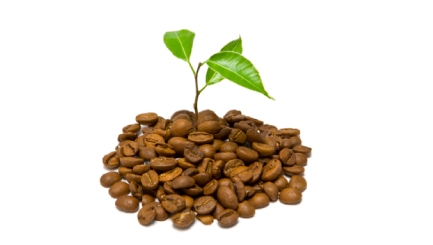
You can’t beat a good cup of coffee. Though too much of it in your diet can be damaging to your wellness, sometimes all you need is a nice cup of coffee to relax and see your mental wellbeing improve. You might always stick to your favourite brand or bean, but consider switching to green-bean coffee, as this could potentially have benefits to your body as well as your mind.


Coffee comes from the roasted seeds of coffee plant, whereas green coffee beans are not roasted, but the natural seeds of coffee berry. These berries are handpicked, dried, stripped down and the residue is a ‘green bean’, which is rich in the chlorogenic acids that inhibit your fat and sugar absorption into the bloodstream. Therefore, you don’t accumulate as much body fat from fat and sugar in the body, and the chlorogenic acids also fuels the activation of fat metabolism in the liver which helps to burn fats.


So why is green coffee better than your usual bean? Green coffee extract is a mouth-watering boost of natural energy which is different from brown coffee due to the different savour and aroma that occurs from not roasting the beans. All the chlorogenic acids are removed during the roasting process in regular coffee, and so the beans become dry and desiccated. Green coffee is bitter and strong as the chlorogenic acids aren’t destroyed.


Further, green coffee is naturally lower in caffeine, and can therefore increase your alertness, improve your work pace and speed up your thought processes without causing any detrimental impact on your body. Green coffee is also rich in vitamins and minerals, reduces your blood pressure level, and even reduces your food cravings, which means better weight loss. On top of all this, it is packed with natural anti-oxidants, has a longer shelf life than brown coffee and is sustainable and organic. Not only does it taste great and minimise some of the physiological effects that drinking brown coffee can bring, this organic version of the same product can actually aid your mental and physical wellness so surely that’s worth trying a brew.


Move Over, Tea, it’s Coffee’s Turn to ‘Go Green’