Showing posts with label Impotence. Show all posts

Impotence is every man’s greatest fear. It affects not only the sexual wellness and wellbeing of those affected, but also their emotional and mental health. Even the word itself seems to somehow imply failure or weakness. Those who are impotent feel that they have lost not only their sexual health but also their dignity, wholeness and masculinity.


Impotence, also known as erectile dysfunction can improve with treatment, however, and is not something that should just be accepted. There are many different causes of erectile dysfunction and there are many different solutions, both medical and non-medical, in the form of home remedies.


There are different degrees of erectile dysfunction too. Some men can achieve an erection but are unable to maintain it. Some men become erect but not fully erect. Others only have a problem with a new partner, or with a long-time partner. Then on the extreme end of the spectrum there are those who are unable to achieve an erection at all.


Behaviour modification is one way to tackle things, if the erectile dysfunction is caused by emotional issues. If it’s caused by a medical condition (and around 70 percent of cases of impotence are) then there are home remedies and therapies that can help you to get back into your sexual stride.


Medical conditions can contribute to erectile dysfunction, the most common of these being diabetes, alcoholism, kidney disease, multiple sclerosis, vascular disease, atherosclerosis and neurologic disease. Around half of all men with diabetes have problems with erectile dysfunction, and younger men tend to fall victim to injuries that cause their erectile dysfunction, such as gunshot wounds, car crashes and skiing accidents. Other causes can include hormonal imbalances.


Doctors treat erectile dysfunction with oral medications, vacuum devices, locally injected drugs, behaviour modification techniques and even surgically implanted devices.

Both men and women experience sexual health problems, which can have a knock-on effect on the rest of your wellness. Your sex life plays an important role in your relationship, not to mention your overall sense of wellbeing, which is why many people turn to all kinds of methods to get their arousal and performance back on track. Herbal supplements are a prime favourite with those wanting to boost their sexual experience without going the medical Viagra route, but do they actually work, and are they safe?


According to Marc Bonnard, MD, a psychiatrist specializing in sex therapy and the author of The Viagra Alternative, certain herbs may actually have an advantage over pharmaceutical alternatives. He writes, ‘Herbs work in a more leisurely fashion,’ replacing the balance between your mind and body that is ‘so important for a positive sexual experience.’ Certain physiological functions – such as hormonal imbalances and poor circulation – contribute to sexual dysfunction, and alternative treatments aim to fix these faulty functions. However, even though this supplements are marketed as “all-natural” and you don’t need a prescription, Bonnard, like other experts, warns that these products are potentially potent and can have toxic side effects. That said, let’s take a closer look at some of the herbal ingredients you’ll find in popular sexual supplements:


1. Damiana: The leaves and stems of the damiana plant are used as an aphrodisiac in Mexico, but here in the UK you can get the sex-boosting plant in tablet form. You can also prepare the dry leaves in a tea, but the Mayo Clinic does warn that the product has not been tested in humans – so tread with caution.


2. DHEA (dehydroepiandrosterone): Your adrenal glands produce this hormone naturally, which aids in the production of sex hormones testosterone and oestrogen. In men with low testosterone levels, some small studies have shown promise in helping these participants improve their sexual function. However, you can only blame a small number of impotence problems on low testosterone.


3. Ginkgo: Bonnard points out that ginkgo seeds and leaves can help men with erectile dysfunction by getting ‘the blood flowing to the right spots.’ Yet the Mayo Clinic counters that there is not solid evidence to show that ginkgo works effectively against impotence. Moreover, both Bonnard and the Mayo Clinic agree that the plant can be dangerous, especially if you are on prescription blood-thinning medication. This is because gingko can affect the clotting of your blood.


4. Ginseng: Used as an aphrodisiac in Asia, this aromatic root is used as and has been shown to have some energy-boosting properties, albeit without any evidence to prove that ginseng has a direct impact on impotence. However, we could all use a little more energy in the bedroom, so use this dried root in powder or liquid form, or prepared as a tea to be sipped slowly.


5. Kava: While Bonnard admits that kava probably won’t do the trick for cases of ‘true ED,’ the root has a positive effect on your mood, which may help to resolve your sexual troubles – such as low libido – that are affected by stress and your emotions.


6. L-Arginine: This is an amino acid found naturally in fish, peanuts and beans. L-arginine works to increase the amounts of nitric oxide in your bloodstream, which, in turn, increases your blood flow. While little scientific research into this amino acid has been undertaken, L-arginine should work against impotence, theoretically speaking, as an erection requires blood flow to the penis.


7. Maca Root. This Peruvian herb has been shown to improve the penis functon in male lab rats, and anecdotal reports from men assert that it can jump-start your sexual systems. However, it is yet to be tested in humans.

Men don’t often like to discuss wellness issues, especially when they revolve around your sexual health. However, instead of keeping quiet, a few brave men have put their questions to medical expert Dr. Mohan S. Palaniswami – and we’re passing the info on to you! So, if there’s something you always wanted to know – but were too afraid to ask – read on and see if the expert has the answers you’re searching for.


1. What exactly is impotence and can it be treated? ‘Impotence is the inability to achieve or maintain an adequate erection frequently or regularly,’ Dr. Palaniswami explains. ‘It is important to understand that one episode of decreased ability for erection does not mean someone is impotent. You should feel free to speak to your doctor about your sexual activity. It is a normal part of health, and physicians are trained to discuss, evaluate and treat, when necessary, these issues. A doctor can evaluate each individual to assess potential causes for impotence and determine the proper treatment, if any, that is needed.’


Dr. Palaniswami continues, ‘In many cases, treatment is quite effective. Treatment depends on the cause of the impotence, and can range from stopping of a medication to treating an infection to implanting prosthetic devices to starting new medications. Sexual wellbeing is a very important part of an individual’s over-all health. Physicians and other health professionals are important resources for considering your sexual health into your over-all health management.’


2. I don’t like using condoms, but if I get a vasectomy will it be reversible? According to Dr. Palaniswami, ‘Vasectomy can be a very effective method of birth control. Usually, a condom should continue to be used for the first three to six months after a vasectomy as there could be sperm stored in the vas deferens (the conduit which sperm uses to travel out of the testicles and through the penis.) More importantly, condoms protect from the transmission of sexually transmitted disease. Vasectomy offers no such defence. Once done, vasectomy is potentially reversible, but the success of reversing the procedure varies. Scarring from the initial procedure can cause irreversible damage to the vas deferens making a revision of the vasectomy impossible.’


Dr. Palaniswami adds, ‘Pregnancy rates after reversing vasectomy can be reduced by up to 50%…If vasectomy is desired, an option for future offspring may be to store sperm in a sperm bank in case the vasectomy is permanent. Prior to planning such a procedure, careful consultation with your primary care physician and a urologist should occur so that you fully understand the risks involved.’


3. Following my annual prostate exam, my doctor told me my PSA was normal, but what is it? ‘PSA stands for Prostate Specific Antigen and is a marker in the blood that is made almost exclusively by the prostate,’ says Dr. Palaniswami. ‘Recently, it has become the standard of care to check a PSA level in men over the age of fifty…A level of less than four is normal, while a level greater than 10 indicates a greater than two-thirds chance cancer being present. A study at the University of Washington in 1995 seemed to indicate that using this marker can catch up to 97% of prostatic cancers at the most easily-curable stage, that is, when the cancer is only in the prostate. The drawback to this test is that PSA can also go up with conditions that aren’t cancerous, such as an infection of the prostate (prostatitis), inflammation of the prostate from a nearby infection, or in a common condition called benign prostatic hypertrophy which is a benign enlargement of the prostate.’

Men don’t often like to discuss wellness issues, especially when they revolve around your sexual health. However, instead of keeping quiet, a few brave men have put their questions to medical expert Dr. Mohan S. Palaniswami – and we’re passing the info on to you! So, if there’s something you always wanted to know – but were too afraid to ask – read on and see if the expert has the answers you’re searching for.


1. What exactly is impotence and can it be treated? ‘Impotence is the inability to achieve or maintain an adequate erection frequently or regularly,’ Dr. Palaniswami explains. ‘It is important to understand that one episode of decreased ability for erection does not mean someone is impotent. You should feel free to speak to your doctor about your sexual activity. It is a normal part of health, and physicians are trained to discuss, evaluate and treat, when necessary, these issues. A doctor can evaluate each individual to assess potential causes for impotence and determine the proper treatment, if any, that is needed.’


Dr. Palaniswami continues, ‘In many cases, treatment is quite effective. Treatment depends on the cause of the impotence, and can range from stopping of a medication to treating an infection to implanting prosthetic devices to starting new medications. Sexual wellbeing is a very important part of an individual’s over-all health. Physicians and other health professionals are important resources for considering your sexual health into your over-all health management.’


2. I don’t like using condoms, but if I get a vasectomy will it be reversible? According to Dr. Palaniswami, ‘Vasectomy can be a very effective method of birth control. Usually, a condom should continue to be used for the first three to six months after a vasectomy as there could be sperm stored in the vas deferens (the conduit which sperm uses to travel out of the testicles and through the penis.) More importantly, condoms protect from the transmission of sexually transmitted disease. Vasectomy offers no such defence. Once done, vasectomy is potentially reversible, but the success of reversing the procedure varies. Scarring from the initial procedure can cause irreversible damage to the vas deferens making a revision of the vasectomy impossible.’


Dr. Palaniswami adds, ‘Pregnancy rates after reversing vasectomy can be reduced by up to 50%…If vasectomy is desired, an option for future offspring may be to store sperm in a sperm bank in case the vasectomy is permanent. Prior to planning such a procedure, careful consultation with your primary care physician and a urologist should occur so that you fully understand the risks involved.’


3. Following my annual prostate exam, my doctor told me my PSA was normal, but what is it? ‘PSA stands for Prostate Specific Antigen and is a marker in the blood that is made almost exclusively by the prostate,’ says Dr. Palaniswami. ‘Recently, it has become the standard of care to check a PSA level in men over the age of fifty…A level of less than four is normal, while a level greater than 10 indicates a greater than two-thirds chance cancer being present. A study at the University of Washington in 1995 seemed to indicate that using this marker can catch up to 97% of prostatic cancers at the most easily-curable stage, that is, when the cancer is only in the prostate. The drawback to this test is that PSA can also go up with conditions that aren’t cancerous, such as an infection of the prostate (prostatitis), inflammation of the prostate from a nearby infection, or in a common condition called benign prostatic hypertrophy which is a benign enlargement of the prostate.’

When you think of the damage that smoking does to your wellness, you probably think about your lungs, heart disease, and even aesthetic stuff like yellow teeth and nails. However, though you may not realise it, smoking can have a huge impact on your sexual health – especially for men. Nothing affects a man’s sexual wellbeing quite like impotence, and your 20-a-day may be bringing it on.


Any wellness expert – or back of a fag packet – will tell you that smoking has a negative impact on your cardiovascular system, as it causes plaque to build up in your arteries. Men obviously need good blood flow in order to get an erection, but this becomes more difficult when you have arteries that are packed with plaque. Even if you don’t smoke personally, second hand smoking can also lead to erectile dysfunction, so hanging out with or even dating someone who smokes may, in the long run, really dampen your sex life.


However, lighting up prevents you from getting it up in more ways than one; in order to have a healthy sex life your nervous system needs to coordinate with your hormones, as well as mental stimulation, and smoking also gets in the way of this. Aside from the fact that arterial build up can lead to stroke, heart attacks or diabetes, long-term smoking means you’re almost certain to have moderate to severe erectile dysfunction (ED). Studies have shown that men who smoke consistently throughout the day have the softest erections at night. But will the ED go away if you quit smoking?


According to a study carried out by researchers at the University of Hong Kong Schools of public health and nursing, 53.8% of men who quit smoking experienced a noticeable improvement in their sexual function. These quitters were 91.5% more likely to reduce their ED than men who did not quit – you can’t really argue with those odds! As a result of this study, the researchers turned to the government and asked them to change the “smoking may cause erectile dysfunction” labels on cigarette packets to “smoking causes erectile dysfunction”. This is because they believe men who suffer with impotence can experience quick and effective results from quitting.


If you’re a heavy smoker, trying to kick the habit can be extremely difficult. Although there are many resources out there to help you, you’re only going to quit altogether if you are determined enough to pull it off. Still, once you have the right mind set, you can make the process a whole lot more simple by bearing a few important factors in mind:


1. Start strong. Make a firm decision about quitting and pick a particular day to quit.


2. Deal with withdrawal. Once the nicotine starts to leave your system, it can be hard to stay firm in your convictions. A lot of research points towards the use of nicotine replacement therapy or NRT as the most effective way to help smokers to quit.


3. Get help. Even with NRT, you may still experience those strong cigarette urges, so it may be beneficial to join a nicotine anonymous meeting or stop smoking class, and get tips from books, pamphlets and websites.


4. Consult a doctor. It may be embarrassing to talk to your GP about erectile dysfunction, but surely it’s more embarrassing in the long run to let the problem get out of hand, when you have the ability to deal with it. If you have pain with urination, pain in the lower belly or your erection lasts for less than a few minutes, you need to seriously consult a doctor.

When you think of smoking and sexual wellbeing, you probably imagine that post-coital cigarette that occurs in almost every movie. However, according to a wealth of research, your 20-a-day may be damaging to your sexual health, as there’s a strong link between smoking and impotence.


Any wellness expert will tell you that smoking has a negative impact on your cardiovascular system, as it causes plaque to build up in your arteries. As you’re probably aware, you need good blood flow in order to get an erection, but this becomes more difficult when you’re arteries are packed with plaque. Even if you don’t smoke personally, second hand smoking can also lead to erectile dysfunction, so hanging out with or even dating someone who smokes may, in the long run, really dampen your sex life.


However, this is more than a simple matter of blood flow; in order to have a healthy sex life your nervous system needs to coordinate with your hormones, as well as mental stimulation, and smoking also gets in the way of this. Aside from the fact that arterial build up can lead to stroke, heart attacks or diabetes, long-term smoking means you’re almost certain to have moderate to severe erectile dysfunction (ED). Studies have shown that men who smoke consistently throughout the day have the softest erections at night. The question is; will the ED go away if you quit smoking?


According to a study carried out by researchers at the University of Hong-Kong Schools of public health and nursing, 53.8% of men who quit smoking experienced a noticeable improvement in their sexual function. These quitters were 91.5% more likely to reduce their ED than men who did not quit – you can’t really argue with those odds! As a result of this study, the researchers turned to the government and asked them to change the “smoking may cause erectile dysfunction” labels on cigarette packets to “smoking causes erectile dysfunction”. This is because they believe men who suffer with impotence can experience quick and effective results from quitting. So, if lighting up is preventing you from getting it up, consult your doctor and look online for resources to help you quit.

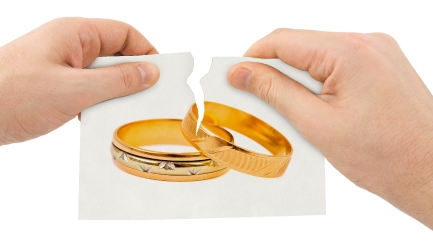
divorceErectile dysfunction isn’t just a blow to your sexual health, but also the wellbeing of your marriage. This is according to a new study which has dubbed impotence to be an emerging major cause of divorce in India. Researchers from the Alpha One Andrology Group, an association of doctors dealing in sex-related problems in men, noted that 20-30% of Indian marriages are breaking up for want of satisfaction in sexual life.


The study discovered that erectile dysfunction affects 50% of men over the age of 40 and 10% percent of men below 40. According to the studies findings, this is the most poorly understood and mismanaged of all medical disorders and results in marriages breaking up. Anup Dhir, a reconstruction surgeon and andrologist, reported, ‘The analysis revealed that of the 2,500 men suffering from erectile dysfunction, one in five were divorced while the marriages of one in 10 were on the verge of breaking over their physical health.’


He continued, ‘Maintaining a healthy marriage requires time, effort and compromise from both spouses. When one or both spouses find a marriage to be unsatisfactory, it is likely because of problems that arise due to issues with communication, expectations or sexual dissatisfaction.’ On average, married couples have sex 58 times a year, or slightly more than once a week the study found. Dhir explained, ‘If the number lacks, it means there is a problem with a partner. Sexual impotence is becoming a common problem among couples in major cities due to sedentary lifestyles, hypertension and busy schedules.’


However, sexual dysfunction could be a sign that there’s a problem with other aspects of your wellness. The study found that diabetes was the leading cause of erectile dysfunction followed by hypertension. The study highlighted, ‘As many as 48% of patients above the age of 40 were diabetic while 45% with hypertension have severe erectile dysfunction. Men who have diabetes are found to develop erectile dysfunction nearly 10 to 15 years earlier than men who do not suffer from the disease.’


C.M. Batra, an endocrinologist with Apollo Hospital, noted that diabetes medications may be to blame. ‘These drugs not only affect and at times suppress the central nervous system but can also cause serious damage to the blood vessels, resulting in permanent erectile dysfunction,’ Batra said.  Dhir added that seeking medical help for erectile dysfunction remains a stigma among Indian men, which is why many marriages break up. ‘Men have an ego problem in accepting the fact and most of them remain secretive about their sexual health, which leads to delayed treatment,’ he said.


Could Erectile Dysfunction be a Major Cause of Divorce?