Showing posts with label Parkinson's Disease. Show all posts

Using pesticides doesn’t only have an impact on your environmental wellness; it might also threaten your mental wellbeing. This is according to a new study from researchers at UCLA, who have found that a common combination of farm chemicals used to protect potato, dry bean, and tomato crops from bugs, weeds, and other pests seems to have the unappetising side effect of triggering Parkinson’s disease.


The study, which was published this month in the American Journal of Epidemiology, gives support to previous theories that pesticide exposure can lead to the degenerative disorder, causing such debilitating symptoms as impaired motor skill, speech, and other functions. According lead study author Sadie Costello, former doctoral student at UCLA who is now at the University of California, Berkeley, ‘We were able to show in humans what animal data had previously suggested. Animal experiments are done in highly controlled environments in which exposure can be measured . . . the chance of actually seeing an effect in humans is not very high unless there is, in fact, quite a large effect.’


Suspicion was first raised that pesticides can trigger Parkinson’s disease when high rates of the disorder were reported in farmers and rural populations. Therefore, the researchers embarked on a study of 368 long-time residents of California’s Central Valley who had been diagnosed with Parkinson’s, as well as another 341 residents as a control group. Some of the participants enrolled on the study inhabited areas within 500 metres of fields that had sprayed with the fungicide maneb and the herbicide paraquat between 1974 and 1999, and it was this subgroup that had a 75% higher risk of developing Parkinson’s than those who lived further away.


Moreover, if the subjects had been diagnosed with the disease before they were 60 years old, this earlier exposure increased their risk for the disease as much as four- to six-fold, and even exposure to just one type of pesticide increased their risk more than two-fold. Study senior author Beate Ritz, professor of epidemiology at the UCLA School of Public Health, commented, ‘The results confirmed two previous observations from animal studies. One, that exposure to multiple chemicals may increase the effect of each chemical. That’s important, since humans are often exposed to more than one pesticide in the environment. And second, that the timing of exposure is also important.’


Even if you don’t live near a farm, the results of the study still affect you. In America, the Centres for Disease Control have found that some pesticide chemicals are present in the blood or urine of nearly every citizen. You’re at risk of exposure from the air you breathe, the water you drink and the food you eat and – worst of all – the wellness experts don’t even know which chemicals are the most threatening. Warren Porter, PhD, professor and former chair of zoology, and professor of environmental toxicology at the University of Wisconsin-Madison, explains, ‘We really don’t know what the “worst” [pesticides] are because the criteria for evaluating them have been so weak, and the government has largely looked the other way until very recently.’


So what can you do to rid your home of toxic chemicals? Vote with your bank balance! Porter suggests, ‘Ordinary people can have an immense impact by changing their buying patterns. Buy organic, buy a good water filter, ask restaurants to offer organic items on the menu, get your hospital to go green, and patronise golf courses that have organic practices. Economics is immensely powerful and a change of only 0.5% market share has profound effects on a corporation.’

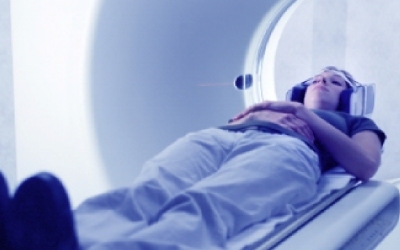
Parkinson’s disease is a progressive motor disorder which can take its toll on mental health and overall wellness. Caused by the loss of dopamine-producing neurons in the brain (primarily in the substantia nigra), Parkinson’s is the second most common neurodegenerative disorder after Alzheimer’s disease, and it is estimated that Parkinson’s affects the wellbeing of up to 10 million people worldwide. There is currently no drug that has been shown unequivocally to cure the disease or slow its progression, so what can treatments do for your wellbeing?


Levodopa/carbidopa – This is the gold standard therapy for symptomatic treatment of Parkinson’s, but levodopa is associated with long-term motor complications (such as motor fluctuations and dyskinesias), low blood pressure, arrhythmias, gastrointestinal problems, nausea, hair loss, sleep disorders, confusion, anxiety and hallucinations. The treatment also has a “wearing off effect” in patients who use levodopa for more than four years, and so patients must either increase their dosage or frequency (and face an increased risk of dyskinesia) or turn to alternative therapies.


Dopamine agonists – These drugs work differently to levodopa, in that they do not change into dopamine, but rather mimic the effect of dopamine in the brain. Dopamine agonists aren’t as effective as levodopa, but they do last longer in the brain and their effects do not wane over time. These treatments make up approximately 70% of the marketed therapies for Parkinson’s, but dopamine agonists unfortunately come with similar unpleasant side effects to levodopa/carbidopa.


MAO B inhibitors – An enzyme in your brain, known as Monoamine oxidase B (MAO B) breaks down dopamine, and so MAO B inhibitors block this breakdown, which slows your loss of dopamine and several of the side effects associated with Parkinson’s. If your disease is in the early stages, you’re likely to be treated with MAO B inhibitors initially.


Adenosine A2A receptor antagonists – These work to modulate the production of dopamine, glutamine and serotonin in specific regions of your brain, without increasing your risk of dyskinesia.


COMT inhibitors – COMT (or catechol O-methyltransferase) converts levodopa in the periphery to 3-O-methyl-DOPA (3-OMD), which is a metabolite that cannot be converted to dopamine. This metabolite then accumulates in plasma during levodopa therapy, reducing bioavailability of levodopa. Therefore, COMT inhibitors allow a larger amount of levodopa to reach your brain and consequently raise dopamine levels. This treatment is always taken in combination with levodopa.

Last Sunday, a mental health foundation celebrated 30 years of aiding the wellbeing of those with Parkinson’s disease. Known as “I Gave My Sole for Parkinson’s”, the Michigan Parkinson Foundation Walkathon and 5K Run at Northville High School, Michigan, took place in order to fund programmes and services for the wellness of patients and their families.


According to Debby Orloff, chief executive officer of the foundation, ‘Parkinson’s disease is a chronic neurological condition affecting more than 30,000 individuals — and growing — in Michigan. Our focus at the Michigan Parkinson Foundation is to give every person with Parkinson’s and related disorders responsive, compassionate quality care and support.’ Depending on age, walkers and runners paid an entry fee of $15-$25 to participate in the event.


As part of the foundation’s 30th anniversary commemorations, the event honoured special guests including Westland’s Ruth Ann Butler, facilitator of the Livonia/Western Wayne Support Group and one of this year’s honorary chairpersons. In addition to Butler, honorary chairpersons include Larry Bauer and Raymond T. Bauer, M.D., sons of the late Dr. Raymond B. Bauer, founder of the foundation; Livonia Treasurer Dennis Wright; State Rep. Vicki Barnett, D- Farmington Hills; Northville Township Trustee Marvin Gans; and Connie Spiteri.


Orloff noted why Butler was honoured for her years of hard work. ‘Ruth is a nurse educator, mother of six, grandmother of 12, and great-grandmother of two,’ Orloff explained. ‘She was a care partner for her late husband, who had Parkinson’s, for almost 40 years. Ruth started volunteering at MPF’s offices around 1989. She’s a strong advocate for patients and families. She created a book of writings of children whose parents have Parkinson’s. She leads monthly meetings for the Livonia/Western-Wayne Support Group. And she continues to think up new ideas to help people cope with Parkinson’s.’


Butler responded that she was happy to help the foundation. ‘They enable the support groups to assist anyone, anywhere,’ she enthused. ‘People diagnosed with Parkinson’s can call down to the foundation office, and anyone in this vicinity can call me. People need to talk to somebody who knows something about the disease. Support groups – and I emphasize the word “support” — offer education, fellowship, doctor referrals, and information. We are not a money-making organisation. There is no charge to join our group.’

Moving to the country may seem like the ideal respite for your mental and emotional health, but rural living could increase your risk of Parkinson’s disease. This is according to new research, appearing in the journal Neurology, which was based on an analysis of more than 100 studies from around the world.


The study researchers from the IRCCS University Hospital San Matteo Foundation in Pavia, Italy, found that exposure to pesticides, bug and weed killers and solvents is associated with a higher risk of developing Parkinson’s disease. According to study author, Dr Emanuele Cereda, ‘Due to this association, there was also a link between farming or country living and developing Parkinson’s in some of the studies.’


The researchers investigated studies on weed, fungus, rodent or bug killers, and solvents and how they may affect your wellbeing with Parkinson’s disease. The researchers also evaluated proximity to these chemicals, due to country living, occupation and drinking water. The results of the study revealed that, if you are exposed to bug or weed killers and solvents, your risk of developing Parkinson’s disease is increased by 33 to 80%.


Exposure to the weed killer paraquat or the fungicides maneb and mancozeb, for example, was associated with twice the risk of developing the disease in controlled studies. Dr Cereda noted, ‘We didn’t study whether the type of exposure, such as whether the compound was inhaled or absorbed through the skin and the method of application, such as spraying or mixing, affected Parkinson’s risk. However, our study suggests that the risk increases in a dose response manner as the length of exposure to these chemicals increases.’


When your wellness is affected by Parkinson’s disease, it means you have a deficiency of dopamine. This is a hormone that affects the way your brain co-ordinates the movements of the muscles in different parts of your body. The chronic neurological disorder mainly develops in those over the age of 50, and roughly five in 1,000 people in their 60s, and 40 in 1,000 people in their 80s have the condition. Parkinson’s tends to present with the symptoms of slowness of movement, stiffness of muscles and shaking. There is currently no cure for the disease, and the symptoms tend to slowly worsen with time. However, the rate varies from patient to patient.

scan1If you have any concern for your mental health and wellbeing, it is imperative that you go for a brain scan from age 55 years onwards, at least once in five years, to check for signs of mental deterioration. This is according to leading scientist Pravat Mandal, a professor at the National Brain Research Centre (NBRC) in India, who noted that medication can prevent deterioration and reduce the symptoms of Alzheimer’s and Parkinson’s, if the condition is diagnosed early.


Mandal, who is also the senior editor of the Journal of Alzheimer’s Disease and guest editor of the American Journal of Neuroradiology, has developed a state-of-the art imaging technology to detect early signs of dementia, which is available, free-of-charge, for the first time in India at the NBRC. He noted that at least 300 people have benefited from the test since it was introduced about a year and half ago.


Mandal explained, ‘Before any manifestation of brain disorder, certain chemical changes occur in the specific regions of the brain. In some cases, structural changes are also observed in the brain prior to the clinical symptoms. For instance, in the case of pre-Alzheimer’s, hippocampus, a part of the brain involved in the processing of memory and spatial navigation, becomes alkaline; in normal aged persons this is acidic.’


‘The test could easily detect the abnormalities in the early stage of any disorder. The MRI scans offered by the centre are safer and easier as they do not require radiation, drugs and surgery,’ Mandal, a post-doctoral Fellow at the University of California-Davis and an assistant professor in the psychiatry department of University of Pittsburgh School of Medicine, commented, adding that the test takes just 13 minutes to complete.


If your wellness is affected by dementia, you progressively lose your cognitive functions. You tend to forget things like what you ate yesterday or your own address, and you can also develop hallucinations. According to the World Health Organisation (WHO), the number of people living with such diseases worldwide was estimated to be 35.6 million in 2010, and this could double by 2030 and more than triple by 2050.


Why Should You Have Regular Brain Scans from Age 55?

Bone marrow stem cells may be able to reverse the symptoms of Parkinson’s disease. This is according to a new study, led by Takuya Hayashi from the RIKEN Centre for Molecular Imaging Science, who found that, in monkeys, neurons can be derived from bone marrow stem cells and then transplanted back into the brain, which can improve your wellness if you have the devastating neurodegenerative disease.


When dopamine-producing neurons in your midbrain die, this is known as Parkinson’s disease. The neurodegenerative mental health disorder can affect your wellbeing with motor symptoms, such as tremors and stiffness, but the cause of cell death remains unknown and researchers have long sought a way to replace the lost dopamine-producing cells. Now, this new study, published in The Journal of Clinical Investigation, has found a way to do so in monkeys.


For the study, 10 adult male cynomolgus monkeys (crab-eating macaques) were injected with a neurotoxin that induces a Parkinson’s-like condition. The researchers then took bone marrow samples from the monkey and isolated the mesenchymal stem cells (MSCs), which they then treated with growth factors. This directed the MSCs to differentiate into A9 dopaminergic neurons, which is the neuronal subtype that is most severely damaged in Parkinson’s patients, and these cells were then transplanted back into half of the subjects – by means of comparison.


When cells are derived from and transferred to the same individual, this is known as an ‘autologous’ transplantation. This is an attractive approach for eventual clinical use, as autologous transplantation eliminates the possibility of immune rejection. The results of this transplantation revealed that the treated monkeys showed improvements in motor behaviours, while the other five, who were given a sham operation, showed no improvement.


The team plans to use monkeys again for their next experiment, in which they will compare the efficacy of transplanting differentiated cells versus native MSCs. Hayashi commented that he also hopes that his system can soon be translated into humans. ‘Our newly developed system of cell-based therapy restored motor function of animal models with Parkinson’s disease,’ he said. We should now test whether we can derive functional and viable dopaminergic cells from human MSCs.’


Could Bone Marrow Stem Cells Reverse Parkinson’s Symptoms?