Showing posts with label Swimming. Show all posts


Swimming in the winter may have a certain spontaneous appeal, but it’s better for your fitness and overall wellbeing if you’re prepared. Don’t let this put you off; winter swimming is completely exhilarating, so here’s how to dive in.


1. Be safe: According to wellness writer Nell Frizzell, ‘Anyone with a heart condition and asthma has good reason not to attempt winter swimming at all. Talk to a GP beforehand if you have any concerns, but also bear in mind that thousands of people swim outdoors safely every year…Winter swimming is a refreshing, life-affirming and exhilarating experience, silencing that relentless inner monologue of worry, doubt and things to do. Swimming in Britain is also extremely safe, and as long as you take a few basic precautions you’ll have a wonderful time.’


2. What to Wear: ‘The sea is at its warmest in September,’ notes Frizzell. ‘When the sun has been heating it all summer. It’s at its coldest in April, so February temperatures can be a pleasant surprise. You can wear a wetsuit if it makes you feel more confident, but I prefer a swimsuit so my body is in contact with the cold water – once you get used to the temperature, it’s a lovely experience. A wool hat over a swimming cap keeps your head warm, and wetsuit gloves and slippers will protect your extremities.’


3. Play it Safe: Frizzell cautions, ‘The sea is often much rougher in winter, so be sensible about where you swim. Do a bit of homework – there are lots of good videos online of what a rip tide looks like. Never go out of your depth, and if you’re swimming in rivers, lakes, pools or ponds, always make sure you’ve identified where you can climb out before you leap in, avoiding seaweed-slicked or steep-sided rocks. It’s also a good idea to have someone keeping an eye on you, just in case something goes wrong. Or, even better, find a friend to swim with you and you can spur each other on.’


4. Getting in: ‘I break it down into five stages,’ says Frizzell. ‘First, go in up to your knees. Wait a few seconds, then wade out to your middle. Check you feel comfortable and the water is calm. Then slide out so the water is over your chest. Give your heart a couple of beats to adjust, and then: plop – you’re ready to dive in. Not everyone likes going underwater but, for me, there is nothing like the electrifying flash of cold water across your head. Once you’re in, don’t feel pressure to swim very far – relax, this is about pleasure, not burning calories.’


5. The Swim Itself: Frizzell details, ‘After a few seconds in the water, my arms and legs start to tingle, then my toes and fingers go pale and numb. This is nothing to worry about. But listen to your body – unless you swim every day you won’t have had a chance to build up resistance to the cold, so don’t stay in any longer than about two minutes…And don’t forget to enjoy it! Relish the unfamiliar perspective of an empty, windswept beach and snow-dusted cliff tops.’


6. Getting Out: Frizzell comments, ‘The rush of adrenaline will make you feel warm for a few minutes after you get out, but you should immediately strip off, rub yourself down and get as dry as you can before you start shivering. If possible, get under a warm shower or stand in a tub of warm water – but don’t heat your body up too fast. Then start to layer up; lots of thin layers are better than just one big, chunky jumper, and a hat will keep your head warm. Keep moving, stamp your feet, rub your hands and let the endorphins wash over you.’

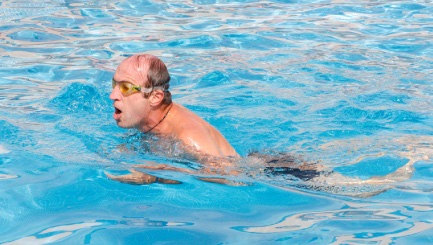
 

When you’re thinking about weight loss wellness, the idea of going to the pool might not appeal. Sure, it’s fine for people who are already skinny, but a workout when you’re wearing nothing more than waterproof underwear? No thanks! Still, whether you want to improve your wellbeing, increase your fitness or just shape up and slim down, you may want to give swimming another chance. You may not love how you look in your swimming costume, but no other workout burns calories, boosts metabolism, and firms every muscle in your body (without putting stress on your joints) better than a swimming workout – so you’ll be bikini-body sexy in no time.


The benefits of swimming have been backed up by tonnes of research. Investigators at Indiana University, for example, looked at recreational fitness swimmers in comparison with non-swimmers, and found that swimmers of all ages had more lean muscle and trimmer waists and hips. All you need to hit the water is a swimming costume, some googles and maybe a cap, making it a pretty convenient way to workout (albeit without the lace-up-your-shoes-and-go convenience of running – but who likes running anyway?) Let’s take a closer look at why water just works.


Swimming workouts provide the perfect combination of calorie burning benefits with muscle recruitment, meaning it will sculpt and shape your body with ease. Even putting in a low amount of effort can help you to burn around 500 calories in an hour, while you can torch up to 700 calories if you put in a vigorous effort.  Every kick, push and pull you make is like a mini resistance workout for your entire body — especially your core, hips, arms, shoulders, and glutes – because water is nearly 800 times denser than air. This means that you’re not only blasting calories as you swim; you’re also building the lean muscle you need to boost your metabolism and burn calories even when you’re showered and dry. However, even though swimming makes you lean and mean, the irony is that it’s also kind to your body.


As you become virtually weightless in the water, you give your joints a much-needed break from gravity. Joel Stager, PhD, director of the Counsilman Centre for the Science of Swimming at Indiana University at Bloomington, who has studied the effects of swimming for years, argues, ‘You can swim almost every day without risking injury. You can’t say the same for running or strength training.’ In fact, you can swim at any age without risk, which is a major pluspoint as swimming has been shown to help you stay young. Stager’s research, which was presented at an American College of Sports Medicine Conference, has shown that your blood pressure, cholesterol levels, cardiovascular performance, central nervous system, and cognitive functioning are all comparable to a younger person if you swim. He notes, ‘Our research shows that habitual swimmers are biologically up to 20 years younger than their actual age.’


However, before you hit the pool with high expectations, make sure you don’t overdo it. A lot of beginners jump into the water and plan to swim for a solid half hour, but Joel Shinofield, head swim coach at Washington and Lee University in Virginia, details, ‘Four minutes later, they’re inevitably hanging onto the edge, feeling completely defeated.’ When you swim, your cardiovascular system and muscles are required to work differently than they do on land, and so your body has to adjust. Shinofield explains, ‘The key to an effective swim routine is splitting it into shorter segments, mixing in a variety of work and rest intervals, and using different strokes, drills, and intensities. It’s not only more interesting but also a better workout.’

Have you heard the rumour that swimming can actually make you gain weight? If you’ve been thinking of taking up going to your local pill this New Year to help you improve your fitness and boost your wellness and wellbeing with a trim figure, you may be a little perturbed at the idea that the very thing you are doing to help you lose weight could actually help you gain it.


The huge caveat to this, however, is that it is not the physical act of swimming that makes you gain weight. It is more about how you think after you have been in the pool. Many people feel so hungry after a swim that they end up overeating immediately afterwards. They often have a mistaken idea about how many calories swimming actually burns, and so feel justified in having a treat afterwards.


Swimming is a great exercise, and providing you also watch your diet very carefully, it can help you to lose weight, but it is important that you realise that swimming doesn’t burn as many calories as you think. The reason is that you are not weight bearing whilst you exercise. The buoyancy that the water provides is great in many ways, as it helps you to exercise if you have an injury and also helps to avoid injuries as you are not taking any strain on your joints, but it also means that you are not having to work as hard as you would on dry land.


The water creates a resistance, and pushing through this makes you feel like you are working harder than you actually are. Having said that, you may still end up burning more calories whilst swimming than you would doing other types of exercise, because of this resistance.

We all know the benefits of swimming, but have you ever considered adding synchronised swimming to your repertoire? It seems that many have, with this surprising trend becoming popular among fitness fanatics and health enthusiasts. While it may seem like an easy and relaxing way to spend an afternoon, don’t be so quick to judge – this is a tough workout. You may associate it with 1940s movies and vintage swim caps, but there’s more to this form of exercise than simply looking the part. If Aqualillies have anything to say on the matter, a stylish LA based performance troupe, you’ll soon realise the amazing opportunities this exercise offers for your body. Hard-core athletes as they are, there is a requirement to not only be a good swimmer but also to have the stamina to keep up – this is an intense few hours that’s giving many people food for thought when it comes to effective toning exercises. So what has made synchronised swimming so popular in recent years?


Synchronised swimming is experiencing a modern reinvention, with celebrities taking it up and raving about the toning effects it has on the body. This is swimming with the volume turned up, and it’s sweeping the globe. Naturally, this is an art to be mastered, but for beginners and those hoping to learn the skill there is the chance to pick up the basics and see results in the flesh. A 75 minute class begins with poolside stretching followed by a four lap warm-up – and that’s just for starters. The tools of the trade are the classic swim cap, along with a nose plug and goggles. Then you move on to the routine itself, where you’ll practice an intense synchronised regime with your fellow pool-mates. As you swim to the music, the moves will be broken down for ease of learning. Everything from dipping under the water to sweeping arm movements is included, so you’ll get a really great workout in the pool. Movements such as ‘The Eggbeater’ support your torso while you’re out of the water so that you can make the elegant arm movements, which means treading water whilst cranking your legs in opposite directions.


Swimming is one of the few exercises which offers every muscle in your body the chance for a workout – it’s cheap, fun and a great overall tone-up. But with synchronised swimming, you get the added bonus that you get to meet people and learn a new skill in the process. With this trend becoming more and more popular among celebrities, not just for its kitsch factor but also the amazing effects it has on the body, there are classes popping up all over the country. Obviously, there are some prerequisites – a fairly good level of swimming, for example, helps. But for any water lovers who like to take a dip in the pool from time to time, this is a seriously good workout that not only improves your muscle tone but also gets your heart rate up. Studies show that people who find a workout they enjoy are more likely to stick to it, and this is a really fun way to burn calories each week. After the class, you’ll no doubt be a little achey for a few days, but you’ll find yourself eager to get back in the pool to pick up a new routine and hone your elegant swimming skills – a sophisticated way to shift the extra pounds and create a sleek body.

Every year, my Dad does the Boxing Day Swim. As the name suggests, my Dad will – of his own free will – go to the beach the day after Christmas and swim in the ice-cold sea. Is there a problem with his mental wellbeing? Probably – but not according to wellness expert Greg Brian. The co-owner of BlogMutt and winner of the first annual Yahoo! Content Spotlight Award notes, ‘Those people jumping into frigid water with barely any clothing on aren’t really crazy at all. In fact, you probably know someone (within a sixth degree of separation) who does this ritualistic procedure once a week in winter or on New Year’s Day here in the United States.’ So why are people going for a December dip?


Swimming in ice cold water is a major trend in the US, with quite a few people in various states around the country belonging to an organisation called the Polar Bear Club. In this club, ice swimming is an annual tradition, but aside from this confusing fact another remains; most of the members in the Polar Bear Club are located in New York. This may be partly due to the fact that the lakes and rivers in New York have a more balanced temperature that’s better-suited for this type of swimming – and the Polar Bear Club members have to sign waivers that the organisation isn’t responsible if someone gets hypothermia or worse after being in the water. With this in mind, then, why on earth would you bother?


Brain notes, ‘You can officially mark down this outlandish procedure as a form of preventative medicine — at least according to those who adhere to the original principles behind the Polar Bear Club. The founder of the organisation was also a true-blue New Yorker by the name of Bernarr MacFadden who may be one of the most legendary originators of alternative health who’s been utterly forgotten from even the alternative health world of today. When he founded the PBC in 1903…he also touted the then-unheard-of procedure of swimming in lakes and rivers during the height of winter to help boost the immune system, supposedly help virility and used generally as a natural cure for depression.’


Rightfully, people were sceptical at first but, as Brian explains, ‘MacFadden managed to draw people in who (for generations now) have proof of not getting any colds, flu or any other illness during the year after taking a dip in frigid water on New Year’s Day. People with circulation problems say it helps them feel better—as well as alleviating the effects of arthritis. But MacFadden pointed out already back in the early 20th century that you have to swim in cold water several times a week to get the greatest benefits. With that, he single-handedly blew away the notion that you can catch cold or get pneumonia by swimming in cold water several times a week (while being careful on how long you’re in the water to avoid hypothermia).’


Obviously, this is contingent on what shape your health is in before you take the plunge. Brian says, ‘MacFadden wisely painted an accurate portrait (and still relevant today) of what preventative methods are rather than promoting the typical process you’d see in that era of quick-fix quackery…otherwise known as a panacea in a bottle.’ Brian adds, ‘Even though many who participate may say they do it just for the thrill as well as for charity, any of the few I’ve ever known who’ve done winter swimming says that it did help boost their immune system and prevented them from even having to get a flu shot let alone getting the flu.’ I guess it’s not time to put your swimming costume away just yet!

When you talk about losing weight, what you’re really saying is that you want to lose fat. After all, who cares what a number on a scale says if it’s all lean, toned muscle? Plus, a good muscle to fat ratio is good for your wellbeing, especially if you achieve this physique through safe and effective exercise. The best exercises for burning fat follow the premise of burning the most calories in the shortest period of time. However, burning too many calories can interfere with your workout wellness, making you feel lethargic and totally unenthusiastic about exercise. If this happens, you can say bye bye to buff and trim and hello to bulge, so which exercises can give you great results, whilst leaving a little in the tank for next time?


1. Jogging or Walking: The great thing about walking or jogging there’s no excuse for not doing it. Whether you live in a big city or in the middle of nowhere surrounded by vast open fields, whether you’re a fitness freak or a couch potato, and whether you can afford a pricey gym membership or you haven’t got two tenners to rub together, anyone can go for a walk or jog. You can go walking or jogging anywhere at any time, and the beauty of it is that you can continually build upon your progress, increasing the level of intensity or distance you go as your fitness levels improve. All you need to do is introduce a moderately sloped hill to your route, walk with heavier weights, or simply go a bit faster, and as soon as a route gets boring you can change it up and explore new areas. This variety explains why walking and jogging are some of the best fat-burning exercises, as long as you keep pushing yourself to the next level every week.


2. Circuit Training: Of all the fat-burning exercises, circuit training is the most hard-hitting. Minute by minute, circuit training burns more calories than any other cardio vascular exercise, which makes it perfect for shedding that unwanted blubber. The problem with this, as opposed to walking or jogging, is that it can be a lot for a beginner to take on, so it may be useful to research the best methods of circuit training before you get started, or, even better, consult a trainer who can help you come up with an individualised, fat-burning routine. If you’re serious about burning off that body fat, you should be aiming to include one or two circuit training sessions in your every weekly workout routine but, again, if you’re just starting out you may have to build up to this point.


3. Cross Training: Although this involves going to the gym or forking out for your own cross trainer, this exercise is still worth pursuing if you seriously want to shed those pounds. The pushing and pulling of the handles and foot rests gives you a total upper and lower body workout, which helps to strengthen your muscles, improve your heart health and, as you may have guessed, provide a good means of burning calories to target body fat.


4. Swimming: Like cross training, swimming works all the areas of your body but, unlike cross training, it’s a lot more cost effective (especially if you live by the sea). This low-impact cardio exercise is great because you hardly realise you’re exercising, as a dip in the pool or sea refreshes you body and mind, and makes you forget you’re sweating off unwanted fat. Plus, it takes far less time to recover from swimming than any of the above activities (with maybe the exception of walking) which means you won’t be aching come the morning, and will be ready to hit the pool again in no time.

swimming helpsA new programme has been developed to help soldiers who are struggling either with their cardio/heart health or with their weight control. This was developed by Sgt. Corey Bell of the 4th Brigade Combat Team, 1st Armoured Division.


He is one of a number of non-commissioned officers who need to ensure that their wellness, wellbeing and fitness are at such a level that they would be available for any mission. These officers are the backbone of the army and need to be ready at a moment’s notice, making it extra important for them to keep on top of their physical health and fitness, but this can be a hard thing to achieve.


Sgt. Bell was faced with this situation as he tried to help one of the soldiers in his command to improve his run time and to lose some extra weight, too.


At the same time, Bell began to take part in a long-distance swim programme, which was a period of intense preparation for the German Armed Forces Military Proficiency Badge.


He took his soldier along with him, and they went to the pool every day at lunchtime, swimming for the whole of lunchtime and eating their lunch on the way back to their posts. This plan that he devised was intended to take swimmers from being able to swim only a little way to gradually increasing their stamina to the stage of being able to swim for a mile without stopping.


Bell is enthusiastic about the opportunity that exercising in the water offers, as it raises the heart rate without the risk of injury, as the impact when swimming is virtually nonexistent. It takes far less time to burn off the amount of energy that you would when participating in another sport on the land.


The soldier in his command lost over 30 pounds during the time of swimming and is grateful that he trusted Bell’s swimming plan, as well as a diet that Bell devised for him.


How Swimming Helps Soldiers Slim Down And Boosts Health

arthritis joint painSuffering from arthritis can make exercise seem like a terrible idea. Arthritis affects the joints and can cause painful inflammation and swelling. So the idea of going to the gym and working out might make you feel like you would only be making things worse. But this isn’t actually true, and exercise is very important to your health, especially if you have arthritis


Here are some important tips to follow if you are a sufferer but you want to make the most of your workouts.


Use a stationary bike


The most important aspect of exercising with arthritis is to avoid impacting your joints with any exercise that involves running or jumping. As such a stationary bike is perfect – you work out your legs and build our muscles but there’s no chance of doing any damage to your aching joints.


Go swimming


Swimming is another great way to exercise but still taking the weight off your joints. It promotes cardiovascular fitness and flexibility. This is all very important to take away pressure from the cartilage in your joints and help you stay as healthy as possible.


Weight training in moderation


The problem with arthritis is due to the strain placed on your joints. Having strong muscles actually means you’ll stabilise the joints and reduce some of the pressure that is placed on them. Weight training is the best way to do this quickly, but make sure that you don’t over exert yourself.


Warm up properly


Warming up correctly is good practice whether you have arthritis or not, but is especially important when parts of your body are already suffering discomfort or pain. Warming up helps you reduce additional swelling or inflammation.


Stay a healthy weight


Combine exercising with diet to maintain a good weight and reduce the swelling of your joints on a daily basis. This is the best overall tactic.


Top Workout Tips For Patients Suffering From Arthritis