Gggg


Alzheimer’s disease is a frightening affliction of the mind that is not yet fully understood. It can be a dangerous illness, as Alzheimer’s patients try to navigate their world with a changing mind. Fortunately, there are some ways you can reduce the risk or magnitude of Alzheimer’s disease by taking certain preventative measures. Exercises, both mental and physical, can delay the onset of Alzheimer’s. These are four exercises you can use to keep your brain alert:
1. Puzzles
Puzzle games like crosswords, Sudoku, and jigsaw puzzles, help keep the brain alert. Not only are they challenging and fun, they’re excellent for keeping the mind occupied when you have extra free time. Keep a puzzle book with you when you’re in line at the DMV, the doctor’s office, or anytime you have a spare moment or two. Switch up the puzzle types for the best brain workout.
2. Memory Games and Trivia
These work especially well if you have friends you can play with on game night. Keep your mind sharp with board games that combine trivia with wordplay, drawings, and charades. Sarah Blige, a memory care specialist with Osprey Lodge, recommends playing with a group, as this pushes your mind to adapt to the clues and strategies of those you play with and provides an extra level of mental stimulation while you participate.
3. Current Events
It may seem odd, but staying on top of current events in the world around you is another great way to stay alert. Even tuning into public access radio helps keep you thinking clearly, and it certainly isn’t any worse than hearing the same Top 40 song for the third time in an hour. If you can, subscribe to a newsletter that will give you condensed versions of important current events in politics, entertainment, and your local area.
4. Combining Mental and Physical Exercises
Physical exercise has been shown to both delay the onset of Alzheimer’s and reduce its chance of developing. When you keep your body physically fit and healthy, your brain, which is an organ that needs training just as your heart or lungs, will stay healthy as well. Try to mix up cardiovascular and strength training exercises, combining physical exercise with mentally stimulating activities like archery, tennis, or hiking.
Alzheimer’s disease can be scary, but it is also preventable to a degree. Staying active using puzzles, games, and other engaging activities is a great way to reduce your risk. With regular activities like these, you can reduce the risk of developing severe Alzheimer’s and prevent its early onset.

If you’re in a long-term relationship, you may have found your sex life bearing the brunt of your familiarity and comfort levels. It can be difficult sometimes to make sex exciting and passionate when you spend all of your time with someone, but the effort is well rewarded when you do! There are loads of ways to make sex more passionate, and one of the easiest ways to get back in the mood is to talk about when you first met and the things which made you fall in love in the first place – these feelings of nostalgia almost always bring the passion back to your relationship immediately. Once you’re there, what can you do to make things more interesting? Here are some tips on how to combat those excuses for why the passion has gone, and how to make sex feel more exciting again.
In between, work, the kids and your social life, sex is invariably the last thing on your mind. But while it may sound counterintuitive, eyeing up a handsome stranger could be just the thing to spike your libido. Checking out other people puts sex back in your mind, getting you thinking about the next time you’ll have the chance to get steamy in the bedroom with your partner. So don’t be afraid of eyeing up that cute barista at your local coffee place or flirting with the guy on the bus – it could be the best thing that’s ever happened to your sex life. Just remember that the rule is to look, not touch!
There’s always an excuse, such as a headache, a deadline at work or looking after the kids all afternoon that’s made you tired. It’s no surprise that with so much going on, we’re not really interested in having sex. But sometimes the best thing to clear your mind and help you relax could be just that. Sex is renowned for being a great stress buster, it can perk you up, and it can help you to feel more connected to your partner as well which is great for increasing intimacy. No-one ever feels bad having sex once they’ve done it, so next time you feel the excuses piling up, just ignore them and do it anyway – you won’t regret it!
When you’re spending all your time doing chores around the house, dealing with the finances and taking care of the kids, you wind up feeling more like housemates than lovers. That’s to be expected, but there are ways you can overcome this and get back to being the passionate couple you once were. Making out with your partner can help you feel like love-filled teenagers again, and can remind you that you’re in a relationship rather than a friendship. Often, the amount of time people spend kissing when they’re in a relationship decreases over time as they settle into a long term relationship. So make the effort to keep up the make-out sessions and enjoy the feeling of romance entering your relationship again.Regular date nights are a great way to do this, as it strengthens your relationship and the passion, and also forces you to make the effort to set time aside for each other each week – something that can be easier said than done when you’re in a long-term relationship.
Do you feel tired, heavy and bloated? There is a complementary therapy that could help improve your wellness and wellbeing in this regard: yoga. Yoga can help to shed toxins and restore your energy. As you twist, breathe, balance and cleanse your body, the yoga restores your natural energy flow and gives you an automatic detox.
There are some yoga positions that are best to help you cleanse your mind, and the first of these is the child’s pose. To do this, curl up and then spend a few minutes making your breath deeper and deeper. Yogic breathing is called Ujjayi breathing, too – when you breathe in and out of your nose, keeping your lips sealed.
When you feel calm and ready, move on into downward facing dog position. Stretch out your arms in front of you and place them on the floor. Curl your toes underneath you and push your bottom up towards the ceiling. Hold this position and take ten deep, calming breaths.
Next, move on to the revolved crescent lunge. To do this, you need to inhale and lift your right leg up as high as you can and then step down between your hands, pressing up into a high lunge. Move your hands together to your heart, and then twist to the right, putting your left elbow onto the outside of your right knee – this is the revolved crescent lunge. Take ten deep, yogic breaths. Release your hands and place them back on the mat in the downward facing dog pose.
The mountain pose is a bit like downward facing dog, except that you walk your feet up to the top of the mat, closer to your hands. Inhale as you press up into the mountain pose, and hold it for a few breaths.
If you practise all these poses regularly, they will help to improve your circulation and make you feel better, fitter and stronger overall.
September is the time of year for a lot of young adults to raid IKEA, pack up their parents’ cleaning supplies and head off to uni. However, while you may think your wellbeing will only benefit from striking out on your own for what is, essentially, three years of drinking interspersed with the occasional lecture, there’s a lot more stress involved in uni life than you might be prepared for. The classes are harder, the essays are longer, the housemates have sex louder and no one does the washing up; in short, your emotional health takes a beating from uni life, so here’s how to stay calm, cool and collected.
1. Breathe better: Taking slow deep breaths does wonders for your emotional and physical wellness, helping to lower your blood pressure, focus your thoughts and clear your mind. Plus, you can do it whenever and wherever the stress hits.
2. Take a step back: When you feel overwhelmed, stop and re-examine the situation. Talk to a friend or family member to see if you can get a little perspective, and stop things appearing a bigger deal than they actually are.
3. Find your happy place: On your laptop and phone, keep photos of great memories that you can look at when things are going haywire. This releases your brain’s mood-boosting hormone dopamine, which helps you to relax.
4. Write all about it: If your friends or family members are too busy to talk it out, writing down your emotions and the situation can help you to put things in perspective, clarify your thoughts and feelings and help you solve your problem more effectively.
5. Stop, meditate and listen: Meditation is great to use in conjunction with breathing exercises, whether you centre on a positive mantra or simply focus on clearing your mind as you breathe.
6. Get active: Regular exercise isn’t just helpful for combating those late-night kebabs, it also relieves mental issues such as stress. Go for a walk around campus or a nearby park for an instant mood lifting, stress-busting effect.
7. Thank you for the music: According to various studies, music helps hospital patients heal more quickly and motivates them to perform better in physical therapy. Find some solid tunes that lift your mood or relax your mind, and put them in a playlist for those much-needed musical moments.
8. Don’t get stuck in the middle: Whether your housemates are arguing over who’s turn it is to take out the bins, or your course friends fall out over a reluctance to share notes, other people’s drama is just that; other people’s. There’s no way to be involved in drama without being personally affected, so when the bickering and bitching starts to bubble, take a step back – literally. Make your excuses, like needing the loo or fake answering your phone, and leave the room until you have the right perspective on the situation.
9. Sleep: This may seem like a foreign concept for a uni student, at least during regular night time hours, but sleep is vital to keep your mind and body in balance. Too little sleep has been linked to everything from heart trouble to depression so, if you can, try to get seven to nine hours on a regular basis.
10. You are what you eat: You may be feeling lethargic, fat and stressed because you’re eating too much fast food and sugary stuff. Fresh fruit and veggies are essential for your body and mind, so try to eat five of these bad boys every day.
It’s common knowledge that if there is one aspect of your life will inevitably and irrevocably change your body, it is ageing. We are all aware of aged or ageing relatives and the way that they have been changed by their battles with time. We naturally think of older people being more vulnerable to illness and disease, as well as being generally more fragile than they were when they were young. And it may well even be true that we place too much of an emphasis on cliché when we think of the old.
For so many people the first image that pops into their head when they think of old people in the wrinkled, dour old man with politically incorrect views and an aversion to change. They’re bad with technology, slow on the uptake and completely unwilling to change. But of course this is just the sort of stereotype that pigeonholes our opinions. So what is the truth of the matter? Let’s have a look at some scientifically valid examples of the way ageing actually changes us.
With regards to the belief in the rather right-wing-leaning opinions of the old, it seems that this might actually be more bluster than reality. According to one survey of more than 46,000 Americans taken between 1972 and 2004, adults’ attitudes became more liberal regarding their thoughts on politics, economics, gender, religion and even race and sexuality issues as they got older. While the survey did not look at the patterns of individuals, so we can’t tell whether conservative people specifically became more liberal as they aged, it was clear from the analysis that as people aged they were more likely to have a more tolerant attitude.
It also seems that it’s not only what’s on the outside physically that changes within our bodies, it is also our cells. Specifically we know that stem cells age just in the same way that other cells do. Stem cells are often thought of as being able to combat ageing as they replenish old or damaged cells, but it seems that they also feel the effects of the wear and tear of ageing. Research published in 2007 argues that stem cells’ regenerative abilities declines as you get older.
Another study showed that as we age we seem to naturally need less sleep – or at least this is one way of looking at the analysis that was presented. A study looked at the sleeping patterns of more than 100 healthy adults and allowed them eight hours of being in bed. The oldest group, who were aged from 66 to 83 slept for around 20 minutes less than people in middle age, consisting of those who were 40 to 55. The middle agers, in turn, slept 23 minutes less than the youngest group who were aged 20 to 30.
Becoming distracted more easily also appears to be a problem for older adults than it is for their younger counterparts. It seems to be true that as we age we find it more difficult to tune out the things going on around us and focus on just one thing at a time.
But perhaps the most predictable and common sign of ageing is certainly backed up by medical knowledge. We know very well that looking at the skin can be a very quick and easy way to ascertain if someone is ageing. It seems that this is partially down to the outer layer of the skin – known as the epidermis – thinning as we get older. This combines with the fact that the skin becomes less supple as the years mount up.
If you want to lose weight and boost your fitness, a large part of the battle is not with your body, but with your mind. Your wellness and wellbeing is linked to the way you think in a much stronger way than you may understand. If you really want to get in shape, it’s time to change the way that you think about your everyday chores. When you stop thinking about them as daily activities and start thinking about them as ways to burn calories.
The truth is, exercise has a powerful effect on your mental health, and not just because of the serotonin (happy hormones) that it releases. Just by thinking you are doing something good for your health, a sort of ‘placebo effect’ occurs, where your mind is lifted and real physiological effects occur like lower blood pressure and weight loss. The trick is, then, to find a way of training your brain to believe that when you are doing daily activities, you are actually exercising.
A recent study backs up this theory. Researchers divided a group into two sections. The first section were given daily household chores to do, but they were not told that these chores were exercise. The second section were given the same chores, but they were told that these chores qualified as exercise. At the end of the four week trial period, the two groups had a medical test. The results showed that the group who believed that they had done exercise for the past four weeks had lower blood pressure and a lower BMI than the group that believed they had done no exercise.
This proves that when people think that their daily chores, such as hoovering, dusting and cleaning the floors count as exercise, these chores then actually make them healthier – so change the way you think about your daily routine!
Have you ever heard people say that wellness is a state of mind? There is actually some truth in that. Your mental and emotional state is quite closely linked to your physical wellbeing. That’s not to say that you can think your way out of any kind of serious health condition, but there are certainly ways in which you can use your powers of make-believe to help you succeed in life and feel healthier overall.
A recent study has proved that the power of the mind can actually help you to control cravings, to increase your motivation to work out and to improve your vision.
When you imagine yourself doing something, the brain is stimulated in the same way that it would be if you were actually doing the thing. Trying this technique is a way of ‘harnessing’ the brain’s powers.
If you are looking to curb cravings – such as when you are stopping smoking or attempting to stop eating carbs – your best friend is distraction. In one study on this area, volunteers were found to be able to reduce their cravings for food by using the smell of eucalyptus, or by imagining what a rainbow would look like.
Getting yourself down to the gym can be a brain-related problem too – the step out of your front door is often the most difficult step in your whole workout. In order to fix this, take a few moments to conjure up what your workout is going to feel like, imagining your heart pounding, and this is likely to give you the impetus to get up off the sofa.
Taking a power stance can also help if you are suffering from confidence issues. Research has showed that striking a confident stance can actually make you produce hormones that make you feel more confident.
Complementary wellness and fitness fads come and go, but you can’t deny the sustained popularity of yoga. Now, this ancient practice may feed in to your corporate wellness, as more and more business are offering classes to employees in an effort to curb rising stress levels and boost productivity. However, even if your boss doesn’t fancy the downward-facing dog, there are still things you can take from the yoga mat and bring into the office.
According to the Dalai Lama, the key to good health is “peace of mind.” This is the basis of Yoga; true health and success are the products of mind-body synergy. If you take care of your body, you, in turn, take care of your mind. Happier people tend to have stronger immune systems, better sleep quality and increased longevity, and so you cannot avoid either side of the mind-body health equation if you want to sustain a high performance at work.
Another focus of yoga is on flexibility; leaning into the stretch without forcing your body to go beyond what it is capable of. Yoga encourages you to be mentally flexible, and to breath and let go rather than force your body. When it comes to the workplace, letting go and adapting to change is a vital ability to have when things don’t go to plan. You should be able to bend without breaking, and be prepared to let go of Plan A so that Plan B can bring a solution.
Yoga doesn’t have an end goal, rather, it emphasises the process of improvement. You may want to get things perfect at work, but how often does that happen? The strive for perfection can prevent you from accepting yourself as you are, and develop a fear of failure that will inhibit your creativity and productivity. For digital media professional Julie Jensen, letting go of perfection helped her to have a more purposeful and fulfilling career. According to Jensen, ‘I put undue pressure on myself that everything I did needed to be perfect. The trouble is, the “right path” is what others project for your life. Most of us try to survive within the construct that others have defined. Today, I focus less on “right” and more on “my” path – on the unique impact I am making on the world.’

During the menopausal time, many women complain that they are struggling with their concentration and their memory, with the phrase ‘losing your mind’ often used to indicate the severity of how this feels. New research has confirmed that the menopause actually does affect women’s cognitive wellbeing and that the symptoms they experience are real.
Fortunately, the good news is that you are not losing your mind – this is a real phenomenon, so you no longer have to worry about what you are experiencing. During the perimenopause, your ovaries start to produce less oestrogen, culminating in them ceasing to ovulate. This stage can last from a few months up to as much as ten years, although on average women go through this stage for four years. Changes in mood are common during this stage and wellness can also be affected by other symptoms such as hot flashes.
Research has shown that women who were tested on verbal memory, fine motor skills, verbal learning, working memory and attention skills during the time period following their menopause did worse than women who were in the stage prior to the menopause. This may be due to the effect that oestrogen (and the reduction of it) has on the brain areas associated with function and memory.
In order to minimise the impact that this stage in life has on your brain, you should keep your brain active by doing brain tasks and puzzles, learning new skills and so on. You should also try to avoid stress as this can have a detrimental effect too. Above all, take care of your overall health and wellness and this will help minimise the impact of this stage of your life.
Although your wellness is affected by depression and anxiety, you can be reluctant to go on antidepressants or other pharmaceuticals, for a variety of reasons. However, if you’re looking for a more holistic approach to your condition, Ayurveda may provide the complementary wellness you need to free yourself from depression and anxiety.
The ayurvedic perspective on depression and anxiety is defined in relation to the doshas or sheaths – different layers of your consciousness surrounding the self. As John Douillard, a famous professor of Ayurvedic medicine, explains, your “self” resides in your heart, or the blissful sheath known as anandamaya kosha, while your mind is the seat for the manomaya kosha. Sad or hurtful incidents encourage your mind to construct a protective barrier around your self, which can, in some cases, cause you to lose access to the essential self, and this leads to depression and anxiety. This restricts your flow of energy, or prana shakti, and so you gradually lose your interest in life.
Unlike antidepressants, Ayurvedic medicines aim at strengthening the nerves instead of suppressing them. Practitioners consider both your physical and mental states, and use herbs, minerals and external therapy to correct the imbalances created amid your doshas. After a while, this causes you to move towards your natural prakriti, or a state in which your doshas are balanced, and so the mansikrog (anxiety and depression) vanishes.
If depression and anxiety is taking its toll on your emotional well-being, there are Ayurvedic remedies that can help. When your mind is restless, try a cup of cardamom tea, or Jatamanshi can canalise your mind towards calm and positive thoughts. Ashwagandha or Withania Somnifera have been known to help with problems like manic depression, anxiety disorders, and mood phobias, while Brahmi or Bacopa monnieri is a nervine tonic that is high in anti-anxiety agents. This means that it works to calm and soothe your mind while enhancing your mental ability. For depression, Guggulu or Commiphora Wightii is effective as it contains a special mind calming chemical called guggulsterones, but you can also light up your spirits with rose petals in lukewarm water or a combination of 1/8th teaspoon of nutmeg powder and amla juice. Finally, for Seasonal Affected Disorder (SAD), try turmeric.
You spend a lot of time at your desk, so surely that little table is responsible for a certain amount of your corporate wellness. Thanks to some really cool technology, there are now hundreds of desk toys and gadgets that can put a smile on your face and help you get things done, so we rounded up eight of the best desk gadgets around.
1. “Sun” Lights. Also known as happy lights, these special bulbs increase your body’s production of vitamin D which make you feel happier. Plus, vitamin D helps to maintain your metabolism, immunity, nervous system, and bone density.
2. LaCie Rugged USB. While a USB drive may not increase your endorphin output, this one will certainly give you better peace of mind. With its protective, bright orange cover, drop resistance of up to 100 metres and a secure encryption, you’ll never have to worry about that little stick again.
3. Wacom Inkling. Efficiency expert Ari Meisel claims that freeing your mind is one of the best ways to be productive, so instead of worrying about lost pieces of paper, have a little doodle and let the Wacom Inkling do the rest. This gadget converts pen and paper into digital vector or image formats for easy reference.
4. USB Greenhouse. According to masters of feng shui, greenery with rounded leaves creates a calming affect while bamboo and other upward-pointing plants are great for providing energy. Moreover, having plants around, even when plugged in on a USB, can make you happier, more productive and less prone to sickness.
5. Desktop Vacuum. If a tidy desk means a tidy mind then having a “Henry the Desktop Hoover” can help free your workspace of clutter and debris, and make you smile in the meantime.
6. Stand-Up Desks. Ernest Hemingway used a standing desk for wellness and weight loss reasons, and there is some evidence to suggest that it actually works. Stand Up or Sit-Stand desks are better for your posture and can even improve your creativity and performance.
7. Keepon. This is basically the cute little blobby thing you’ve seen on the EDF energy ads (and who wouldn’t want that little guy sitting on your desk?!). In the Keepon, there are sophisticated sensors which cause it to react to commands, noise and pressure. You can pat it on the head, poke it or tickle it until your heart’s content, unless you’re worried about a few stares from co-workers.
8. Red Knock Out Bag and Stress Balls. You should never take your workplace stress out on those around you (even if they’re the ones causing the stress!) but holding it in isn’t doing your well-being any favours either. Take it out on a mini punching bag or a stress ball before throwing punches.
Traditional Chinese healing uses special breathing techniques that can have a big impact on your spiritual and emotional wellness. Grandmaster Erle Montaigue, a Chinese martial arts and healing instructor, explains that your breath resides between your mind, body, and spirit, and so can bring harmony to these three areas of your well-being. Plus, breathing techniques serve to clear and focus your mind, increase your energy levels, relax your stress levels and help you lose weight.
First and foremost, you need to learn how to breathe from your belly. Your stomach should move out and expand when you inhale, and move in and contract when you inhale. While it sounds simple, this breathing technique facilitates deeper and more relaxed breathing which, in turn, increases your lung capacity and pumps your blood with more oxygen. When there is more oxygen in your blood, your metabolism works more efficiently and waste is removed from your body better.
Natural breathing helps to reduce stress and alleviate anxiety, so it’s a great one to do at the end of a busy work day. Lie down in a comfortable position and place your hands over your belly button. Then you simply breathe through your nose, and use your stomach to move your hands up and down. Once you’re able to breathe naturally from your stomach throughout the day, you’re ready to use the breath to clear your mind. Sitting on a chair with your back straight and your feet flat on the floor, begin breathing through your nose (using your stomach, of course). Gradually slow your breathing, and focus on the temperature of your breath as it passes in and out of your nose. Doing this for five minutes, three or four times a day, helps to clear your mind of thoughts and relax.
To increase your awareness, focus and discipline, inhale as you count to five and exhale as you continue count to ten. You can then change these numbers once you become comfortable with the exercise, aiming to inhale on a count of 10 and exhale on a count of 20. This means that you’re taking two breaths every minute, and should try to do this for 10 minutes after five minutes of mind-clearing breathing. This helps to make you aware of your surroundings, in tune with your emotions, and more in line with a rational and realistic view of things.
Meditation has been used for centuries as a way of relaxing the body and mind, and relieving stress. It’s often associated with yoga, due to the peaceful effects on the body and the importance placed on unifying the mind with the physical relaxation of stretches and yoga poses. Recently, it’s been discovered that meditating every day can actually do wonders for other aspects of your mind, such as helping you to become more compassionate. Meditating can help with anxiety, pain and depression, as well as physical ailments, too. Studies have found that meditation can help to improve your emotional wellbeing, as well as your cognitive health, attention and cognitive control.
The study involved 39 participants who were analysed for an eight week period, during which they were randomly assigned meditation classes. Some of those groups were taught mindfulness meditation, whilst others were taught compassion meditation. Although meditation is used as an umbrella term, there are various techniques one can learn. After the study was complete, the participants were asked to complete a compassion test, which was a role play scenario in which the participant was unaware of. Researchers looked at how likely it was for the test subject to help the third person playing the ‘sufferer’, depending on whether they underwent taught meditation. They found that meditators were five times as likely to give up their seat for those they believed to be in need, compared to just 15 percent of those who didn’t engage in meditation.
Due to meditative techniques helping you to clear your mind, it makes sense that compassion will follow – when you are relaxed and stress-free, you’re more able to empathise with people and help others in need. Meditation can help you lead a calmer and more peaceful life, as well as aiding other elements of your lifestyle, such as helping to deal with anxiety, stress and physical complaints.
Learning to deal with stress and managing stress levels is an important part of life. Family life and your career can often bring what seem likely overwhelming pressures to bear on mind and body.
So how do you cope with stress? Here are 7 handy tips to relieving mind and body without turning to unhealthy crutches such as tobacco and alcohol to cope.
Take control of your problems. When you are passive, you are more likely to feel helpless in the face of any difficulties. So confront the issue head on and you will find that taking control will empower you and reduce the stress you feel.
Exercise regularly. Physical activity works as a mood elevator and while it won’t get rid of your stress, it will help you clear your mind and provide a better focus.
Identify the triggers that indicate your stress levels are rising; for example, your pulse or heart rate increasing in certain situations may be a very obvious physical sign. Take time to consider the situations that cause you the most stress and look for ways to reduce them.
Step away from stressful situations. Take five minutes of breathing time when you feel things getting on top of you. A common cause of stress is overwork and having too much to do. Reduce your workload where you can and find some quality time to relax without constantly checking a Blackberry.
Ditch those unhealthy stress crutches. Caffeine, tobacco and alcohol are typically used by people for a little support when they are under pressure. But each simply adds to problems while only giving a moment’s relief. Instead learn to talk to other people. Find someone to confide in with whom you can share your problems. The old adage of “a problem shared is a problem halved” is still true today.
In today’s busy world, we’re beginning to lose touch with the important things in life and two wellness experts have argued that meditation can help us to reconnect. According to Erica Richardson, resident teacher at the Kalpa Bhadra Kadampa Buddhist Center in Harrisburg, ‘Our external life is so very busy and our internal life is just as busy. We put so much time, so much effort into arranging our lives, arranging our world and arranging other people, trying to make it all go our way that we’ve neglected our mind. We’ve forgotten — or never knew — where real happiness comes from.’
Richardson explained, ‘The goal is to find happiness from a different source, instead of trying to manipulate our world to our definition of what we want, we are going to go inside our minds and cultivate inner peace. Meditation is being able to familiarise my mind with a positive state of being.’ She added that the more familiar you become with emotional wellbeing, the easier it is to remain in your calm state of mind, even when you’re not meditating.
Dr Charles Palmer, neonatologist and chief of the division of newborn medicine at Penn State Milton S. Hershey Medical Centre, noted, ‘It’s not just thoughts it’s the state behind thoughts. The quietness, or stillness, between thoughts is what you get to experience in meditation and that’s a new experience for some people.’ He continued, ‘People are not only interested in getting better from a disease, but they are interested in maximizing wellness and health. And that includes diet, exercise, correct nutrition, sleep, and various techniques from positive psychology and also meditation.’
Palmer is a long-time student of meditation who teaches a free monthly meditation class to 30 staff members at Hershey Medical Centre. He commented, ‘It’s like in an orchestra, a violinist needs a tune up before they start playing. When you’ve been practicing meditation at the beginning of the day, it’s like tuning up for the day.’ So how exactly does meditation tune your body for the day?
‘The mind-body connection is well-established now. What you think is as important to your body chemistry as what you eat. Because your thoughts will generate emotions and your emotions will generate chemistry,’ Palmer said. ‘When you practice breathing regularly like this it has an effect on the vagus nerve. The vagus nerve, when stimulated, actually lowers inflammation and inflammation is at the root of many of the diseases that we see today. I think [meditation] is a form of immune regulation.’
If you think anxiety is all in your mind, you’re wrong. While it may start there, the physical symptoms of anxiety can run rampant through your body.
Anxiety is a psychological condition that can produce very real, physical symptoms, such as:
Anxiety is categorized as common or severe. You’ve probably experienced a case of nerves from time to time, with your heart racing or hands trembling. These are symptoms of common anxiety. It’s uncomfortable and unpleasant, but the symptoms won’t kill you. With severe anxiety, your nausea may lead to vomiting. And instead of an occasional bout of nerves, the anxiety can be persistent which, over time, can cause long-term stress on your body.
While some of us may need antacids and over-the-counter pain relievers to medically address anxiety, many of us can diminish these uncomfortable feelings with simple changes to our lifestyle.
Go to bed. Start by getting more zzz’s, as you may be more physically exhausted than you suspect. When we’re sleep deprived, we won’t handle the common stresses in life as well as we would after a good night’s sleep. Most people need at least seven to eight hours of sleep a night. If you’ve always believed you only need five or six hours, do yourself a favor and go to bed earlier and see if you don’t feel better. If this sounds difficult, cut the caffeine. If you can’t live without your coffee, try limiting it and only drink it prior to lunch. Caffeine is a stimulant, which is great if you want to wake up, but delayed consumption can be quite disruptive to your sleep patterns. Furthermore, too much caffeine can make you jittery, which is one of the symptoms you’re trying to reduce.
Get moving. Try getting some exercise on a daily basis. The new medical guidelines call for 150 minutes of cardio activity a week. Not only would 30 minutes of activity a day improve your heart function, but it would also release endorphins and exercise your muscles, both of which can reduce anxiety.
Have some fun. Make sure you take time for fun in your life. All work and no play isn’t a healthy balance for anyone. Be sure you are doing something you call fun every week – whether it’s working on a hobby, entertaining friends or catching up on your favorite TV show. Furthermore, consider trying out new relaxing practices, like yoga, meditation or simply soaking in a bubble bath!
Organize your environment. If yours is a cluttered environment, clean it up. An unorganized, cluttered home or office space can actually cause hassle – and it’s one of the easiest stressors to correct. When you walk through the front door to find a cluttered mess, it is common to feel:
If you’re feeling overwhelmed by the prospect of tackling a mountain of clothes and junk, remind yourself that Rome wasn’t built in a day. Commit to cleaning 20 minutes a day, and that mess will be gone in no time. Furthermore, limit the chaos by making sure that everything has a place to be stored and is easy to find so you don’t have to frantically rip apart your living area to find a shoe or your keys as you rush out the door.
Avoid unrealistic expectations of yourself. We often jam our days full of errands and responsibilities and quiver with fear at the idea of failure. Unfortunately, there are many factors that are outside of our control, including our own, physical and emotional capabilities. With there being only so many hours in the day, it is crucial that you acknowledge and listen to when your body is informing you that you’ve hit your limits so you don’t overextend yourself. Furthermore, do not regard mistakes as devastating failures but, rather, as learning opportunities. Above all else, be kind to yourself!
If you find that these lifestyle changes are having no impact or the anxiety is becoming crippling, it is advisable to consult with a medical professional.
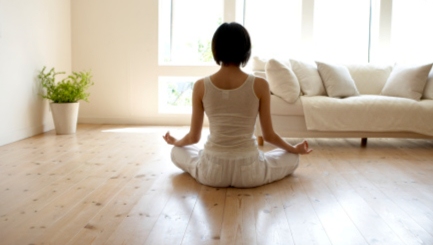
Coined by the IIN School, the term “primary foods” refers to what feeds the soul; loving relationships, regular exercise, spiritual practice and a fulfilling career. When you have these four factors in balance, everything else falls into place. It’s not just a healthy diet that nourishes you, but other complementary elements affect your overall health and wellbeing, and so making a few simple changes can give you big results.
Firstly, carve out daily quiet time, in which you give yourself the opportunity to recharge. Whether you use this time to read a book, pray, meditate or journal, this is your time and can really shape the rest of your day. You might like to try an exercise called Morning Pages (developed by Julia Cameron), to relax your mind for the rest of the day. As soon as you wake up in the morning, write down everything and anything that is on your mind, as soon as it pops into your head, before you get out of bed. This allows your worries to leave your mind and get onto paper, and calms and refreshes your busy brain during the day.
Next, try and find an exercise that you enjoy, aiming to put aside 30 minutes to one hour 4 times per week to do it. Whether you want to get out of the house and go for a jog, or stay in with a dance or workout DVD when the kids are asleep, the key is to just make the time to get up and move. It’s not about losing weight (although that can be a wonderful side effect!) but exercise also helps reduce your stress, improve your sleep, increase your energy levels, lower your blood pressure and strengthen your heart.
Finally, take time to connect with your spouse on a daily basis. You may have kids that take up a lot of time and energy, but your family is based on a solid relationship between you and your spouse, and so it’s important to nurture it, even if it’s just half an hour after the kids go to bed. You might need to get out of the house and go for a date, just the two of you, or, if you can’t find a babysitter, find some fun “date night in” to do. Just making these three changes can help you find better balance overall, and improve your wellbeing to the heights that you deserve.

The first tool for losing weight is to change the way in which you think about food – dealing with your inner self before all else will help you maintain your motivation, as well as helping you to examine the struggles you face with overeating or your self image. Whatever it is that causes you to overeat, whether it is stress, comfort eating or emotional problems, healing it before you begin your weight loss regime will make things a lot easier for you.
Similarly, changing the way you view healthy foods can also be beneficial to keeping the pounds off – what if you wanted to eat healthy foods over crisps, biscuits and chocolate? Viewing those foods as ingredients which will help you achieve your dream body can be useful in maintaining motivation. The same can be said of wanting to work out or go to the gym – those things you once dismissed can be good things and elements that you want to include in your lifestyle.
It can be difficult to make these changes on your own, but creating a weight loss mindset can be done – this is 90 per cent of the task in losing weight. The further 10 per cent is down to diet and exercise, which is easily achieved once you can master the tricky 90 per cent. This inner problem doesn’t have to be dealt with alone though – speaking to health professionals, experts or even friends can be a great way to get it out in the open and deal with whatever is troubling you. Once you have done this, you’ll find that following a balanced diet and exercise regime will be far easier.
