Showing posts with label traditional. Show all posts

If you want to improve your chances of getting pregnant, it’s important to look after your wellness and wellbeing. As well as all the traditional, mainstream ways, you should look to gain an all-natural boost from the plethora of treatments and tips available under the discipline of Traditional Chinese Medicine.


At a recent fertility seminar held in New York City, many natural fertility specialists highlighted the importance that Traditional Chinese Medicine and other mind/body techniques can have on a woman’s chances of having a baby.


For example, traditional Chinese Medicine can help to improve blood flow to the reproductive area. It is thought that a stressful lifestyle can remove blood flow away from the reproductive organs, funnelling it instead to the legs and arms as part of the body’s ‘fight or flight’ response to danger. To change this, a course of acupuncture can help to redirect the blood flow back to the reproductive organs. You could also try focused relaxation (such as mentally going to your internal ‘happy place’), or a session of de-stressing yoga, or even a massage.


Hormones also play a big role in conception. When your hormones are all out of kilter, it can make it much tougher to conceive. Stress is often the cause of hormonal imbalance too, especially as so many women have high –stress lifestyles. Stress can cause increased production of the hormone prolactin, which may then impede ovulation. As well as cutting down on the stress in your life, there are some herbs that can be useful to fertility. You would also benefit hugely from eating a healthy, balanced diet and taking plenty of exercise. All of this will help to bring your body’s hormones back into balance, hopefully helping you to conceive successfully in the future.

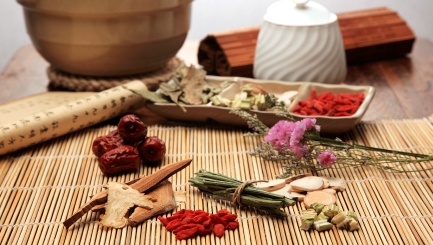
Traditional Chinese Medicine is a complementary form of medical treatment that is quite different to Western medicine. In Western medicine, any problems with your wellness and wellbeing are typically treated with prescription medication, with perhaps a healthy dose of chicken noodle soup on the side, whereas in traditional Chinese medicine, a treatment plan can include various therapies including qi gong, massage therapy and moxibustion.


The most common type of treatment plan is a combination of herbal medicine and acupuncture, and this is used to treat a very wide variety of ailments.


Traditional Chinese Medicine, like Western medicine, covers every different aspect of health, with anything from allergic reactions, to insomnia to a common cold being covered by the wide range of treatment options. If you are interested in trying Chinese medicine, however, you would be well advised to go and see a Chinese healthcare practitioner. Medical advice found in articles on the internet cannot be a safe substitution for the guidance of an educated and experienced professional.


Many people who suffer with allergies turn to traditional Chinese medicine. These allergies can be to anything at all in the environment, from animal hair to peanuts, and some experts in Chinese medicine claim that the therapies can cure these sensitivities.


Arthritis is another one that is a prime target for Chinese medicine. Whilst Western treatments tend to focus on dulling the symptoms of this painful disease, Chinese medicine claims to offer a cure, by eliminating the actual cause of the arthritis.


Even the common cold isn’t left out when it comes to traditional Chinese medicine. Instead of chicken noodle soup, however, the Chinese turn to foods such as miso soup with ginger and spring onions to help cure this ailment and get you back to full strength.

No matter how old you are or what level of activity you do, the chances are that your wellness and wellbeing will be affected by some form of pain during your lifetime. Traditional Chinese Medicine is a complementary therapy that is designed to help ease your discomfort, whether you’re suffering from knee pain, sciatica or menstrual pain.


There are several Chinese pain relief medications, with varying functions, indications and dosages. These remedies have already stood the test of time and are based on traditional formulas that date back for thousands of years.


Traumatic injuries can include things like bruising and swelling. These occur when an area of the body experiences trauma of some sort, whether that be a direct contact with an object, a fall, a sprain or something of this ilk.


The Chinese herb Chin Too Tieh Shang Wan (also known as chin koo dyeh shahng wahn) is known in English as the Muscles and Bones Injury Pill (which, let’s face it, is a little easier for Westerners to say!). It is used in cases where traumatic injuries have occurred, such as sprains, swelling and bruising. The pill helps to get the blood moving and also reduces swelling and internal bleeding, plus of course relieves the pain that is usually resultant from such an injury.


Chin Koo Tieh Shang Wan is the main pill that is used in these types of circumstance. The chief herb that makes up the formula for this pill is Panax pseudoginseng (san qi) which is also an active ingredient in the pill Yunnan Pai Yao. Chin Koo also contains the ingredient myrrh and frankincense, two better-known herbs that are used to increase circulation and reduce pain levels.


These herbs have been used as an incense, too, for many thousands of years. They are also available as essential oils, and these work to stimulate the circulation of blood.

Figures from the National Institute of Child Health and Human Development show that the current estimated cases of autism are around one in every 1,000 and one in 500. Some scaremongers claim that vaccines are responsible for these high levels of autism, but there has never been any established link between vaccines and autism. There is also growing concern that autism may be caused by toxins and pollution in the environment. Another school of thought is that nutrition may contribute towards autism, as well as viral infections, antibiotics and other minor factors.


Although people talk about children ‘developing’ autism, some new research coming out of the Autism Society of America suggests that there may be a genetic link, and that the disorder is actually present at birth. The symptoms of autism normally appear by the time the child is three, and it is then that a formal diagnosis can be made. Autism is difficult to diagnose, however, as there are so many different factors and characteristics, such as social communication problems, language problems and difficulties with cognition.


In the Western sense, autism does not exist in traditional Chinese medicine. It is instead classified as the ‘Syndrome of 5 Delays’. These delays are categorised as walking, standing, teeth eruption, hair growth and speech. Based on the yin and yang theory, traditional Chinese medicine treats the problem within the framework of rebalancing the energy.


Western medicine rates the brain as being the most important part of the human physique, whereas Chinese medicine views the body and mind as being joined, as part of a circular system which includes the organs and the central nervous system. . The Chinese medicine system sees balance as the key to achieving wellness and wellbeing. The complementary system sees the organs as being a vital part of this balance.

Anybody who wants straight, beautiful teeth will have to get braces at some point if they aren’t already perfect. These days, there are several major types of braces that one can choose from. Of the choices available, traditional braces and invisible braces are the most popular. Here are five differences between the two to help you with your decision.


1. Concealability


One of the most attractive aspects of invisible braces is that they stay very well hidden from view. Traditional braces are far more noticeable, and those who have to wear them don’t usually want to be seen with them on. Many people are embarrassed to be spotted in public with braces on, but invisible braces are a great solution to that problem.


2. Comfort


Braces are not very comfortable to wear. The traditional variant is made of metal wiring, studs, and plastic pieces that may have very sharp edges. These pointy parts protrude into the mouth and often irritate gums and the inner cheek. Invisible braces tend to be more comfortable than standard braces because they are designed from a thin plastic that molds to the shape of the wearer’s teeth. There are no sharp edges or points on the invisible braces at all. They are seamless, removable mouthpieces reminiscent of sleek, transparent mouth-guards. Even invisible braces come with some degree of discomfort because they reposition teeth, after all, but overall they are far more comfortable.


3. Wear Duration


Both traditional and invisible braces are worn for an average of two years for a complete dental transformation. However, invisible braces may take a shorter amount of time to straighten less severe dental crookedness. In the end, the time required to straighten the teeth will vary on an individual basis depending on the severity of the problem. For an accurate estimate of how long you may have to wear braces, contact a dental office like Sierra Dental in Calgary or another cosmetic dentist near you.


4. Effectiveness


When it comes to effectiveness, traditional braces reign supreme. They have a long history of being used to successfully fix more severe dental issues. Invisible braces are designed for more typical cases of dental crookedness. They appeal to teens and other individuals who are more concerned with looks, but they won’t solve every dental problem out there.


5. Cost


Invisible braces seem to offer many advantages over traditional braces, and all of that comes at a higher cost. Expect to spend an average of $500 more on invisible braces for each year of treatment. Total costs for traditional braces fall just under $5,000, while costs for invisible braces range from $3,500 to $8,000.


Like with everything else, traditional braces and invisible braces both have their pros and cons. Either choice is a good one, but the decision should be based on your personal needs and preferences. See an orthodontist if you want to learn more about either form of braces.

There are many ways to reduce your weight and improve your fitness, but using a kettlebell has got to be one of the most effective ways of all. These amazing weights can help improve your wellness and wellbeing by giving you a cardio and strength training workout all in one.


That’s why kettlebells are the talk of the health and fitness circuit at the moment, as they are thought to enable you to burn up to 20 calories in just one minute of using them, and can produce some impressive toning results, too.


In case you haven’t seen one before, a kettlebell looks like a cast iron cannon ball which has a handle on the top. You use this handle to pick it up and then perform dynamic movements, such as swings, presses and cleans, as these movements tax a great deal of your body’s musculature.


The difference between kettlebell exercises and traditional weightlifting is that kettlebell exercises work all of the major muscle groups at the same time, so that your whole body receives a work out with nearly every exercise that you do. Traditional weightlifting isolates muscle groups, whereas kettlebell exercises are far more generalised. This means that your heart rate goes up and then stays up for the duration of your workout, translating into some pretty major fat burning.


Hollywood stars, athletes and regular gym bunnies have all taken to kettlebells recently, due to their calorie burning abilities, and their ability to increase your mobility and flexibility. This translates into real life strength that you can use in your day to day life. Kettlebells also help you to get lean and strong muscles but in far less time than most traditional exercises, and you need far less equipment as well.

Traditional Chinese Medicine, often abbreviated to TCM, is a variety of different complementary medicinal practices which have been developed in China over the past 5,000 years. These include acupuncture, herbal medicine, exercise, massage and dietary therapy. The medicine is based on something called Yinyangism (derived from the Yin-Yang theory and comprising of five phases).


Widely used in the US, TCM is on the increase, with a study in 1997 estimating that there are around 10,000 practicians improving the wellness of around 1 million patients every year.


TCM is fundamentally different to traditional medicine in that the ancient Chinese perception is of humans not as individuals but as microcosms, connected to the larger surrounding universe and forces.


Yin and Yang form an important part of Traditional Chinese Medicine, and this originated in the Shang Dynasty (1600 – 1100BC). Yin and Yang represent two complimentary forces that the world is made up of – the fire aspect and the water aspect. Yin and Yang also refer to temperature, male and female.


The concept of Yin and Yang can also refer to the human body – generally the upper body and back are known as the yang and the lower part of the body is the yin part.


There are also other theories unique to Traditional Chinese Medicine, such as the six levels theory that relates to the penetration of cold diseases, the four stage theory regarding the progression of warm diseases and the eight principles system.


Some elements of the body are also represented in Traditional Chinese Medicine as other elements Wood, for example, governs the liver and the gallbladder, as well as being responsible for blood sugar. Fire, on the other hand, relates to the heart, the pulse and the face.


chinese medicine2A new study confirms what the Chinese have known for centuries – their traditional herbal remedies are an effective way to treat diabetes. The Australian study has revealed that combining Chinese medication with conventional drugs made the prescribed medication work better.


Researchers from the University of Queensland carried out a controlled clinical trial involving 800 adults diagnosed with type 2 diabetes – this is the type of diabetes in which the body cannot produce any or enough insulin to turn sugar from food into essential glucose for cells.


The participants in the study were split into two groups. The first were given the anti-diabetic drug Glibenclamide on its own with the second prescribed Glibenclamide alongside traditional Chinese medicine. The study’s findings revealed that patients given the combined medication were more than a third less likely to experience dangerously low levels of blood sugar – known as hypoglycaemia – than the patients given Glibenclamide on its own.


The participants receiving Chinese herbal medicine also showed fewer symptoms associated with diabetes, such as hunger, palpitation and fatigue, according to the research, which was published in the journal PLOS ONE.


The Queensland research was prompted by the lack of scientific understanding and relevant data in the western world relating to the efficacy and safety of traditional Chinese medicine. The study concluded that more research is required into how Chinese medicine can reduce hypoglycaemia but the results of the Australian study suggest that the traditional remedies could be put to work immediately to treat diabetes.


In developing countries, diabetes – and in particular, type 2 diabetes – is fast becoming an epidemic, fuelled by the rise in obesity.


Traditional Chinese Medicine Proven to Treat Diabetes