Showing posts with label Core Muscles. Show all posts

In personal training and fitness, falls and other immobility issues among the elderly are directly related to their loss of coordination. The popular adage, “If you don’t use it, you lose it,” holds true here. It has been found that as people age, they lose interest in basic physical fitness. This leads to the little use of common muscles used for coordination. It is coordination that allows any human being to trigger the left-right movement of both arms and legs. Without this coordination, it is impossible for the human brain to decipher what body part is moving and when. Below are some ways of building and maintaining bodily coordination for the preservation of movement as one ages.


Hand Eye Coordination


Hand-to-eye coordination drills can be as simple as holding both arms out as if making the wings of a plane. By rotating one arm in a specified direction whilst the other arm in another, the body is forced to manage the action taken. This simple action will help to maintain the brain’s sense of coordination. It is also easy to do. All that is truly required is time set aside to complete this task.


Lower Body Coordination


Lower body coordination for the elderly can be achieved by taking consistent walks. Remember, “If you don’t use it, you lose it.” Regardless, for the best way to exercise lower body coordination, try walking laterally without crossing either foot. When done in one direction, stop and go to the other while repeating as needed. Keeping your attention on this will help build a need and sense of lower body coordination. Be sure to inquire Corner Medical LLC for home medical supplies that will help you complete these exercises if you are in the Minnesota region.


Inner Core Coordination


Scientists have concluded that the inner core muscles contract a half to one full second before any bodily movement. Core muscles are essential to stabilizing the body parts so other parts can freely move. Thankfully, this coordination muscle can be strengthened in bed. Lying on one’s back and lifting the heels of both feet four to six inches from the bed will help rejuvenate the stabilization required for all bodily movements.


Diet for Better Coordination


B vitamins are recommended for health of the nervous system as they help to synthesize neurotransmitters. Because it is the nervous system that stimulates body activity, the general health of the nervous system is essential to good coordination and brain comprehension when it comes to movement.


Diet for Better and Stronger Muscles


This is an easy one. Tissue construction that a person has within muscles will dictate the potential output of those cells. In both understanding and receiving stimulation from the brain, healthy muscle tissue will produce better results. Eating salmon will not only help with brain function thanks to omega 3s, but it will provide the adequate protein to build quality muscles. We all know about protein shakes, but do yourself a favor and get more complicated compounds in body through meats like salmon.


Above all else, remember, “If you don’t use, you lose it”. Keeping active in life will be the primary factor that sustains over all freedom of movement. It is essential to a full life and being mobile as the body ages.

Group fitness classes are a great way to lose weight, as the support of others in the same position to yourself can be great to help you feel motivated. Without even realising it, you will be benefiting your wellness and wellbeing, whilst having a whole lot of fun. Group exercise classes provide a feeling of camaraderie, a very important aspect to any sport.


Group classes are often divided into skill levels, but anyone can take part and is catered for. There are so many different classes to choose from.


Cardio Challenge is one such class, and it mixes low impact and basic step aerobics in a fun format that is designed to get your heart racing and your muscles working hard.


Brazilian Jiu Jitsu is another, which is a self-defence martial art class which centres around the idea of ground fighting and gaining dominance in a fight against an opponent.


Fitness Training Camps are also popular with people with all levels of fitness. They generally involve 30 minutes of vigorous aerobic exercise followed by 20 minutes of strength training, done in groups, often outdoors.


Body Sculpting is along the same lines, too, focusing on strength training and endurance using resistance bands or free weight.


Iron Man core classes aim to boost cardio-respiratory fitness as well as core strength. Core Conditioning is similar, but focuses on the lower body and core muscles, which has the added benefit of strengthening your abdominal muscles and improving your posture.


Indoor Group Cycling provides an intensive cardio workout for people of all fitness levels and of various ages, as the pedalling speed and resistance varies from person to person.


Pilates is a gentler type of class, and focuses on building endurance and core muscles, rebalancing the body and building strength in a long-lasting way.

Whether you are looking to decrease your weight or increase your fitness, or indeed both, it is essential that you find the right workout for you. Whilst exercise of any kind will do wonders for your wellness and wellbeing in a general sense, to really get into shape you want to make sure that you are targeting your routine towards the areas of your physique that you really want to tone up – and to do this you have to use the right equipment.


You’ve probably seen the big, inflatable gym balls rolling around the place and wondered what on earth they could possibly contribute to your fitness. Well, the answer is – a lot. Using one of these special gym balls to help you work out can increase your fitness and tone up your body in all kinds of amazing ways.


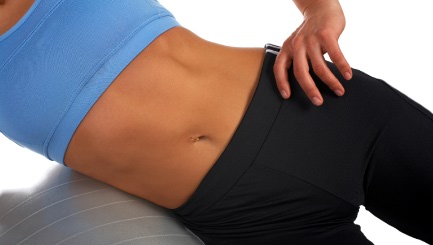
For a start, when you are balancing on a ball you have to engage all kinds of muscles other than the ones you are using. So, to use situps as an example, when you are doing situps on a ball rather than on the ground you are not only exercising the muscles that are involved in doing a situp, you are also exercising a whole lot of other core muscles to keep you from falling off the ball at the same time!


One exercise that you can do using a smaller gym ball is something called a star reach, where you place the ball on the ground next to you and then you lean over completely to one side, placing your hand on the ball. You then lift the opposite leg off the ground and throw out the opposite hand in a star shape. This is great for toning up the legs.


You can also try grasping the ball between the top of one calf and the hand on the same side and then doing a ‘v sit’ where you balance on your bottom with your legs in the air, and use your core muscles to keep the ball on your leg.

Thanks to celebs like Jennifer Garner and Matthew McConaughey, stand-up paddleboarding (SUP) is a more popular fitness pursuit than ever before. However, the wellness benefits of this sport, which originated in Hawaii in the 1950s, were not always well-known. SUP-er Michelle McChristie, who works for the Ontario Ministry of the Environment and also publishes a regional outdoor magazine, details a time, even as recently as 2010, in which she got a few funny looks from people on the beach. ‘Even when I explained—‘You stand up on the board on the water and paddle’—people still seemed puzzled, she remembers McChristie. However, three years on, people are starting to see how SUP can benefit their wellbeing:


1. Sculpt a strong core: According to Paddle Canada, the national paddling sports association (which covers kayaking, canoeing and SUP) the number of participants taking courses more than doubled between 2011 and 2012. Ben Schram, a physiotherapist studying SUP at the faculty of health science and medicine at Bond University in Australia, says he’s not surprised at this statistic as SUP is ‘relatively simple to learn.’ Moreover, he adds, it’s a killer workout, particularly for your core muscles; it’s easy on your joints; and it improves your balance.


2. Meditative benefits: McChristie explains, ‘I like the challenge of learning a new way to paddle, and the perspective of standing up rather than sitting down.’ As well as noticing stronger core muscles, the real benefit McChristie takes away from SUP is the mental-health payoff. ‘The calmness, the rhythm of the waves and the water and the paddling…. It’s really meditative,’ she enthuses. ‘Being out on the board is a healthy way to escape the stress of a typical day.’ This is especially the case compared to the stress of manoeuvring heavy canoes and kayaks. ‘My fibreglass sea kayak is hard to manoeuvre on and off the car roof rack on my own,’ McChristie says. ‘But it’s no problem for me to throw on my board [boards weigh only 20 to 25 pounds] and take off to the lake for a paddle.’


3. Versatility: Fitness trainer Jessica Rando asserts, ‘SUP is versatile: You can paddle on lakes, rivers or oceans; waves or no waves. There was room for me to grow as a paddler in different water conditions, but it was also really easy to pick up and learn. I was addicted the second I tried it, and I think that’s how it is for a lot of people.’ She adds that SUP races are a great way for people to come together and enjoy exercise. ‘Anyone can race!’ Rando insists. ‘It’s a great community of people, and you get all ages and abilities. You’ll be welcomed with open arms.’


4. Great cardio workout: Kelly Miller of Bowen Island had no experience with paddle sports, but ever since she saw it done in 2011 she hasn’t looked back. ‘A friend showed me how to use one, and I jumped on right away,’ she recalls. ‘It was amazing, like walking on water. We were out on the ocean on this beautiful calm night and watched the sun set. I was hooked.’ The benefits are endless for Miller, as she points out, ‘Besides your core strength, you use your arms for propelling yourself, and you get nice strong legs from staying balanced because there are waves from speedboats ripping by. It’s good cardio, too, because half the time my friends and I are playing around and racing. It’s just the perfect workout.’ Next she hopes to try SUP yoga.


core musclesIt’s harder to visualise your core muscles, and so you might neglect them when you’re exercising. However, keeping your core strong is vital to your workout wellness, and your overall wellbeing, taking care of everything form movement to posture.


The 29 pairs of muscles that make up your core provide a stable base for practically any activity you perform, giving you balance, good posture and efficient arm and leg movement. Therefore, exercises that strengthen the core muscles are a vital part of any exercise routine. This could mean programmes based around pilates and yoga, which have multiple movements that support and build the core, but you can also experience certain benefits by simply balancing on one leg while stabilising your back and pelvis. Sit-ups and crunches seem like a natural option for building the core, but there are more effective ways of working most of the 29 pairs of core muscles.


For example, a variety of push-ups will work all of these muscles. However, the mistakes that many people make are trying to go too fast and using an abbreviated range of motion, which is only wasting your time and energy. Instead of doing a set number of push-ups, try to work each individual one slowly, keeping your body straight. Making sure your elbows at a 45 degree angle to the body, try to gently touch the sternum to the floor and rise up to a straight-arm position. If you’re just starting out, you may want to do this with your knees on the floor, or else stand with your feet about three feet away from a wall, place your palms flat against it leaning forward, and then slowly push away from the wall.


Once you get stronger, you can move into a traditional push up, and then, for a more complete core workout, try the reverse push-up. This involves using the same basic start position of the push-up, but instead of allowing your weight to move downward to the floor, you bend at the knees and hips and push backward until only your hands and feet are still on the floor, and your waist is totally bent. If you want an even more difficult version of this, and get even more of your core muscles involved, start the backward movement from your low position on the floor.


Core Blimey! Do You Need to Strengthen Your Core Muscles?