Showing posts with label Balance. Show all posts

In the West, we think we know all about vitamins, minerals, fats and carbohydrates—so why aren’t we healthy? One way back to nutritional wellness can be found in the East Asian tradition, which has been taking care of wellbeing through food for thousands of years. Therefore, we turned to complementary wellness expert Mika Ono, author of Ancient Wisdom, Modern Kitchen: Recipes from the East, for her Eastern healthy eating tips.


1. Balance Is Beautiful: According to Ono, ‘In the West, we can be found casually eliminating whole food groups, say fats or carbohydrates, or trying to exist on a single type of food (the grapefruit diet, anyone?). That’s an anathema in the East, where we’re advised to pursue balance in our bodies and in our minds by eating a variety of foods to maintain health. No single ingredient or kind of ingredient is vilified or consumed to excess. As one Chinese proverb says, “Sour, sweet, bitter, pungent: all must be tasted.” Food is also used to bring balance between the individual and his or her natural cycles and parts of the environment. Particular foods are thought to counteract an individual’s personal tendency toward, say, restlessness or fatigue, and different choices are recommended for different seasons.


2. Take Your Temperature: ‘Are you the kind of person who runs cold?’ asks Ono. ‘Or do you tend to feel hot? What is the weather like outside? According to the East Asian tradition, the answers to these questions can help guide your healthiest food choices. In the interest of balance, traditional Chinese medicine advises people who tend to run cold to gravitate towards “warm” foods and spices. This refers not only to the food’s physical temperature, but also to its effects on the body (think of breaking a sweat when you eat a curry). On the warmer end of the spectrum are foods and herbs such as ginger, chili peppers, cinnamon, turmeric, nutmeg, green onions, and walnuts. Warm foods are also especially appropriate in the winter or an unusually cold day.  Similarly, people who tend to run hot or who are in a hot environment are advised to consume more cool foods (think of the tingly cool sensation you experience when consuming a mint beverage). In addition to mint, cool foods and herbs include citrus, tofu, milk, lettuce, celery, cucumber and tomato.’


3. Colour Counts: Ono notes, ‘In the world of natural foods, traditional Chinese medicine teaches us to try to consume foods of various colours—purple eggplant, red tomatoes, green spinach, black sea vegetables, white garlic and yellow squash, for example—to fortify different parts of our bodies and to balance each other’s beneficial properties. By paying attention to this rainbow of hues, Chinese food therapy transforms what we in the West often lump into a few categories, say “fruits” and “vegetables,” into patterns more complex and inviting. Interestingly, scientific studies have related phytochemicals in coloured plant foods to their healthful effects. For example, red tomatoes, peppers and watermelon contain lycopene (linked to cancer prevention); orange and yellow fruits such as squash, carrots and apricots possess beta carotene (which may reduce the risk of cancer and heart disease); and white garlic and onions contain a number of sulphides (which may possess anti-bacterial, anti-cancer and immune enhancing qualities).’


4. Raw Might Not Be Better: ‘In our society where over-processed foodstuff is encountered at every turn, members of the raw food movement need to be applauded for getting back to basics,’ says Ono. ‘However, assuming that you are selecting natural, mostly organic foods to begin with, traditional Chinese medicine would recommend a different approach in the kitchen. According to this tradition, cold, raw food such as salads are particularly hard on the digestion and should be eaten in moderation.’

Everyone’s different and none more so than with what we eat and how we look after ourselves. Some people love eating fresh vegetables and going on daily hikes, whereas others prefer the more relaxed approach of fast food and lounging at home. We usually chalk up our differences to metabolism or personality. But we rarely attribute our physiques to what we eat, despite this being such a valuable way to vary how we look and feel. According to ayurvedic medicine, we really are what we eat and it depends on our different body types and personalities as to what we should be dining on each day. It boils down to your dosha type and keeping this in balance is the best way to stay healthy, regulate your mood and energy, and prevent a range of health conditions which plague western cultures now. Doshas are metabolic currents which drive our bodies and are called vata, pitta and kapha. We inherit these through our genetic make-up and most of us are dominated by one dosha in particular. Too much vata is associated with space, wind and air, which can make you sleepless and indecisive, for example. Eating the right foods can balance this and help you to achieve a regular sleeping pattern.


The ultimate goal of ayurveda, as with yoga, is to achieve balance – to achieve this, hardcore ayurvedics follow a strict combination of diets, meditation, exercises and herbal therapies. Although this is a more complex route to balance, you’ll be surprised what following a certain diet can do for your wellbeing and health. Fresh vegetables, dairy, grains, poultry and fish are all considered both food and medicine There’s no counting your carb intake or tracking fats with this diet, it’s also not vegan or vegetarian. You simply need to eat for your dosha and ignore the calories – your health is valued more than the amount of calories you ingest here. However, regardless of your dosha, there are some eating guidelines which ayurveda can offer to help improve your wellness. These tend to be more common sense-based than about depriving yourself of anything. For example, drink room temperature water with your meal rather than cold water, so that you digest your food properly, as ice water can inhibit proper digestion. It’s also better to avoid canned foods, red meat, white flour, white sugar and junk food – nothing you weren’t already aware of, but handy tips to remember. Once you know what dosha you’re eating for, you can begin to adapt your diet to suit it and achieve balance. To do this, you need to organise your foods into six categories – sour, sweet, salty, bitter, pungent and astringent.


Vata is associated with worry, insomnia, constipation, dry skin and anxiety. These can be balanced with warm, heavy foods such as stews or tapioca pudding. Aim for foods which include butter and healthy oils, but avoid astringent foods such as lentils, raw vegetables and cauliflower. Pitta is associated with digestive problems, anger and resentment, so temper those issues with cooling foods like casseroles and grains with limited butter or fat. You also need to minimise pungent foods such as hot and spicy foods, as well as excess salt and sour foods. Lastly, kapha is attributed to weariness, oversleeping, sinus problems and weight gain. Eat light, spicy foods such as grilled vegetables with a mild pepper sauce, and lower your intake of salty foods, red meat, dairy and sweet additions such as maple syrup. Also, pay attention to what your body is craving, as these aren’t considered moral weaknesses in ayurveda but rather your body’s way of trying to tune into your doshas.

When you think of work, “optimism” might not be the first word that comes to mind, but it plays a huge role in your corporate wellness, and overall wellbeing. In his book Learned Optimism, world renowned psychologist Martin Seligman notes that optimistic people:


  • Are physically healthier and suffer less depression.

  • Are persistent, resilient and get better results.

  • Are not overwhelmed by adversity.

  • Rebound quickly following defeats.

  • Cope well with frustration, rejection and stress.

  • Do not dwell on or punish themselves over failures.

  • Maintain confidence and determination following setbacks.


However, Rachel Clements, BSc Hons, M Psych, MAPS, co-founder and Director of Psychological Services and Principal Organisational Psychologist at the Centre for Corporate Health, points out that a balance is needed between seeing the glass as half-full, and overfilling the glass with cheery expectations. According to Clements, being overly optimistic isn’t useful as ‘we may not see a potential problem, not take responsibility for things that we should or rely too much on wishful thinking. The extreme optimist may also view themselves as having no faults and brilliant in every respect. What we aim for instead is a level of “healthy optimism” where the “healthy optimist” is able to balance taking on too much or too little responsibility and balance being pessimistic and optimistic when it is useful, depending on the situation.’


So how do you achieve the right balance of optimism and pessimism?


1. Take up relaxing activities: Clements explains, ‘Undertaking activities such as regular exercise, yoga, pilates, mindfulness or mediation can provide us with a sense of space whereby we are not processing intellectual information so quickly, we are less distracted by the external world and we are able to tune in to our body and listen to what it is telling us. This assists us in moving our attention from our head to our heart. In making this shift we may be able to more easily detect how we are feeling and what we need to do get back on track.’


2. Be conscious of balancing your energy levels throughout the day: ‘If you have had a busy day with long hours and demanding work,’ Clements details. ‘Make sure you do something during the day (such as getting out of the office at lunch time, even if it’s for only 15-30 minutes) or doing something after work (such as exercise, meeting up with a friend or a going to bed early) to replenish your energy levels.’


3. Choose your words: Clements warns, ‘Be careful of perfectionistic self-talk such as when using phrases like “I must” or “I should” or “he has to” or “she needs to”. Ask yourself, are implicit expectations and inflexible rules dominating your thinking? How else could you frame your statements so that they are less emotionally charged (for example “I prefer” or “I choose” or “he could consider” or “she may like to know”).


4. Be realistic, but notice good things: ‘Learn to set realistic goals and recognise and celebrate your successes,’ Clements advises. ‘Become an expert on knowing what you can control and what you can’t. Save your energy for the things you can influence, such as how you go about your work, and learn to let go of the things you cannot control such as other people’s behaviour. Let’s face it, much of what we actually experience in life is outside of our control.’


5. Practise makes perfect: Clements recommends, ‘Practise optimistic thinking by making a conscious effort to think of one positive thing every time you find yourself focused on a negative thought or judgement. Or, keep a diary of the positive things that you did or that happened today, to help develop a broader thinking style.’

You know the deal with sexual health hormones; it’s testosterone for men, and oestrogen for women, right? While, to a certain extent, that’s true, all men do have some oestrogen, and all women do need a small amount of testosterone. That said, there’s still a lot wellness experts don’t know about the effects of oestrogen in men, and more research needs to be done into this area. What we do know is, like all hormones, oestrogen needs to be kept in check, or else it could have a detrimental effect on male and female wellbeing. However, as a bloke, you’re more likely to experience chronic health conditions as a result of oestrogen levels becoming too high.


In your body, testosterone and oestrogen are actually very closely related, with very similar chemical structures. Yet, the impact these hormone have on your body are substantially different. As a man, testosterone affects nearly every cell in your body, working to improve your muscle mass, bone density, heart and blood vessel health and cognitive wellness. An enzyme called aromatase actually makes oestrogen from the circulating testosterone in your body and, as you age, your body starts making more oestrogen and less testosterone. While oestrogen can be made in your liver, muscle and brain, much of the concern lies in the oestrogen made in your fat cells. As obesity rates rise around the world, men will begin making increasing amounts of oestrogen and decreasing amounts of testosterone, which is a dangerous thing indeed.


The right balance of testosterone and oestrogen is a beautiful thing; with enough testosterone, men may be able to prevent heart and vascular disease, and have better moods, muscles and blood sugar levels. High rates of oestrogen, however, mess with this latter benefit, which is why you’ll find that diabetics tend to have higher rates of oestrogen. Low levels of testosterone have also been linked to a higher rate of depression, while too much oestrogen might make you more likely to have a heart attack or develop prostate cancer. For years, testosterone has been blamed as the cause of prostate cancer, but actually research is finding that an imbalance of oestrogens in your body is more important in preventing or causing the condition. When all is said and done, too little testosterone and too much oestrogen may play a role in nearly all chronic diseases in men.


Oestrogen isn’t necessarily bad for you, but you need to have it in balance. One study recently investigated the role of oestrogen in heart failure, and found that the men with the lowest AND highest amount of oestrogen had the greatest problems – indicating that a happy medium is key. Plus, another research showed that giving elderly men testosterone supplements increased their spatial memory and verbal memory. Seeing as testosterone supplementation also naturally increased the enzyme aromatase, oestrogen levels also rose which, in this case was a good thing. When the researchers blocked the aromatase – and, consequently, the oestrogen – the men did not find any improvement in their verbal memory. This implies that you need some oestrogen, just not too much.


So how do you find that happy balance of oestrogen and testosterone? As obesity is perhaps the greatest hindrance to maintaining a healthy hormone balance, getting trim and building muscle through exercise can give you extra insurance against hormonal imbalance and chronic disease. Increased use of alcohol can increase production of oestrogen in men, and so sticking to the recommended limits can help keep things in check. You should also limit your exposure to plastic chemicals, as these may also disrupt proper hormone function. This means avoiding microwaving plastic containers and preventing water bottles from getting too warm in the sun.

In today’s recession, it may seem that work always has to take priority. A job is something to be prized and to be held onto at all costs. The corporate world can start to swallow up your family life and this can lead to problems with your wellness and well-being.


Fortunately, work-life balance is something that can be achieved. The first step to achieving this balance is to stop trying to achieve it. Stop trying to be the best in the corporate environment and the best family man or woman you can be. There simply aren’t enough hours in the day to enable you to do it all. Balance is far too big an aim to be achievable. If you put yourself in the position of aiming for this balance, you will simply feel stressed, and that stress will then lead to guilt. This negative cycle has all kinds of difficult physical and emotional side effects.


Instead, start to switch off the cycle of guilt. Accept that you can never do everything, and focus instead on doing the best that you can do with the time that is available to you. It may seem counter-intuitive, but you also need to schedule in downtime for the sake of your own mental health. Schedule family time the way you would schedule any meeting or business commitment and then make sure you stick to it. By blocking out this time in your calendar, you are more likely to find time to spend with your family – a decision you will not regret.


If you need more time to do things in your life, then cut back on the things that are mere time-wasters and don’t add any value to your life, for example things like internet surfing, television watching, and playing video games. These things are all too easy to get sucked into, and they waste valuable time. A good tip is to put stickers on items such as the TV and computer that say, ‘What matters most in my life?’ – this will give you a good reminder about what to prioritise.

Most people from western societies first approach holistic health by trying to apply the illness model of allopathic medicine. Traditional health systems look at disease as a set of symptoms that need to be removed, but it is actually better to see your health as a state of balance that can be achieved through making better lifestyle choices and following healthier diets. Ayurveda is known as the ‘science of life’ and has been developed over thousands of years as a method for bringing us all into greater harmony with life. Physicians in ancient Greece also looked to classical ayurvedic texts which formed the basis for western healing. There are three parts of ayurveda, known as doshas. These are vata, pitta and kapha. As with many forms of healing, this relates to the elements and are identified as air or ether for vata, fire and water for pitta, and water and earth for kapha. Every individual has a unique blend of these dohas – somebody who is primarily kapha, for example, is more likely to have a sturdy frame and a calm approach to life. Somebody who has a lot of pitta energy may have a more muscular frame than vata types, with an assertive and competitive personality.


None of these three types is more effective or better than the other – you can have a combination of the three, or exist in a state of balance or imbalance regardless. An excess of pitta may be created through inflammatory conditions, or an emphasis on vata may reveal itself through dry skin, chronic headaches and insomnia. Weight gain and congested sinuses are often a sign of an imbalance with kapha. Ayurvedic medicine sees a healthy balance of food consumption as rooted in six different tastes – sweet, sour, pungent, salty bitter and astringent. The sweet, bitter and astringent tastes have a cooling quality whereas sour, salty and pungent provide the heat. The individual must choose from these tastes both according to the season, and to the need to balance tendencies towards hot and cold, dryness and wetness.


Ayurveda suggests that we should eat foods with more heat, so meals that are salty, sour or pungent should take focus in winter. In summer, this is the time to eat more astringent, sweet or bitter tastes. This contrasts to the western diet where foods are either sweet or salty. If you’re diet is shaped by the kind of foods served at your local supermarket or fast food joint, you’re unlikely to be able to appreciate the astringency of raw fruits and vegetables or the sourness of unsweetened yoghurt. When people in western cultures take charge of their health, they tend to do so via a one-size-fits-all diet plan that doesn’t take into account their personal needs and bodily requirements. Ayurveda does just this – it takes the individuals climate, health history and state of balance into account, enabling it to pinpoint any imbalances and provide suggestions on how to restore this. This may be certain foods and herbs, as well as aromatherapy, massage, music and meditation. If you want to make use of this type of healing and system for health, you may want to start with a dedicated source or an ayurvedic practitioner in your local area. You will then be able to make use of the knowledge that they can provide, in order to follow a more balanced lifestyle and reap the many rewards for an improved wellbeing.

The leader of any successful company will tell you that a work-life balance is good for corporate wellness; a reputation of putting employee wellbeing first increases morale, yields superior work and attracts the best talent in the market. Recently, job site Indeed.com released a list of the top 25 companies nationwide in terms of work-life balance, and director of recruiting Mark Steinerd explained, ‘Proper work-life balance makes employees feel appreciated, which in turn makes them more productive and more likely to stay with the company for an extended period of time… This list showcases those companies that, according to previous or current employees, got it right.’


Companies who made the list often infused balance into the work day itself, through creative managerial practices. Desk time is often the epitome of work day drudgery, and so Farhad Chowdhury, the chief executive officer of the application development firm Fifth Tribe, works with collaborators over an intensive four-mile hike rather than a conference room. The physical challenge is a great team-building exercise, and the collaborating element promotes thinking outside the box by removing professionals from the box itself. Chowdhury noted, ‘That’s why I try to do this with everyone with whom I interact professionally.’


Flex time also rated high on Indeed.com’s list of companies. As an employee at Wegmans explained, ‘Because I am a college student, my schedule can sometimes be all over the place. Thankfully Wegmans is more than happy to work around my school and personal schedule and make a work schedule that I can easily adhere to. For the two years I have worked at Wegmans, I have not regretted one minute of it!’ Most of us would rather work to live, rather than live to work, which means we place higher value on picking our kids up from school, attending a class or going to an important family event, than putting in the nine to five. During his 2010 TEDTalk Why Work Doesn’t Happen at Work, Jason Fried, co-founder of the Web application firm 37signals, explained a flexible professional atmosphere allows the long, uninterrupted thought required for great (and even good) work to manifest.

What happened to your workout? It used to be fresh and challenging every time but now your exercise routine is, well, simply a routine. Sure, it’s better for your wellbeing to do a lack-lustre workout than no workout at all, but don’t you want more for your fitness and wellness? There are plenty of ways to get more out of your gym time, so read on to get inspired!


1. Keep an eye on the time: The gym is a social place, which means you can end up spending all your time chatting away and taking trips to the water fountain, instead of actually doing anything. Studies have shown that the best results come from short and intense workouts. Dave Smith, owner of GreenFit Health & Fitness, recommends, ‘For a killer workout pace, try allowing just 60 seconds of rest between each set to add a cardiovascular element to the workout. This increases fat-burning while packing on lean muscle.’


2. Play cupid: While you may think of strength training and cardio exercise as two separate beasts, it’s high-time that you get those crazy kids together. If you add a cardio interval to your strength training, such as using a skipping rope or doing 20-second sprints, this can rev your metabolism while still allowing for added strength.


3. Be a poser: According to Smith, ‘Contracting a muscle and holding it in a flexed position (aka isometric exercise or static holds) provide strength and endurance benefits that can’t be achieved through traditional isotonic exercises (i.e. lifts that are in constant motion).’ Try doing stability ball wall squats to engage your thighs and glutes, starting with a 30-second goal and moving towards holding this static position for longer periods of time.


4. Skip the Machines: Smith explains, ‘While exercise machines do make resistance training user-friendly, they simply do not get the job done like free-weight exercises. Lifting with free weights will incorporate more stabilizing muscles and therefore burn more calories than their weight machine counterparts. The same can be said for bodyweight exercises, which can be more effective for core strengthening and calorie-burning than workouts done on machines.’


5. Be a little more instable: While it’s not great advice for your mental health, challenging your balance in terms of your fitness routine can help give you the boost you need. ‘Exercises that require balance stimulate more muscle recruitment, specifically core muscles, than the same exercise done in a stable position,’ says Smith. ‘This is rather intuitive: Is a squat standing on the floor as challenging as one standing on a wobble board? Of course not. The good news is most stable exercises can easily be geared up by adding a BOSU or stability ball.’ Just make sure you don’t compromise your form, as this can lead to nasty injuries.


6. Explode: It used to be that bodybuilders used slow, heavy lifts to build bulk and strength, but not research shows that explosive movements are the way to go. Smith comments, ‘Box jumps, kettlebell swings, and plyometric push-ups can achieve a greater response from something called fast-twitch muscles (the ones used during quick, powerful movements).’ Plus, as an added bonus, your fast-twitch fibres have a greater potential for growth compared to your slow-twitch fibres.


7. Join the resistance: In the words of Marty Mcfly, this is getting heavy. According to a recent study, if you lift a heavy weight for just eight reps, you will burn double the calories than if you had lifted lighter weights for 15 reps. Smith advises, ‘Keep adding weight (in small 2- to 5-pound increments) to an exercise until achieving three sets of 10 reps becomes very challenging (as in almost impossible to squeeze out the final rep!). Practice with that weight until 10 reps becomes too doable and then add a few more pounds of resistance.’

Physically draining jobs, like those in the oil and gas industries, require extra physical strength and endurance. Generally, if drillers wanted to survive on this lucrative field, they have to be physically strong, mentally sound and emotionally stable.


As an outdoors and health enthusiast, I truly believe that health is one of the greatest secrets to achieving success in every endeavor or activity. So, if you belonged to this group of hard working professionals and you wanted to have a successful career on this challenging industry, you need to learn how to take care of your overall health.


There are different ways to improve our health like recommended diet, proper rest, positive thinking, and regular physical exercise. The last item is one of the most significant thing we can do to build our physical and mental well-being. It is very important, most especially to those who are in the drilling fields and are always with the oilfield tanks and drilling equipment.


The truth, however, is that there a lot of people doing random physical exercises on their fitness program. Along this line, we need to check if we were using the right program for our health and fitness goals. But if you would like to achieve absolute health and fitness, you need to cover all four essential categories of exercises—endurance, strength, balance, and flexibility.


Oil and gas drillers need endurance considering the nature of their job. Strength is vital to their survival. Balance is crucial to their safety. And flexibility is a must to handle different tasks on the field. How these four exercise will help you?


Exercises for endurance


These types of physical exercises are important in improving and maintaining our breathing and heart rate. Running, biking and swimming for example are good cardio exercises that help improve overall wellness and prevent different illnesses.


Exercises for strength


When you lift weights or do resistance training, you are also boosting your physical strength. Regular strength exercises develop the muscles, increase its power and allow it to handle heavier physical tasks.


Exercises for balance


The exercises under this category are somewhat physically challenging. Balance exercises require strength from the weaker points of the body like the foot and toe. But by regularly doing these exercises, it will help strengthen the lower parts of the body which are crucial to maintaining balance.


Exercises for flexibility


Moving from one physical exercise to another could be very difficult when you are not flexible. Flexibility exercises will allow you to move your muscles freely and adjust to various types of exercises. Simple stretching on the shoulder and arms are good ways to start developing flexibility.


In order to be able to adapt easily to these categories, you need to check out those exercises that you are comfortable doing. Make it a habit and it will do you really good. And since health is vital to your daily drilling life, you need to take it seriously along with maintaining proper diet and complete rest.


Author Bio:


Brandon Peters is an entrepreneur, writer and a travel, gadgets, health, and outdoors enthusiast. He loves sharing his insights, knowledge and experience in different fields. You can follow him through Facebook, Twitter and Google+.

Here’s something to tell your boss next time you are speaking to them: taking time off work actually makes you a better employee. In a demanding corporate world, this can be a difficult concept for employers to stomach, but it is true that employers who look after the wellness and wellbeing of their employees often see a great rise in productivity.


That is why many workers feel that they do not get enough time off work, and this can lead to resentment towards fellow colleagues. A survey conducted in 2011 found that 60 percent of childless women surveyed resented their colleagues with children for taking too much time off to look after them, feeling hard done by in comparison.


Another study found that men who take their legally entitled paternity leave are less likely to receive a raise or be promoted. This shows that, even more so than women, men have a hard time being allowed a work/life balance. This is very damaging, as it sends the message that men should be traditional breadwinners and stick to their ‘time honoured’ roles, and equally that the role of raising a family is less important than any kind of corporate role.


American society in particular is more work-orientated than the rest of the world. A survey of the richest 21 nations in the world found out that the United States is the only country where the government does not guarantee any paid vacation for workers, or vacation at all, in fact. Most European nations guarantee around 20 days of holiday, with some extending to as much as 30 or 35 days. Even Japan, which is considered to be one of the most hardworking nations in the world guarantees its workers at least 10 days of vacation (although it must be noted that many workers don’t actually take all of this vacation!)


It is hard in today’s corporate-driven world to keep a health work/life balance, but more studies than ever have proved that your wellness is strongly linked to how able you are to achieve this. People who do not prioritise their wellbeing and let their work life take over often fall victim to numerous mental and physical health conditions.


Many people, however, claim that they are only happy when they are multitasking. Some people simply cannot settle to one task at any one time, and have to be simultaneously checking twitter, e-mailing, doing work and booking a dentist appointment.


Others claim that the concept of work/life balance is now totally outdated in a world where people are constantly connected to their computers and phones, 24 hours a day, seven days per week. This blurs the lines between work and home and perhaps even makes them nonexistent.


Have you ever checked your work e-mails before falling asleep, for example? Or worked on an important pitch or client portfolio over the weekend? Taken a business call when in a restaurant with your partner or standing in line at the cinema? If any of the above sounds familiar, it is likely that you too are blurring the lines between work and home, and thus not achieving a good work/life balance.


As this separation of work and home is so impossible, it is vital, then, that you find other ways to achieve work/life balance. This can be done by simply striving to be fully committed to whatever you are doing. Maintain your focus on one task before switching to the next. Make sure that you schedule in time to rest and relax: recharging the batteries is important. Try also to keep your stress levels in check – there is nothing more damaging to either your corporate or home life than stress.

It can be hard work trying to be a dad and have a successful profession at the same time. Whilst much attention is giving to mums who are trying to juggle a career and a family, there is very little recognition of the fact that men are trying to do the exact same thing. Men are simply expected to fit into the corporate world, and there are far fewer allowances given to them with regards to their children, as the mother is generally expected to be the main carer.


This can lead to men often feeling like they have to make some extremely tough choices between their work and their family, and this constant feeling of being pulled in opposite directions can be very bad for their wellness, in terms of stress, as well as their general sense of wellbeing and happiness.


Men who are responsible for childcare can find things even tougher than most, as often a corporate setting will require you to stay late for meetings, client contacts and so on, and this can face extreme challenges if you have a child whose daycare facility closes at the end of the day.


Fathers can feel stressed and unhappy if they feel that they are not being the kind of father that they would want to be. Due to modern role changes, fathers are now much more concerned than ever before with wanting to be loving and nurturing. In addition to this, there is still a strong expectation on them of being the family breadwinner. This can lead to them feeling like they have two full-time jobs, and that they are not achieving 100% in either role.


In order to find their ideal work/life balance, dads need to start by evaluating the needs of the family. They should make a list of what they want to achieve as a dad, or what they need to do, in the same way that they would do for a more formal job. They can then work out how to schedule in time for each job. They must also learn to separate work and home, by leaving work at work and not bringing home extra work, or even checking work e-mails at home. Dads should also make sure that they take sufficient holidays, recognising that this break from their job enables them to be the best dad possible, and also leaves them refreshed for returning to the corporate world.

Mental Health Fears For Patients With Chronic IllnessesFor a safe and sound wellbeing, family, and even society, your strong mental health is essential. You come into this world with a simple mentality, but, as a child, the harsh reality of the world takes its toll on your mental wellness, and causes you to think about too many damaging things. This mental complexity leads to a plethora of problems, which can affect your entire life,


Excessive anger, lack of morality, sexual perversity, doubt, confusing behaviour, a complicated lifestyle, hatred to mankind, and reluctance to live are all signs that your mental health needs a boost. Otherwise, these can lead to many clinical problems, such as psychological disorders, anxiety, phobia, obsession, depression and a tendency towards suicide, too many of which are committed nowadays. So what can you do to prevent these problems from happening to you?


There are six simple steps that can keep the danger of mental illness at bay. Firstly, avoid over thinking things, as this can cause worry and anxiety to develop unnecessarily. Also, try to avoid being overly emotional about situations, but instead see them for what they are and don’t make mountains out of molehills. The third and final thing you need to avoid is laziness, be it in your physical, mental or emotional life. Make sure you challenge your body and mind, and make the effort in your relationships, if you want to keep your mental health strong.


So that’s what you need to avoid but what can you include in your life to prevent mental damage? Many people find that religion or faith helps them to maintain a sense of perspective and hope, whilst responsibility likewise important in mental health. When you are responsible for something or someone, this gives you a sense of control and importance in your life. The final thing to add into your life is a healthy balance of diet, exercise and enjoyable activities, to prevent stress.


Not only do these six simple steps help you to stay mentally fit, but they also improve your lifelong physical health and happiness. If you’re worried about mental health, or think that you may be experiencing some of the negative symptoms listed above, consult your doctor for more advice and, potentially, medication to help you through it. It’s not always possible to prevent mental illness, but you can reduce your risk with these six steps.


Could You Take Six Simple Steps to Better Mental Wellness?

core musclesIt’s harder to visualise your core muscles, and so you might neglect them when you’re exercising. However, keeping your core strong is vital to your workout wellness, and your overall wellbeing, taking care of everything form movement to posture.


The 29 pairs of muscles that make up your core provide a stable base for practically any activity you perform, giving you balance, good posture and efficient arm and leg movement. Therefore, exercises that strengthen the core muscles are a vital part of any exercise routine. This could mean programmes based around pilates and yoga, which have multiple movements that support and build the core, but you can also experience certain benefits by simply balancing on one leg while stabilising your back and pelvis. Sit-ups and crunches seem like a natural option for building the core, but there are more effective ways of working most of the 29 pairs of core muscles.


For example, a variety of push-ups will work all of these muscles. However, the mistakes that many people make are trying to go too fast and using an abbreviated range of motion, which is only wasting your time and energy. Instead of doing a set number of push-ups, try to work each individual one slowly, keeping your body straight. Making sure your elbows at a 45 degree angle to the body, try to gently touch the sternum to the floor and rise up to a straight-arm position. If you’re just starting out, you may want to do this with your knees on the floor, or else stand with your feet about three feet away from a wall, place your palms flat against it leaning forward, and then slowly push away from the wall.


Once you get stronger, you can move into a traditional push up, and then, for a more complete core workout, try the reverse push-up. This involves using the same basic start position of the push-up, but instead of allowing your weight to move downward to the floor, you bend at the knees and hips and push backward until only your hands and feet are still on the floor, and your waist is totally bent. If you want an even more difficult version of this, and get even more of your core muscles involved, start the backward movement from your low position on the floor.


Core Blimey! Do You Need to Strengthen Your Core Muscles?

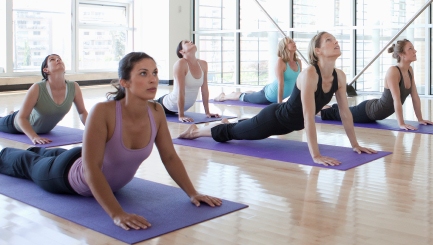
what is hatha yogaSince the 15th century, people have been using hatha yoga to improve their lives. It works by helping you to find a balance in the three main components of wellness; mind, body and spirit. The word yoga literally means the union or working together of mental, physical and spiritual health, whilst hatha is another word for balance, and so at its core, the simple and beneficial asanas of hatha yoga have your overall wellbeing in mind.


With a combination of stretching exercises, pranayama and meditation, hatha yoga helps you to relax and rejuvenate your senses, relieving you from all the stresses, worries, and tensions in life. It teaches you the most basic of yoga asanas, or exercises, and so you will be comfortable moving on to other forms of yoga. Anyone can benefit and learn from hatha yoga, as it makes you fit, active and healthy and provides mental stability.


There are several mental and physical benefits of hatha yoga, whether they are therapeutic or preventative. It calms you, heals your body, improves your blood circulation and provides oxygen to various internal organs. The breathing exercises, for example, provide your body with the inner strength to fight different types of physical pain, such as pain in your shoulder, back, head or neck.


One of the greatest benefits of this yoga is that it provides your body with agility and flexibility, especially if you practice this yoga on a daily basis. However, not only will you observe an improvement in your muscle joint mobility, but your posture will also improve with the help of this yoga. This is because the yoga exercises help to strengthen your spine, and increase your stamina.


Aside from this, a striking benefit of hatha yoga is that it prevents and fights against a myriad of wellness problems. It has the potential to improve your symptoms of arthritis, fatigue, chronic, asthma, arteriosclerosis, AIDS, diabetes and obesity. This type of yoga is great for weight loss in particular, as it helps to promote fat loss throughout the body. Not only does it boost your metabolic rate, but it also enhances the function of your digestive system, which is another important factor in weight loss.


Taking up hatha yoga is especially crucial in the winter months, as it guards your immune system to colds and flu. Finally, if you’re pregnant, hatha yoga can help you to avoid several problems such as backache, depression and excess weight, and it has even been said to help women handle the pains of childbirth in an easier and more effective way.


How Can Hatha Yoga Help Balance Your Body, Mind and Spirit?

How Can Strength Training Help You To Improve Your FitnessA new fitness program promises a full body workout in just 20 minutes. Core-Tex, exclusively available at Virgin Active gyms in the UK, is a challenging but fun workout that pushes you to improve core strength, motor skills and mobility. And it’s all done on top of a platform that moves in every direction.


The Core-Tex is a platform with a base that sits on three ball bearings so it moves in every direction, forcing the user to adjust balance quickly – and in doing so, working every muscle group in the body. The platform can be used for any activity that could also be done on the floor – such as squats, press-ups or balancing exercises.


At Virgin Active gyms, Core-Tex fast classes are pushing fitness fans to the limits in a 20-minute workout that promises to work the body from head to two in a program that will challenge users both physically and mentally. The fast class focuses on mobility and strength while encouraging interaction and fun challengers with both the instructor and other class members so, at the end of a demanding 20 minutes, everyone will be feeling fitter but also had a lot of laughs.


The class is split into three sections. The first part focuses on mobility and is a warm-up that allows you to get used to the Core-Text itself. Four high-intensive exercises follow where every muscle group in the body is put to work. Considering that the class is only 20 minutes long, you get some idea of just how intensive this particular section can be.


The next section is interactive where you are joined by a partner for a series of fun exercises that give you a chance to draw breath while still working out. And the final section features challenges that vary from class to class – a challenge might involve attempting to maintain perfect balance on the Core-Tex while your workout partner rotates you.


Balance and Fitness the Challenge from Core-Tex